
Sure, the Andes have their show-off credentials. Super-high mountains. Lake Titicaca—the highest navigable lake in the world, and definitely the best lake for mischievous elementary boys who need a good story later in life.
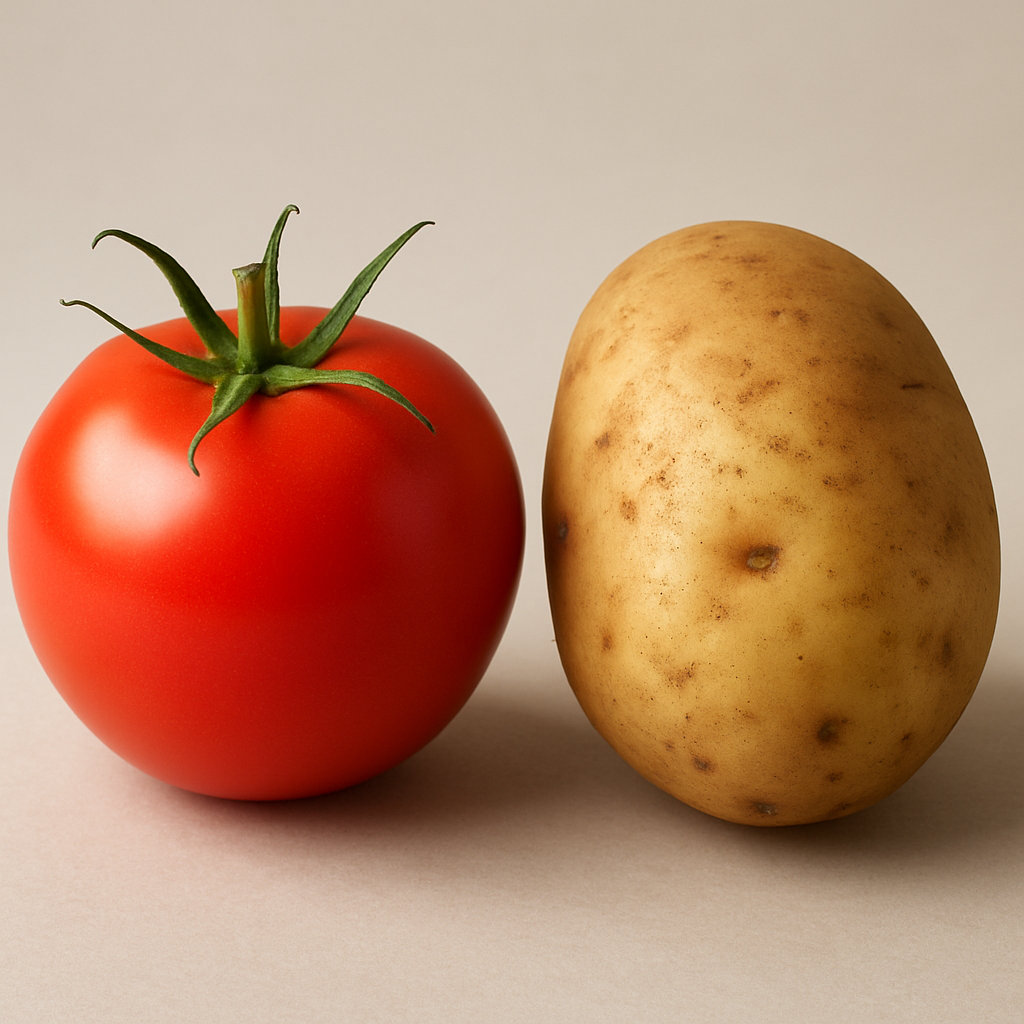
But the Andes also gave us something stranger and far more delicious: potato–tomato. Same family. Same neighborhood. Two plants domesticated within a long day’s hike of each other, both up in that thin air where people know how to survive and plants learn tricks.
Here’s the part your brain likes:
potatoes and tomatoes are opposites wearing the same jacket.
Potato berries? Boring and yucky—don’t touch. Eat the root. Tomato roots? Nasty—don’t touch. Eat the berries.
Nightshades are like that: one big family reunion where most of the cousins are toxic, dramatic, or both. Out of roughly 3,000 varieties, maybe eight are worth inviting to dinner. The edible ones include eggplant (India), peppers (Mexico/Peru), and the Andean tag-team that changed half the globe’s cooking.
So thank you, Andes.
Without you, Italian food loses its red sauce, Irish food loses its foundation, Slavic and German food lose their comfort staples, and American diners lose their fries, ketchup, salsa, chili, hash browns, and basically their will to live.


 A Work Progressing
Good post of the season, John.
By the way – you mentioned your favorite Christmas films in a comment on my GRS Christmas post. One gem of a film, not widely known, is the CBC production of Dylan Thomas’s A Child’s Christmas in Wales. Think it’s on YouTube. Highly recommended.
Now back to tomatoes and potatoes – which I’ll do physically in a couple of hours.
Cheers,
Don Scott
I don’t have your email to attach a photo