Voetica

The poem website “www.voetica.com”, where I have recorded some poetry, was hacked by Russians. David, who started ithe site, had contacted me and asked if every thing was okay with the recordings I did.. Usually it was at least 15 poems by each poet.

I think it was Richard Brautigan, Leonard Cohen, Annie Dillard, Bob Dylan, Ferlinghetti, David Gray, Rod McKuen, Paul Simon, and of course John Diestler. At least this what I remember doing. All seem to be there and sounding amazing!

Please go there to read and listen to some amazing poets!

Anyway, it took awhile to check all those places!!! What did I find?

On the one poet, Annie Dillard, I had recorded a few things from her book “Pilgrim on Tinker Creek”, and in the credit line it had been changed to “Pinker on Tinker Creek”.

The hackers had left behind a little rhyme

Posted in Commentary | Leave a comment

Trophes, pt. 2

The Cosmic Dining Dilemma

From time to time, I like to check the visitors to this humble blog of mine, just to see what’s trending. I must confess, it’s a rather amusing exercise given that the trending numbers are often in the single digits—serious single digits.

This week, however, something curious happened. A solitary visitor from the far reaches of Finland, Japan, or even Canada stumbled upon a blog post I wrote about “Trophes.” It’s a term I’ve been dwelling on ever since I discovered that, in a somewhat brutish-sounding way, humans are heterotrophs—meaning we exist by consuming other living things. It’s a sobering concept if you take it out of context, almost like fish surviving by preying on one another in the vast ocean of life.

Contemplating the intricacies of existence, I began to wonder if intelligence must inherently align with either the heterotroph or autotroph category. Is there room for something beyond, something more complex and nuanced than these life-consuming modes of existence?

Then, in a moment of unexpected inspiration, it hit me like a bolt of cosmic lightning: this is why UFOs haven’t been landing on Earth. They’re absolutely terrified of being turned into dinner! Imagine this scenario: you have new neighbors moving in next door. They’re highly intelligent, multilingual university professors. Everything seems splendid, except for one tiny detail—they happen to be lions!

It’s not easy to attend a dinner party when you’re both the guest and the potential entrée. So, while the universe may be teeming with intelligent life, perhaps the universal fear of becoming someone else’s cuisine is keeping the intergalactic welcome parties at bay.

And as I glanced back at my trending single digits, I had to wonder if somewhere out there in the great expanse, there might be another blog pondering whether Earthlings are friends or food.

Posted in Commentary | Leave a comment

I’m Stepping

I’m stepping out of my comfort zone. I don’t often suggest that I actually know something. Okay, maybe I do, but I generally don’t believe it in my inner being.

Here it goes, the UK musician/artist Ren is on to something important.

The “reaction” influencers on the net speak of going down the “Ren Rabbithole”. For the last week I’ve been down there.

Yes, it’s dark, and maybe a lot of sadness, but it is also hopeful. This young guy from Wales is crafting some important messages through musicianship and masterful story telling.

I’m not a fortune teller, but I’m thinking that there are tipping points in history where things are way different from one side of an occurrence to the other side. Ren might be that occurrence. And if not, then we have missed something.

Three links, not in creation order, but the order that I think is best to understand Ren, and what’s behind his music.

1. Hi Ren

2. Tale of Jenny and Screech

3. For Joe

Posted in Commentary | 2 Comments

Conan

My 30th great grandfather was not a barbarian, he was Conan I ‘le Tort’ de Rennes, duc de Bretagne. ‘Le Tort’, meaning ‘the crooked’. I’m assuming he had some sort of physical deformity.

Like most nobles with castles, he had a company of fighting men that he would lead if required by his liege lord. If not, then he would lead his own men on various attempts to gain more land by fighting other nearby castles.

Conan decided to fight his brother-in-law, Fulk III, of Anjou. Conan was laying seige to the city of Nantes, and Fulk was rushing his men to counter Conan.

Conan decided to retreat back to his castle to fight Fulk, but could not get away from Fulk, so he stopped and prepared the battlefield with some surprises.

Conan had pits dug, filled with water and covered with branches. When Fulk came up, Conan lured his men towards the traps. The ruse worked and Conan should have won the battle.

Unfortunately Conan was feeling pretty confident so he stopped, it was a hot day, so he paused to take off his armor. A few men in Fulk’s company happened to see thus and attacked Conan, then killed him.

The rest of Conan’s men fled back to the castle, and then surrendered to Fulk.

Conan had to foresight to endow Mont. St. Michael, and after his death he was buried there. Within the next few hundred years it became the incredible place we see today.

Posted in Commentary | Leave a comment

Speaking of “Special Knowledge

The Curious Case of the Speed Bumps

Allow me to regale you with a tale of “special knowledge” that revolves around the design and implementation of the now-famous barriers that grace the streets of Berkeley. I know the person who conceived, designed, and implemented the system. He was a genuine nice person.

If you’ve been a long-time resident, you might recall the era when the grid system of the neighborhood roads provided a convenient escape from the main thoroughfares during the chaos of major commutes. A simple drop down a few blocks, and you could journey north, east, west, or south without a hitch.

For Berkeley residents, these barriers might be viewed with favor, as they bring about safer streets and slower-moving cars. However, for those seeking to outmaneuver traffic jams, these barriers are nothing short of a labyrinth, forcing one to memorize a convoluted web of routes that bypass these roadblocks.

A few years ago, one of my neighbors embarked on a quest to address the issue of speeding cars in our residential areas. Signs alone didn’t seem to do the trick, and even the acquisition of miniature plastic figurines brandishing warning flags failed to deter speedsters.

Then, like a beacon of inspiration, someone resurrected the age-old saying, “Watch out for the speed bumps of life.” Ah, speed bumps, the solution seemed clear—install them on every long, straight road where drivers had a tendency to accelerate, and serenity would prevail.

Of course, such a plan came with its own set of challenges, primarily the cost. The actual speed bump wasn’t exorbitant, but the warning signs were another matter entirely. There were dual signs on both sides of the road—one forewarning the impending bump and the other declaring its immediate presence. That meant a minimum of four signs for each bump, not to mention the generous application of paint to make sure no one missed the bump.

Nevertheless, the neighborhood embraced the plan. Local drivers slowed down and navigated the bumps with finesse. As for those who either failed to read the signs or simply disregarded them, they would hit the bumps at 25 miles per hour or more, producing resounding noises that echoed for blocks. I confess to remaining somewhat befuddled about the exact placement of these bumps.

Then, a curious revelation surfaced thanks to my daughter. At first, she suspected a typo, but upon closer inspection, it became evident that all the signs echoed the same phrase: “Speed Humps.”

“What signs? What typo?” I inquired.

“The speed bump warning signs,” she explained, “They say ‘Speed Humps.'”

“Speed Humps?” I repeated in bewilderment. “Since when did the Department of Transportation become involved with…rapid dating?”

Suddenly, the local birth rates took on a whole new perspective. Perhaps it wasn’t the COVID lockdown that was responsible. Perhaps it was the signs that nobody truly reads—working their magic in the subconscious. Or could it be that a hump is simply a larger bump? The mysteries of the local speed “humps” persist.

I just looked it up on a transportation web site. A bump is bigger than a hump! Who would have thought?

Posted in Commentary | Leave a comment

Unraveling the Mysteries:

There’s a kind of knowing that sits apart from the rest—what some call special knowledge. The kind that makes you seem prescient in a meeting, or keeps you from running aground when the fog thickens. It’s knowing where the riptides and hidden rocks live.

Most of us don’t have it. We drift along, improvising, mistaking guesses for insight. With time, what little we once knew grows dim—like the memory of how to row a boat we haven’t seen in years.

When something strange happens, we do what humans always do: we try to make sense of it. Sherlock Holmes offered a convenient script—when every ordinary explanation fails, the impossible must be examined.

Years ago, I had such a moment. A rural road. A dark reservoir on my left. No lights, no shoulders, just the curve of asphalt and my headlights cutting through brush. Then—an eruption from the foliage. A blur of legs and motion, fast and upright, crossing my path in a heartbeat. Too big for a dog, too balanced for a bear, too quick for anything that ought to be on two legs. Black jacket, fluttering tails, perhaps lighter trousers.

I arrived home unsettled but rational: the mind must label what it sees. So I told my wife I had nearly hit a three-and-a-half-foot-tall creature in evening wear, bent forward like a Marx Brother fleeing a wedding. She laughed so hard I considered waking the children to join in.

I shelved the story. But two weeks later, same road—there it was again, slightly ahead this time, caught clean in the beams. The same tuxedo tails, the same improbable sprint. I kept that encounter to myself.

A week after that, I met him again—at home. Not a phantom, but a whole family of them, perched in my century-old oak and strutting beneath it. Turkeys. Real, live turkeys.

For most people, a turkey is an abstract thing: frozen, shrink-wrapped, cartooned on greeting cards. Seeing one alive—standing in your tree—rearranges the world a little.

Later, in conversation with our veterinarian, I relayed my “gnome in a tuxedo” tale. He laughed, then leaned closer:

“Your neighbor imported Southern California turkeys years ago,” he said. “Looks like they finally took the hint.”

And that, I suppose, is special knowledge—not the knowing itself, but the moment when the absurd resolves into sense. It doesn’t erase the mystery; it just lets you laugh at it with better aim.

Posted in Commentary | Leave a comment

Two New

I stumbled upon two new musicians this last week. I’m a little shocked that I hadn’t heard about them, because they have been around awhile.

I encourage you to find a good YouTube video of their work!

Posted in Commentary | Leave a comment

Nature Boys

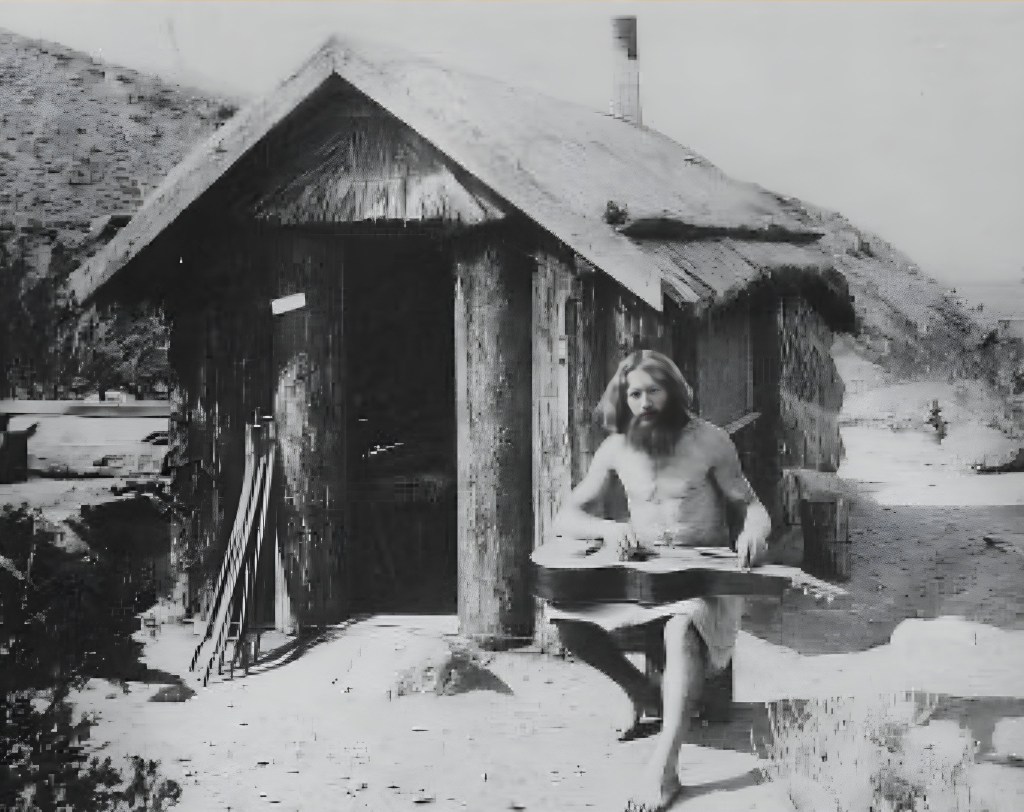
In front, eden ahbez and Bill Pester, Los Angeles, 1940s

Nature Boys emerged in the early 1900s, embracing long hair and sun-kissed skin as symbols of their deep connection to nature. Jack Kerouac mentioned them in “On The Road,” recalling encounters with these “Nature Boy saints” during his 1947 travels in Los Angeles.

Eden Ahbez, a standout among the Nature Boys, was a musician and songwriter who frequented the Eutropheon. He played piano and crafted flutes, eventually composing the hit song “Nature Boy” for Nat King Cole as an homage to their lifestyle. The song topped charts for eight weeks and became a classic, performed by artists like Frank Sinatra, Ella Fitzgerald, and Peggy Lee.

Despite the attention, Nature Boys led hermit-like lives, seeking solitude in hills, trees, and caves. The term “Nature Boy” loosely translated “naturmenschen” and was embraced mainly by German immigrants and their followers, adherents of “Lebensreform” or life reform.

Bill Pester, an early Lebensreform influencer, mentored the Nature Boys. He left Germany at 19 to avoid military service in 1906, promoting nature worship, literature, music, nudism, and a raw foods diet. Settling in Palm Springs, he roamed the desert barefoot, playing his guitar and forming bonds with Native Americans.

In the 1960s, elder Nature Boys influenced the emerging Hippie generation, serving as spiritual guides and role models. However, they didn’t endorse all Hippie aspects, as Lebensreform discouraged drug use. Gordon Kennedy’s book, “Children of the Sun,” traces Hippie origins to 19th-century Germany, revealing the deep roots of the American counterculture.

Recognizing these earlier movements reshapes our understanding of the 1960s and the global consciousness movement today. The Hippie narrative, often focused on middle-class youth dropping out, only scratches the surface. A deeper story stretches back to the 1940s with the Nature Boys and Lebensreform movements introduced by German immigrants.

Bill Pester, Palm Springs desert, 1917

Source: realitysandwich.com

Posted in Commentary | 1 Comment

More Books

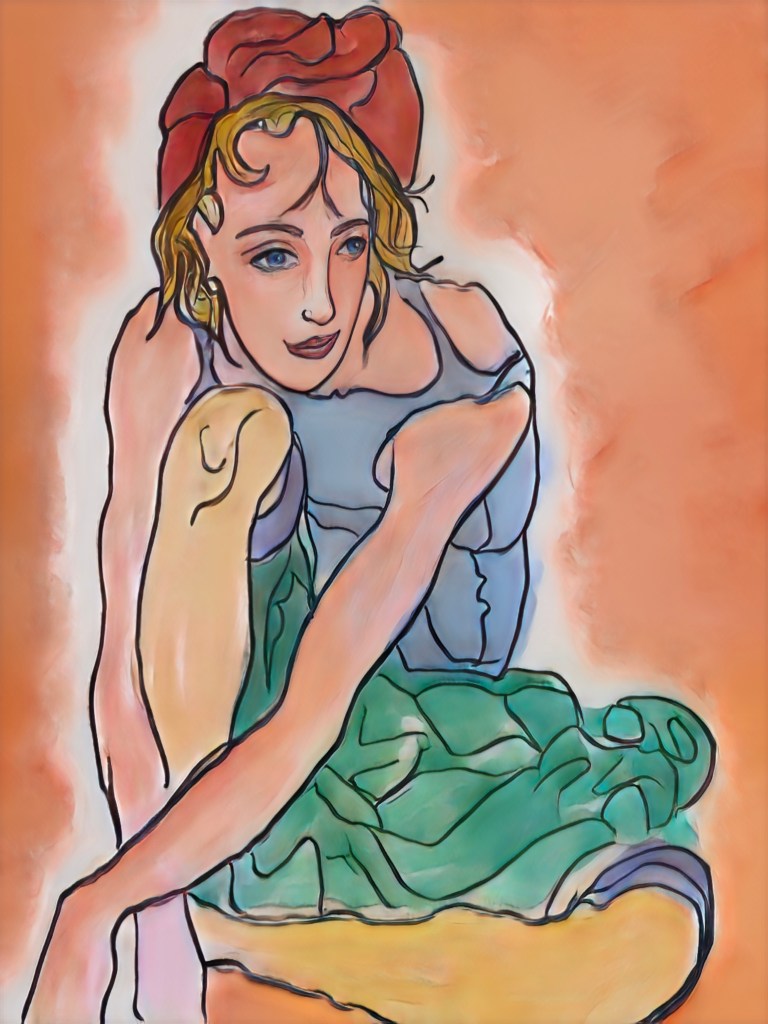
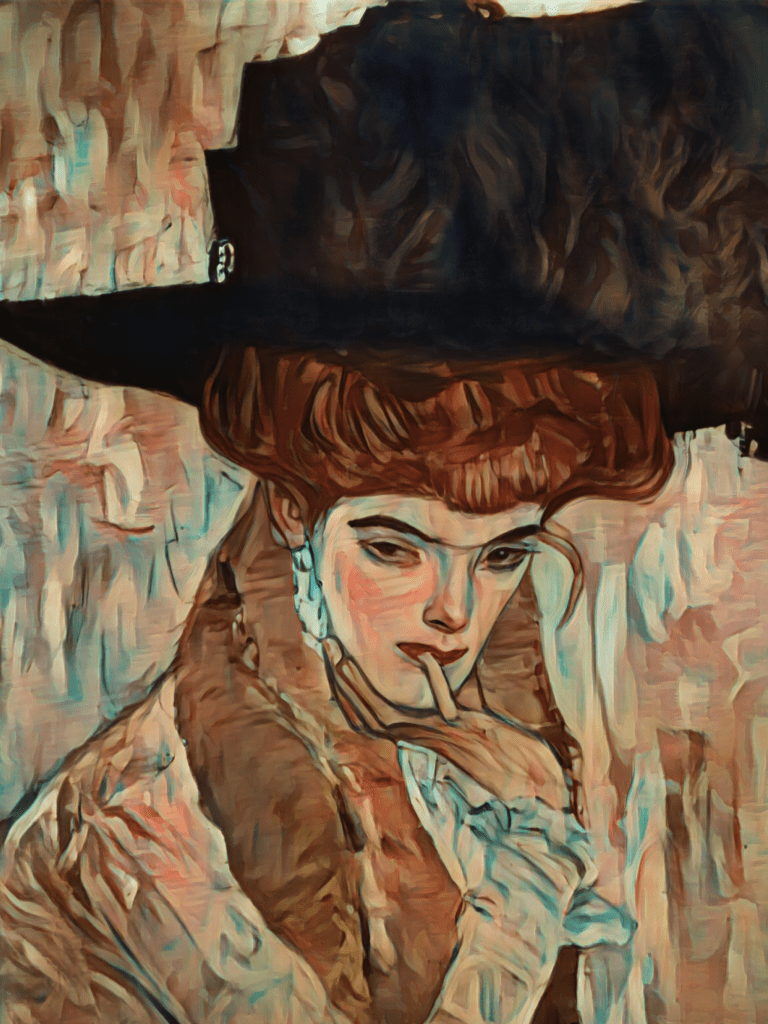
A good friend recently gave three boxes of art books. I couldn’t refuse them. There were images that I haven’t seen. There were sketches that demanded to be re-drawn and colorized. More tribute art!

Egon Schiele
Kokoschka
Gustave Klimt
Gustave Klimt
Posted in Commentary | Leave a comment

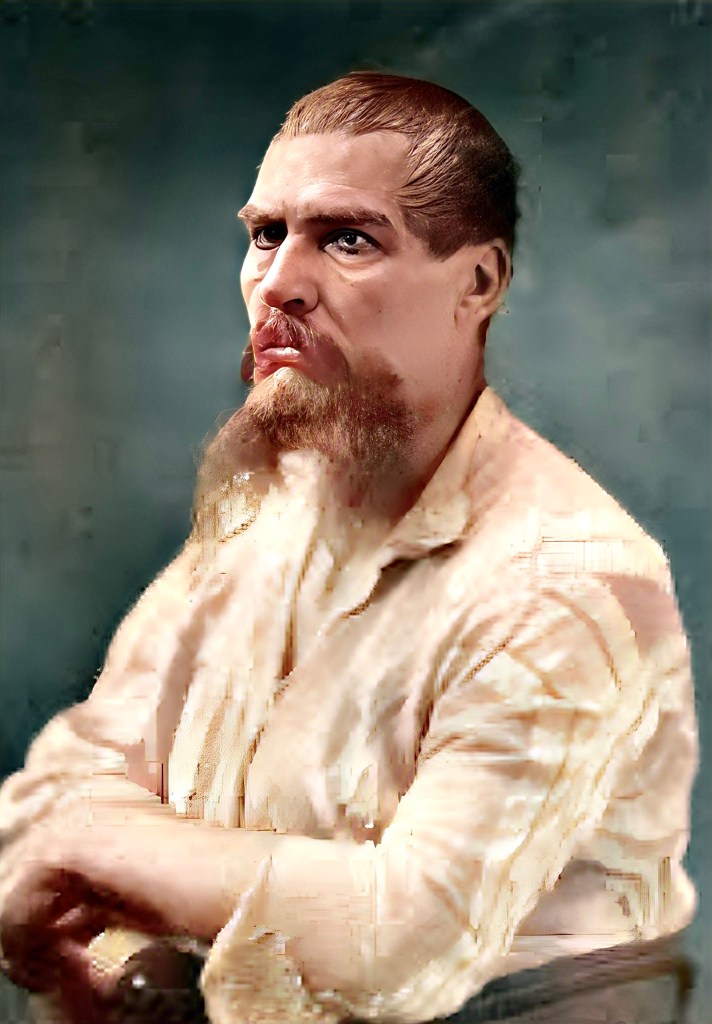
Sir Richard Francis Burton (1821–1890)

A Multifaceted 19th-Century Explorer, Linguist, and Renaissance Man

Sir Richard Burton was a remarkable figure of the 19th century, known for his incredible talents, achievements, and daring exploits. His life story is one of adventure, intellectual curiosity, and cultural exploration that earned him the prestigious title of knighthood.

He was born in 1821 in England and showed a keen interest in languages and cultures from a young age. He attended Trinity College, Oxford, where he excelled in his studies, particularly in the study of languages and literature.

One of Sir Richard Burton’s most remarkable feats was his proficiency in an astonishing 29 different languages. This linguistic prowess allowed him to communicate and immerse himself in the diverse cultures he encountered during his travels. His ability to understand and speak languages fluently facilitated his explorations and interactions with local populations.

Burton’s exploration journeys took him to some of the most remote and challenging regions of the world. He is perhaps best known for his exploration of East Africa, particularly his quest to find the source of the Nile River. His travels through the Arabian Peninsula, India, and Africa yielded invaluable insights into geography, anthropology, and ethnography.

Beyond his exploration, Sir Richard Burton was a prolific author. His writings include travelogues, translations of classical literature, and even his own poetry. His translation of “One Thousand and One Nights” and “The Kama Sutra” are still considered among the definitive versions of these texts.

Burton was not just a scholar and explorer; he was also a skilled fencer. His expertise in fencing added to his reputation as a Renaissance man, demonstrating both mental and physical prowess.

Despite his extraordinary accomplishments, Sir Richard Burton’s contributions were sometimes underappreciated in his time. His unorthodox methods and controversial beliefs often led to conflicts with Victorian society’s norms. However, his legacy has grown in stature over the years, as modern scholars and admirers recognize the depth and breadth of his achievements.

Sir Richard Francis Burton’s life was a tapestry of adventure, intellectualism, and cultural immersion. His ability to master languages, his courage as an explorer, and his literary contributions make him a truly remarkable figure in history. His legacy continues to inspire those who value the pursuit of knowledge, the embrace of diverse cultures, and the spirit of exploration. ated.

Still, there is the fact that thousands know of Indiana Jones, a fictional man, yet the real person of Sir Richard Burton is largely forgotten.

Posted in Commentary | Leave a comment