
-
Recent Posts
Recent Comments
Anonymous on The Key Anonymous on The Cocoon johndiestler on What About the Andes? Anonymous on What About the Andes? johndiestler on The Edge Theory of Learni… Archives
- March 2026
- December 2025
- November 2025
- October 2025
- September 2025
- August 2025
- July 2025
- June 2025
- May 2025
- April 2025
- March 2025
- February 2025
- January 2025
- December 2024
- November 2024
- October 2024
- September 2024
- August 2024
- July 2024
- June 2024
- May 2024
- April 2024
- March 2024
- February 2024
- January 2024
- December 2023
- November 2023
- October 2023
- September 2023
- August 2023
- July 2023
- June 2023
- May 2023
- April 2023
- March 2023
- February 2023
- January 2023
- December 2022
- November 2022
- October 2022
- September 2022
- August 2022
- July 2022
- May 2022
- April 2022
- March 2022
- February 2022
- January 2022
- December 2021
- November 2021
- October 2021
- September 2021
- August 2021
- July 2021
- June 2021
- May 2021
- April 2021
- March 2021
- February 2021
- January 2021
- December 2020
- November 2020
- October 2020
- September 2020
- August 2020
- July 2020
- June 2020
- May 2020
- April 2020
- March 2020
- November 2019
- September 2019
- August 2019
- July 2019
- June 2019
- May 2019
- April 2019
- May 2018
- April 2018
- March 2018
- February 2018
- January 2018
- December 2017
- November 2017
- October 2017
- September 2017
- August 2017
- May 2017
- March 2017
- February 2017
- October 2016
Categories
Meta
Deeper Dive
As always, once a depth is reached you find even more that are just out of reach, so you think, go deeper. You never know what you don’t know.
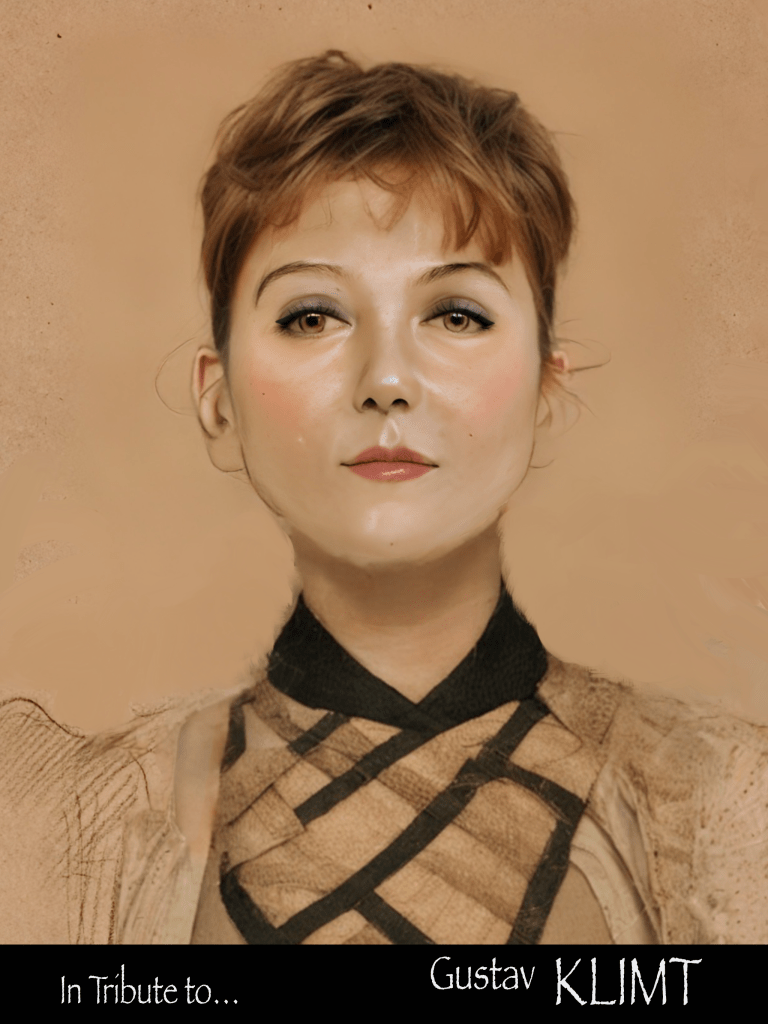
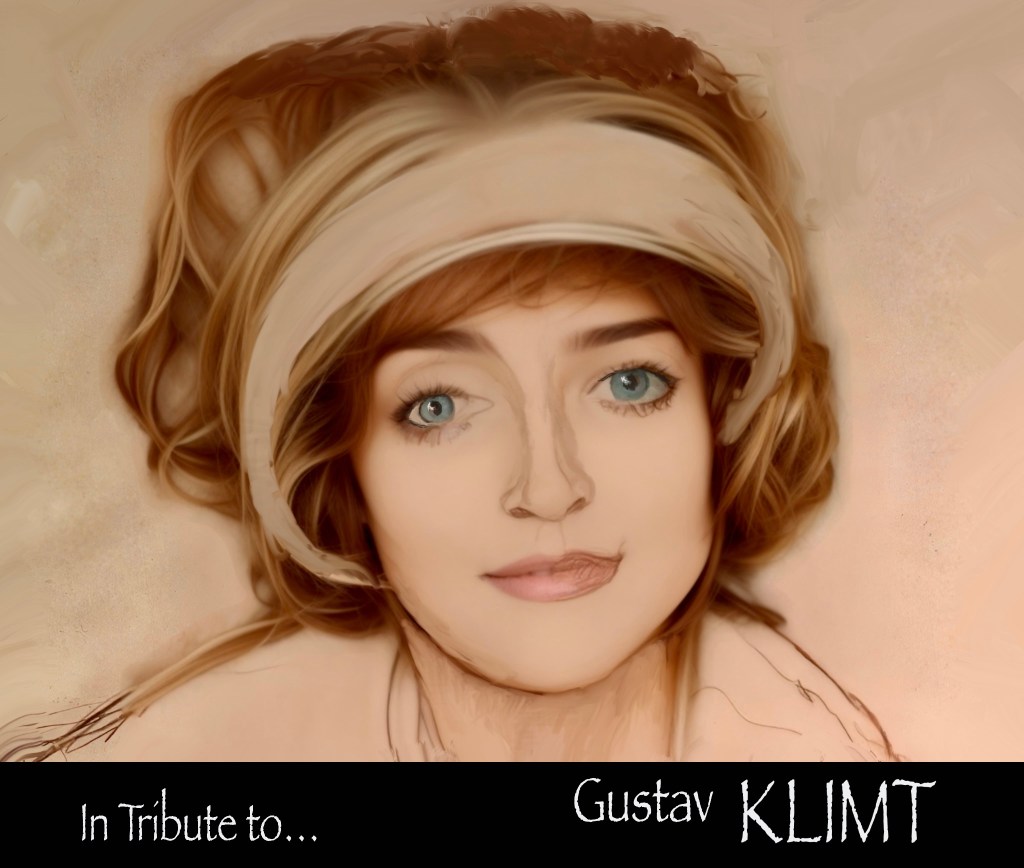
I found my favorite thing, sketches that are incomplete, but they inspire me to take up the challenge. Sometimes I stay within a Klimt solution, sometimes I go my own wat, but always a tribute to Klimt.


Posted in Commentary
Leave a comment
I Have a Friend
I have a friend who is responsible for a very large, and very important organization. It took many years in many different roles, to get to that responsible position.
I believe it occurred because the focus never wavered, because the responsibility was always on helping the people, not necessarily the product or the personal gain.
But now there is a potential problem. An issue has come up and a decision must be made. The primary focus would seem to be to protect the organization so that people can continue to be helped. This is a fact, what is also a fact is the the real problem is one of leadership.
An organization can exist for several years with poor leadership, but it’s a slippery slope, and poor decisions almost guarantees a brood of future poor decisions until the organization ceases to be helping people.
Two decisions are generally made… go with the flow, and bail out before it collapses, and the blame is kicked down the road. Or make the hard decision and ride out the storm, risking health, happiness, and sanity.
And guess what, it’s not like you only have to face that decision once. It keeps repeating itself year after year, month after month, week after week, and sometimes day after day.
Scripture in Joshua puts it bluntly…
“Choose you, this day, whom you will serve…”
Posted in Commentary
Leave a comment
Nude with a Hat

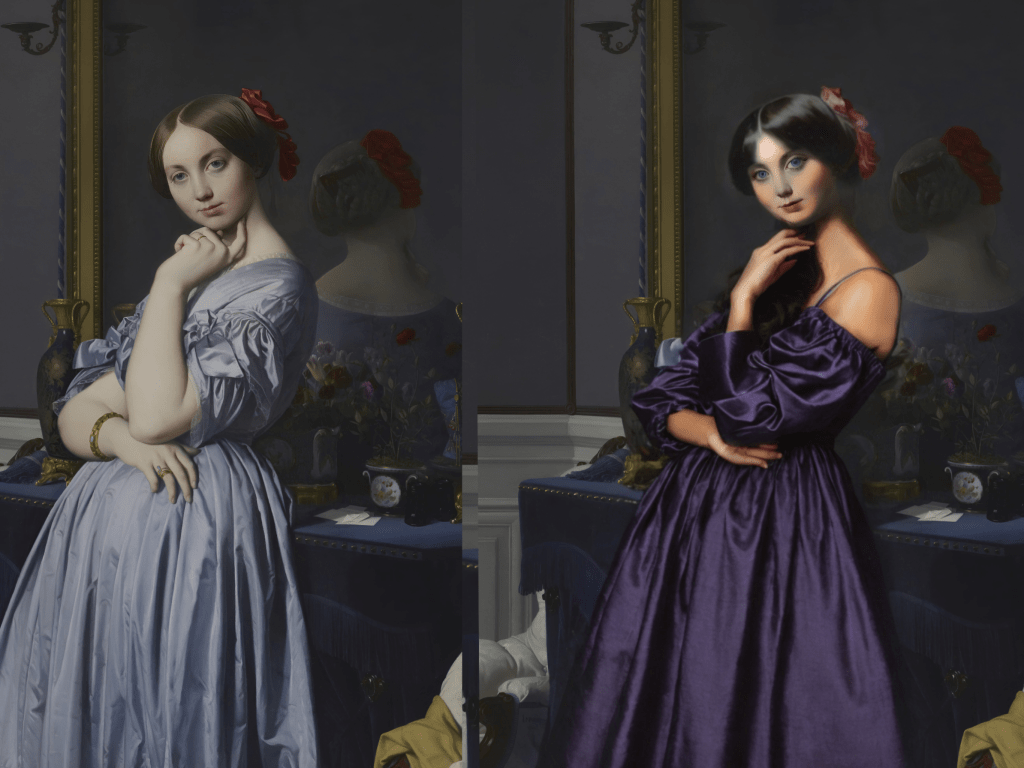
It did have its disadvantages, many painters developed lasting relationships because of the amount of time spent with a live model. Painting from a photograph had limited social interaction.
I somehow missed the talent of Charles Guerin, a late 19th century French impressionist. Many artists were now using photography in their studio work, they would set up the lighting, provide the props, then call in a model for a quick session for a photograph instead of hours in a drafty studio for traditional painting.
So, while I’m not opposed to nudity in art, I thought it was somehow unfair that these brave men and women were only known for their nude participation in art.
I started collecting the photos and the scans of paintings that I liked based upon composition, palette, and general quality. Some I had to colorize after raising the resolution and repairing the scan. Some I had to radically increase the saturation to get the right color. Of course all this filtering wiped out fine details, so I had to add layers of detail, focusing on eyes, hair, and skin tones.
I did use several new AI programs that providing clothing. I forgot to mention, that was my initial intention. To make a decent image that was successful based upon color, composition, and saturation.
In Charles Guerin I had dozens of choices, the most famous is the Nude in a Hat, now she is in a chic black dress, with a hat.
I forgot to mention, putting AI clothes on a figure is not like cut-out paper doll clothes. The figure can be in a variety of complex poses with hands in various places, legs crossed, arms akimbo…
AI can only do so much then it breaks down and suddenly the model has three legs, or large patches of fabric are simply missing.
For a test subject I thought I would use the famous statue of David by Michelangelo. I thought a nice modern tuxedo would be a good look, and family friendly. What I got was a nice coat, with a pair of chaps instead of pants. It was way worse than just the nudity.
So, it always takes study in light, color and fabric folds to cover the mistakes. The subtle high lights of a black satin dress took hours, and I’m still not satisfied.
So, here are some of my favorites…





Posted in Commentary
2 Comments
Deep Dive

In the last few weeks I’ve made a deep dive on Gustav Klimt, looking at sketches and paintings that are not well known, and revisiting a few old friends. I’ve been impressed with my 11×17 printer, although somewhat confused by the image staying within the size, then suddenly it blows up the center, cutting off heads and feet.




Posted in Commentary
1 Comment
There are so many things…

Learning to make images… from the mind, from live scenes, and from photographs. Where to start? For me, my challenge was to try to improve some things that I seem to have already shown some skill or success. But what was my weakest skill?
Looking at my images from the past it was always color. I never really studied palettes. A friend of mine said the best part of her 4 year study of art making, was developing a palette. Ha, well considering that my formal college education in art was one course in art appreciation, two courses in photography, and one course in live model sketching… Well, developing a color palette wasn’t in the curricula.
And my twenty-five year career in graphic design focused mostly on low cost B&W printing with minimum half-tones. I did have color projects, but maybe only a dozen per year. Not enough to become very proficient.
So, considering I do best on my own, I conceived a plan. Search and download classic B&W headshots from Hollywood stars from the 40s and 50s. I also threw in some early silent, and later modern. They just had to be great B&Ws, with solid range of grey scale. The professional photographers of time had also years of classic posing, so the images were generally interesting.
My challenge was to colorize, with texture, and digital effects. Generally, this meant redrawing most of the details lost in the filtering process. I must say, I learned how to save a palette, and apply it to a series of images, I spent hours in applying layer changes to bring out tones and texture.
Mostly I had a great deal of fun. I even went back recently to use some new techniques to old images.
This YouTube video is a record of my Hollywood folder of images that I’ve saved.
Posted in Commentary
Leave a comment
Tribute to Berthe Morisot

Most people know the image made by Manet. I’ve been so attached to it that I’ve drawn it many times. I know that the model was Berthe Morisot, what I didn’t know at first was that she was a painter in her own right. So I started redrawing her pieces.
It only occurred to me recently that there mayb some photographs of her on the web. They’re probably very low resolution, damaged, scratched… but what the heck, that’s what I love to repair.
I didn’t find a lot right off, but I found enough to keep me busy for a few hours.
The following is a link to a YouTube movie that I made from the folder of images that I made. I certainly won’t use most of the images, it’s just play. But a couple are pretty interesting.

Posted in Commentary
Leave a comment
Tribute Meaning

A tribute work is generally based upon some other work that has been scanned, photographed, or perhaps a painting hanging on a wall.
I have used this work to make another work, not to improve it, but perhaps it has inspired me to go in another direction,
The changes that are made range from massive to major, or perhaps just filtered for color palette change and saturation. In general the filtering process wil remove fine detail, this is reasonable for the background, but causes problems where the detail is important.
Sometimes a few minutes of filtering can cause hours making layers of hand drawn details. Hair, eyes, lips, fingers, ears are generally the problem areas. Digita; artifacts also show up in random places.
Most of my efforts started with repairing old photographs found online. Often they were of low resolution quality, with cracks, chips and dust particles. Restoring old B&Ws with better resolution is very satisfying. Some of these can turn into tribute works by applying color and texture through filters.
Each image will have changes, an example of massive is that the image will sketched by hand in pen, ink, color pencil, etc. then that image will be scanned and filters applied. It can then be printed on 11×17 high quality art paper with high resolution, perhaps additional color pencil or ink is again applied. Then this is once again scanned for a final digital check.
The vast majority has not had this massive of a procedure.
Lately, I have called up past digital works and used new tools to make new images. It’s a never ending stream. I like this analogy, because you can never cross the same river twice. It’s different water!
This link is to a YouTube collection of my favorite tribute pieces.
Posted in Commentary
Leave a comment
What’s Your Name?
In today’s social media, this is a phrase asked with a loud shout. When receiving a response (which is usually ‘Tony’), the shouter often retorts with explicit language from the very beginning. Why does one ask for a name? Because there is power in a name. The very first task given to humankind was naming the living creatures. Correction: God had already created the creatures and knew their names, but He brought them to Adam to hear how Adam would name them.
Afterwards, He declared that since Adam had said, so it would be. Regarding plants, scripture doesn’t specify, but thousands of years later, Shakespeare would express, ‘That which we call a rose / By any other name would smell as sweet.’
Asking for an individual’s name is a form of connection and recognition. Any future interactions are based upon this initial step. To dismiss someone’s name is to dismiss them directly.
Traditionally, an individual’s name was typically bestowed by their family, often consisting of a single word or a short combination of words. My name is John, and the problem lies in its commonality. Gather a dozen random people, and you’ll find at least two, sometimes three individuals named John.
This is where bynames became important. To distinguish individuals, there were ‘John the Bald,’ ‘John the Short,’ and ‘John the Fat.’ In larger gatherings, there would be ‘John of Lafayette’ or ‘John of New York City.’ And then perhaps, ‘John the Tailor,’ ‘John the Butcher,’ and ‘John the Miller.’
Some cultures used a combination of adjectives, verbs, and nouns: “Swift Fox,” “Bright Morning Star,” “Salvation,” and “Sitting Bull.” Oddly enough, I’ve found indigenous tribes of the Americas and the Hebrew naming traditions were very similar.
Bynames were based on appearance, location, and vocation. It’s possible that if there were too many Johns, you might encounter ‘John the bald teacher of Lafayette.’ Thank God surnames were invented.
Initially, surnames may have been inherited place names or attributed to illustrious ancestors. The Scandinavian tradition is to credit the father, as in Peter, John’s son, or Peter Johnson. Girls would also be named for their fathers, as in Helen, John’s daughter, or Helen Johnsdotter.
In ancient Rome, individuals typically used only about two dozen praenomen (first names), possibly another praenomen from the same list for a middle name, and finally a cognomen (family name) for the last name. In the modern world, that naming pattern remains the most common.
I have mentioned before that I have dabbled in genealogy; I have slightly more than 50,000 individuals in my database. One of the wonderful pleasures is collecting the additional naming of some of my ancestors.
I am fortunate to have dozens with the epithet “the Great” added after their first name. Admittedly, some may have added that to themselves, but most had it added later as history recalled their accomplishments.
I don’t want to be disrespectful, but finding another “the Great” is not as exciting as the odd epithet that pops up. “Krum the Horrible” is an example. All of his neighbors called him “Krum the Horrible”; his own people called him “Krum the Brave.”
Then there was the medieval minor noble called “Godefroi ‘the Captive’ Lothringen,” who lived around 1000 AD. It seems that he had a small domain with about 500 men at arms. He also seemed to be very poor at picking the winning side. He would always ally himself with the losing side; his men at arms were killed or sold into slavery, and the few knights and himself were captured and held for ransom. This was the practice of the times, but you only had so much wealth to pay for only a few losses. Godefroi lost a lot of battles and stayed longer and longer in the dungeons before the ransom was paid. Within his lifetime, and for hundreds of years later, he would be known as “the Captive.”
You might not know this, but William was known as “William the Bastard” for more than a hundred years before historians called him “William the Conqueror.” “Eric the Good” wasn’t all that good, but “Louis the Fat” was indeed corpulent. King Louis VI of France tried hard to be known as “Louis the Fighter,” but he was just too big.
The epithet tradition has faded somewhat; President Reagan was called “the Gipper,” John Wayne was “the Duke,” and Elvis Presley was “the King.” As my days are getting longer, I am thinking about what my future epithet might be… “John, the Reluctant?” Or “John the Napper?.
Posted in Commentary
Leave a comment


 A Work Progressing
Fun with Fabric