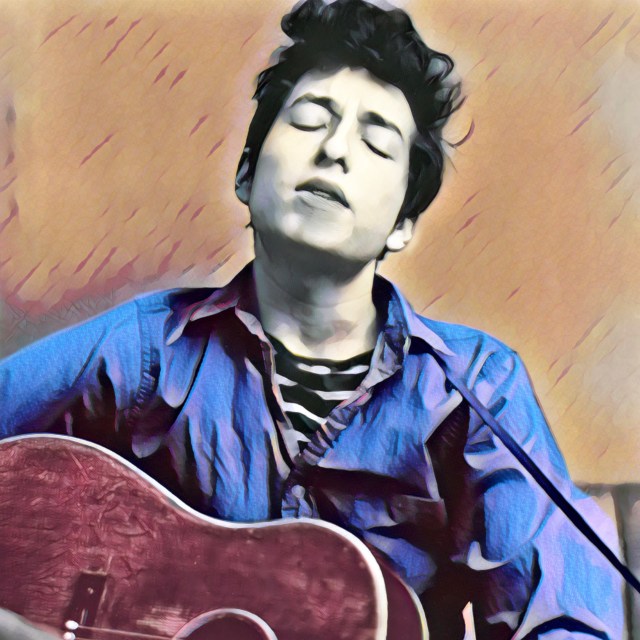
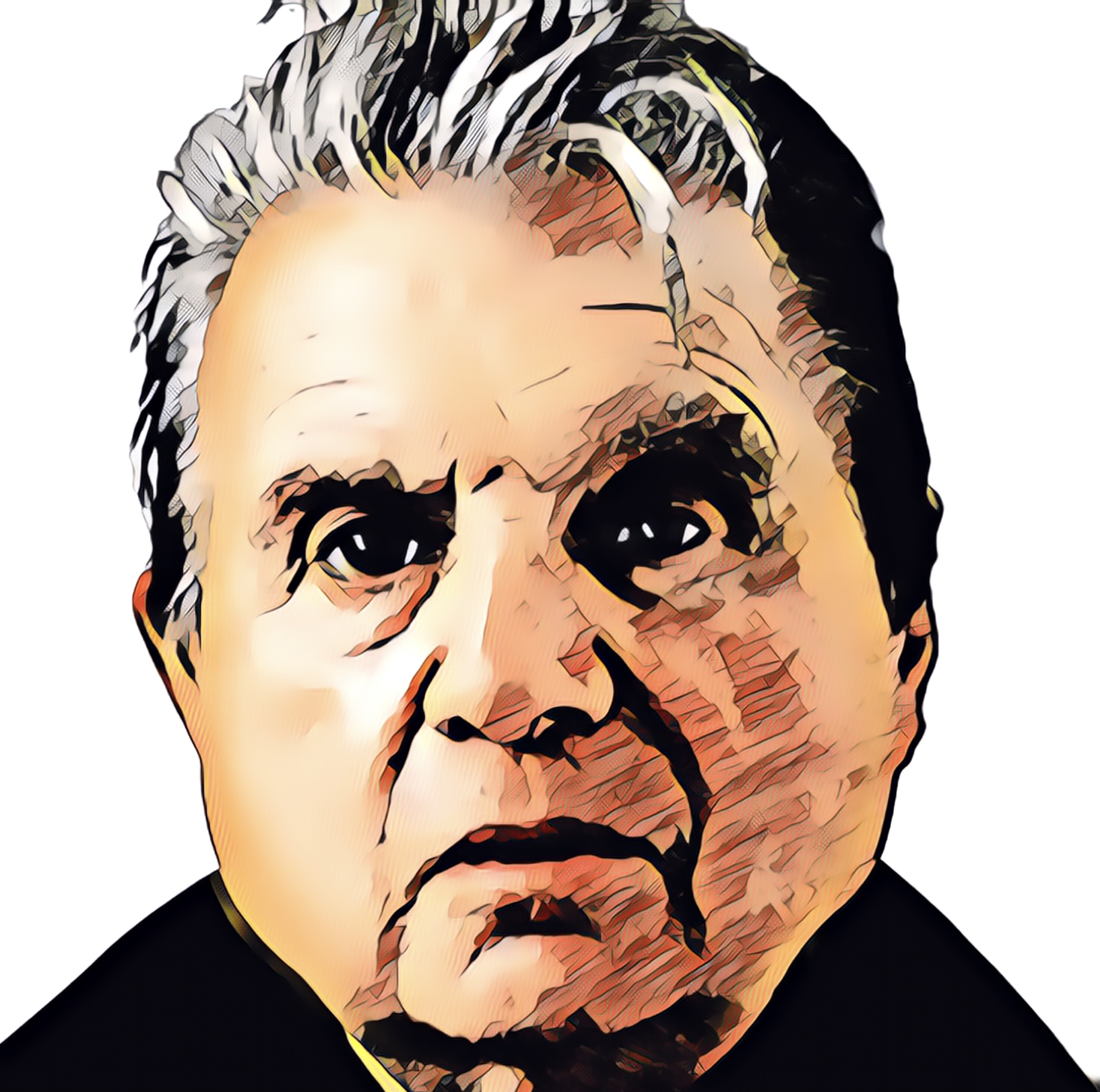
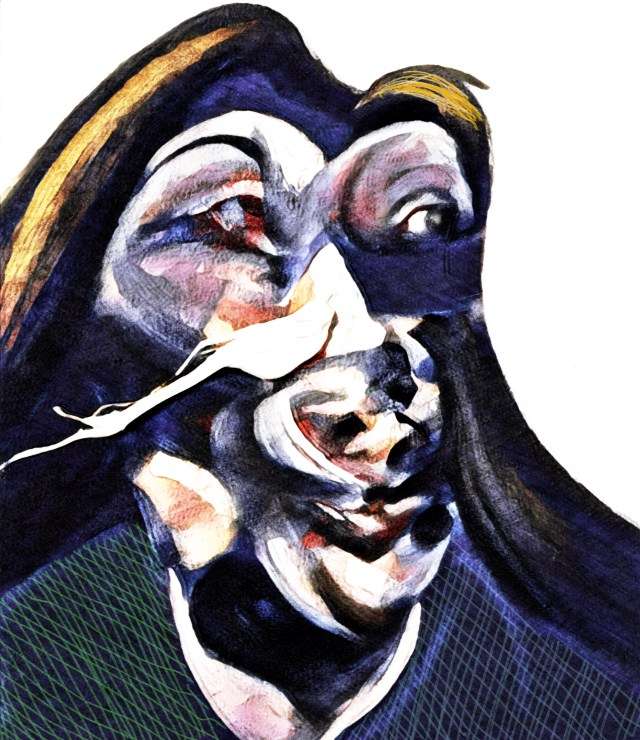
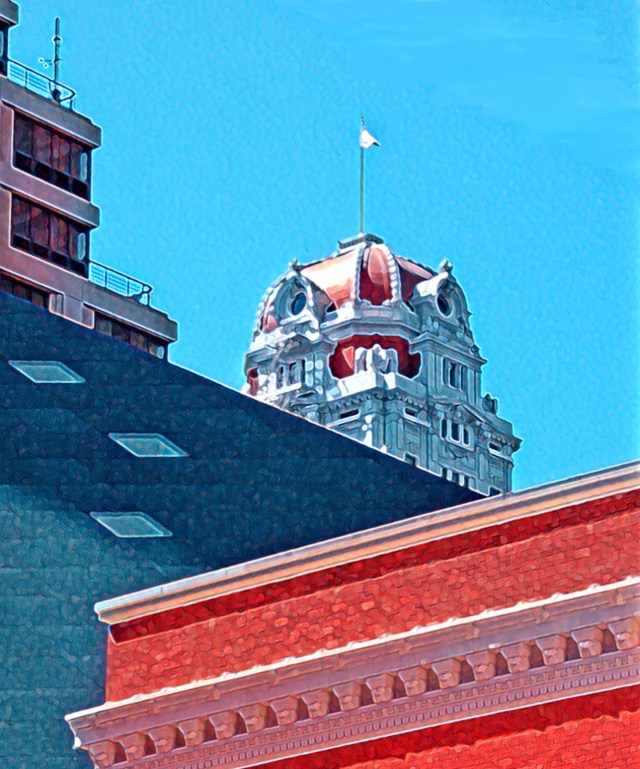
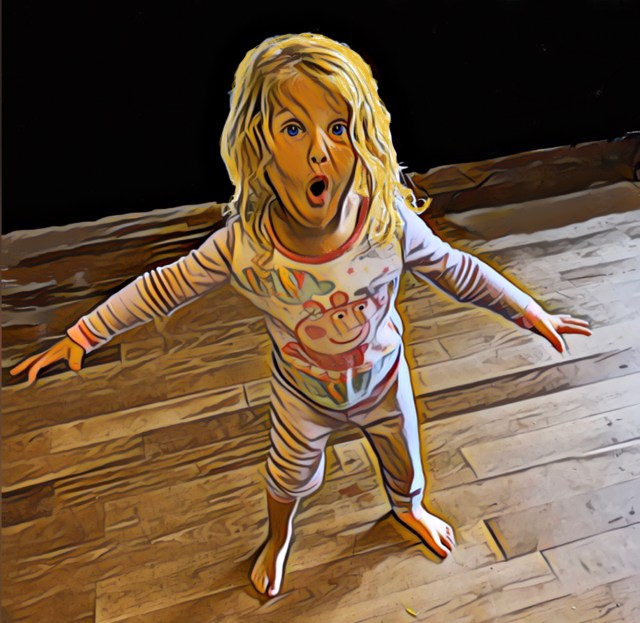
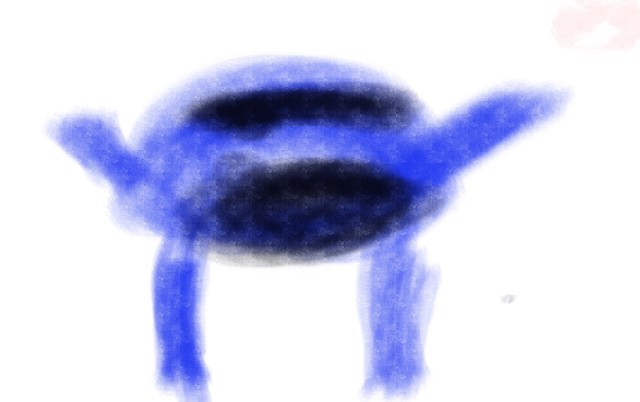
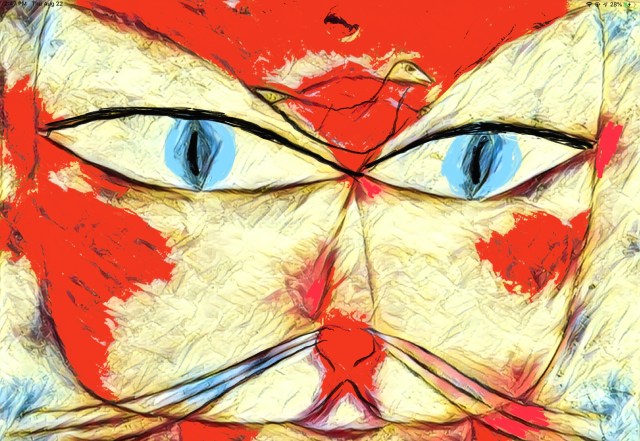
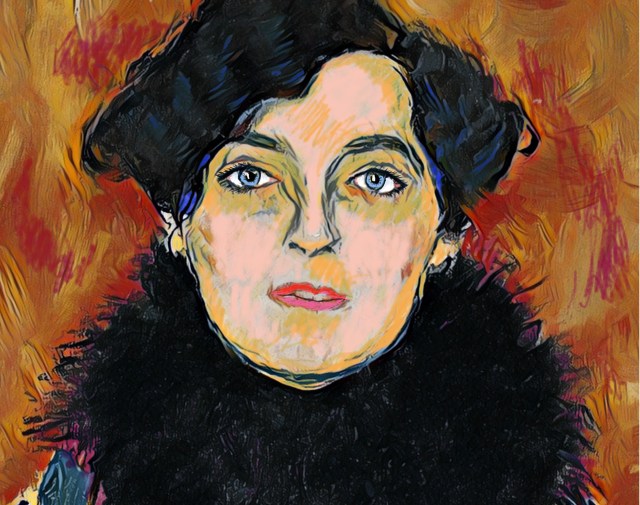
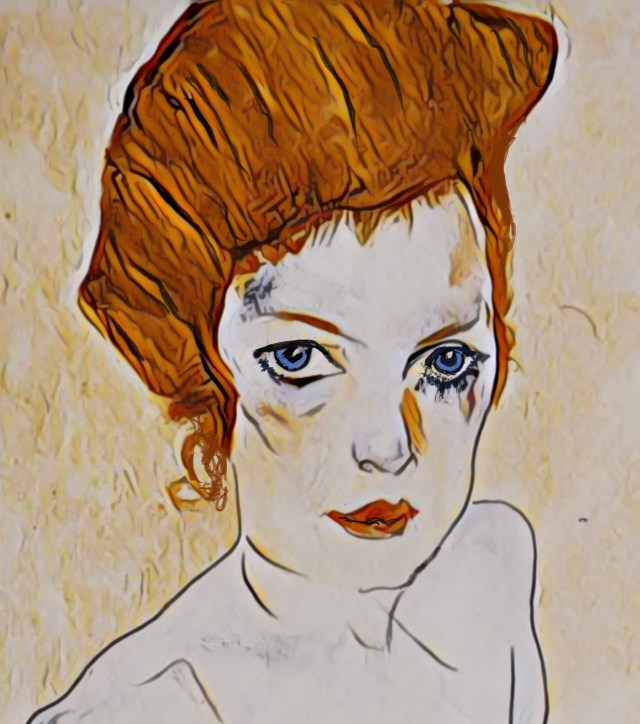
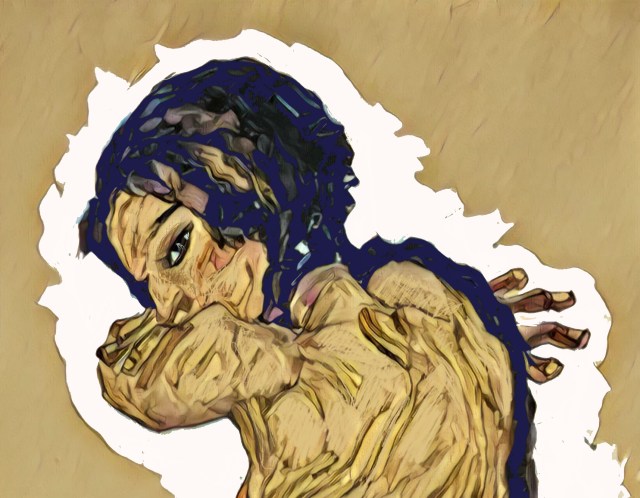
My friend Bob

I am inspired by his work

www.youtube.com/watch

Posted in Commentary | Leave a comment

Recent Work

Posted in Commentary | 1 Comment

What do I make?

In the simplest terms: I make art.

It is art because I say so—

not because I’ve mastered any particular medium.

It’s art because, in the act of making,

the image crosses a threshold.

For me.

There are hundreds of mediums for making art—

from the raw edges of found objects

to the layered complexity of screen printing.

I’ve sampled a few.

I’ve “mastered” very few.

I’m pretty good at sketching.

Not bad at sculpture.

Color portraits? A struggle.

Watercolor? Monstrous.

Oil paint terrifies me.

Acrylics paralyze me.

None of that stops me.

I keep making.

Even the hideous attempts.

So—where am I comfortable?

I like working from photographs.

I like digital filters.

But I’m never satisfied with just one.

I layer them, remix them, draw into them.

Sometimes I use hand-drawn elements, sometimes none at all.

I don’t set rules about what percentage must be “mine.”

The final image is what matters.

For me, there’s no distinction between

100% hand-drawn

and 100% digital filter.

If someone else sees a difference, that’s fine.

It doesn’t change the way I see it.

I fell in love with digital in 1985.

Still am.

When I taught art appreciation,

I’d show students abstract modern art.

Some didn’t connect with it.

But if I showed realistic work by the same artist,

suddenly they understood.

“If they can paint realism,” they said,

“then the abstraction must be a choice.”

I get that.

But skill isn’t a requirement for legitimacy.

Too many potential artists disappear because they believe

they aren’t qualified.

That’s tragic.

It’s like saying you can’t be a photographer

because you don’t understand how a camera works.

The photography is in the vision.

The camera comes later.

Finding the right medium is a lifelong process.

You might stay with what’s comfortable, refining it.

You might step into discomfort and explore something new.

There’s value in both.

I used to tell my photography students:

Every great photo you admire

was probably taken by an uncomfortable photographer.

I can’t prove it.

But I believe it.

Looking at my own path, I see a deep connection to three dimensions.

That’s why sculpture has always pulled me.

But even landscapes and portraits feel dimensional—

layered, textured, full of depth.

What I love about digital is the undo.

The speed of variation.

The capacity for transformation.

I’ve made tribute works—redrawing, remixing, channeling.

Sometimes, in the process,

I learn something new from the artist I’m echoing.

I’m not done with my versions.

And if I had one piece of advice, it would be this:

Follow Duchamp.

Artists make art.

That’s it.

Posted in Commentary | Leave a comment

When is it Sin? When is it Evil?

A good friend posted an article by Dennis Prager and suggested I read it.

I’m good with that. I’ve read several of his books and enjoyed his writing.

No red flags there.

Well—maybe one.

Prager has many books, a radio show, numerous speaking engagements.

He also founded Prager University.

I dunno.

A small red flag waves when someone names a university after themselves.

I mean, there are billions of possible names—some brilliant, some horrible.

Settling on your own name feels… iffy.

Maybe he named it after his parents?

Still, we all make choices.

Some might be mistakes.

In the article, Prager presents a kind of moral equation:

Good Intentions – Wisdom = Evil

It’s an interesting formula, but to me, it misses the mark.

It’s too simplistic.

The threshold for evil is, I think, quite a bit higher.

That equation works better for describing a mistake

—or a serious error in judgment.

But to label it evil?

That feels harsh.

Yes, it can be a step toward evil,

but it’s still early enough on the road to change direction.

Not every mistake becomes a turning point.

I’ve known plenty of people who recognize their error

and continue making it every day—for years.

Still…

That doesn’t necessarily make it evil.

Now I’m about to make some of you uncomfortable.

The basic definition of sin is “missing the mark.”

Like an arrow that doesn’t hit the bullseye.

But in religious circles, sin has taken on more dramatic weight.

Fire. Judgment. Condemnation.

I find that unfortunate.

We should have a word that describes failure—

a word that’s stronger than mistake,

but not as final as damnation.

That original definition of sin—as a miss, a misalignment—feels right to me.

Maybe that’s why it’s so unpopular.

Is sin evil?

Possibly.

But I don’t think they’re interchangeable.

Sin is an action that causes the spirit to be grieved.

Sometimes we plow ahead, assuming it’ll resolve itself.

Usually, it doesn’t.

When we analyze it enough to see that our action benefits us

at the direct expense of others—

that’s when it crosses into evil.

Small evils.

Larger evils.

But evil nonetheless.

Prager contends that embracing communism was evil.

I believe it was a mistake—often a tragic one.

And yes, many leaders embraced it for the sake of power,

justifying horrible acts with appeals to the “greater good.”

That tiptoes into evil.

“Power tends to corrupt, and absolute power corrupts absolutely.”

Thank you, Lord Acton.

(Most people ignore the “tends to.”)

But it would be a moral mistake to classify millions of people

who once believed in communism as evildoers.

When we sin, we have the option of redemption.

Some of us reach for that quickly.

Some don’t.

The same may be said of true evildoers—

but for them, the road is longer.

It’s not just about knowledge.

It’s a deeper-rooted fracture in the way they think.

A shift in personality.

A hardening.

Evil is pernicious.

Sin is unfortunate—but change is possible.

Posted in Commentary | Leave a comment

Francis Bacon

Posted in Commentary | 2 Comments

More Encouragement Thoughts

Encouragement can be found in a vast mountain lake.

A reservoir filled to the brim—more encouragement than we could ever absorb in a lifetime.

And yet, for most of us, it remains untapped.

This is stored encouragement—

the “frozen-in-time” encouragement found in books, in songs, in scripture, and sometimes even in physical places.

It’s available 24/7.

It’s free.

It’s honest and true.

And still—we ignore it.

Or worse, we forget it’s there.

Why?

Because we’ve confused the source.

We believe the most important encouragement comes from people—

from their words, their approval, their timing.

But the deepest encouragement often comes from sources that don’t change.

Static encouragement is powerful because it doesn’t shift with someone’s mood.

It doesn’t require performance.

It waits patiently—whether we’re ready or not.

Yet discouragement—usually from others—acts as a gate.

It blocks access to the wellspring.

“I feel discouraged.”

“Why don’t you read the Bible?”

“I don’t feel like it.”

“Why not?”

“Because Bill and I had an argument.”

This is the tragedy: a passing human conflict can disconnect us from eternal comfort.

The gate is small—but effective.

And the saddest part is, it’s easy to open… if we remember it’s there.

Sometimes it isn’t people that discourage us—it’s the world.

Your car won’t start.

You can’t find your glasses.

The traffic lights are all against you.

You switch lanes five times and still end up in the slowest one.

The world sends discouragement, too.

But here’s the key: you have a choice in how you see the world.

Gravity holds you down.

Fire burns.

Skunks smell.

But almost everything else is subjective.

The more clearly we see that, the less the world can discourage us.

People, however, are different.

They matter more.

Their words land deeper.

And they often unknowingly block our path to static encouragement.

A cruel word is bad.

But a cruel word that disables access to hope?

That’s doubly destructive.

So how do we respond?

We could shut people out.

“I will ignore you. I will no longer hear your words.”

But that comes at a cost: disconnection.

Instead, I suggest something else:

Change the ratio.

Most discouragement is patterned.

It’s not always mean-spirited.

It’s often careless, unthinking.

But intentional encouragement?

That’s different.

It ripples outward.

Encouragement is reflective.

It is viral.

When someone speaks hope, it helps others access their own store of encouragement.

More encouragement creates more encouragement.

The ratio shifts.

The world becomes better for it.

So take back the gate.

Reclaim your access.

Let the encouragement flow.

Posted in Commentary | Leave a comment

DuChamp

I’ve lost count of what I’ve done and how many.

Apparently my storage system is a little wacky—

I remember working on an image,

but later I can’t find it.

Then it pops up like an Easter egg.

There are worse things.

Lately, Marcel Duchamp has been on my mind.

I haven’t attempted a tribute—he’s too complicated.

I haven’t done Dali either.

Well—I tried Dali once, but it offended me.

I had to tear it up.

Back to Duchamp.

Art historians call him the one who freed Art.

They also say Fountain is the most important artwork in history.

Duchamp promoted the Found Art Movement.

He would find an object, declare it Art, and put it in his next show.

A stool with a bicycle wheel.

A pane of glass with trapped debris.

If you thought he was joking, he’d hit you with a fifty-page monograph

detailing the philosophical and mechanical underpinnings of the piece.

Duchamp was the real deal.

Art is made by artists—

not defined by critics, gallery owners, or even the public.

It may not be liked.

It may be dismissed.

But if the artist makes it,

it is Art.

There’s a freedom in that.

Art isn’t bound to a medium.

It doesn’t have to be archival.

That’s a museum policy—not a definition.

Questions like:

What is truth? What is beauty? What is art?

These feel like things we should know.

But usually, in our desire to know, we get them wrong.

At the very least, we can define them for ourselves.

I’ve been going through a change lately.

I no longer create art.

I make art.

It seems like a small thing—just a shift in words—

but I’m serious.

Everything in the universe was created in one instance.

Since that time (and yes, time was created too),

nothing has been destroyed.

Everything has simply changed.

I take created things and make new things.

I create nothing.

But I am a prolific maker.

What about ideas?

Same thing.

Everything is built up.

I just put things together.

Of course, this is just my view.

I’m not saying it’s true for anyone else.

It’s simply what I believe—for me.

There’s too much responsibility in being a creator.

Too many liabilities.

Too much ego.

Putting a few things together is more honest.

More humbling.

And what about the days, hours, or months when I’m not creating?

Much easier to take a break from putting things together.

I’m just resting.

Yep—

I make art.

And I make it art.

Posted in Commentary | Leave a comment

Various New & Revisted

I can’t leave it alone. Gotta try reworking. And I’m really only using two different brush styles.

Okay, the last one is my grandson’s.

Posted in Commentary | 1 Comment

One More Egon and a Klee

Posted in Commentary | 3 Comments

Egon Studies

I wanted to revisit Egon with my Apple Pencil.

Posted in Commentary | 1 Comment