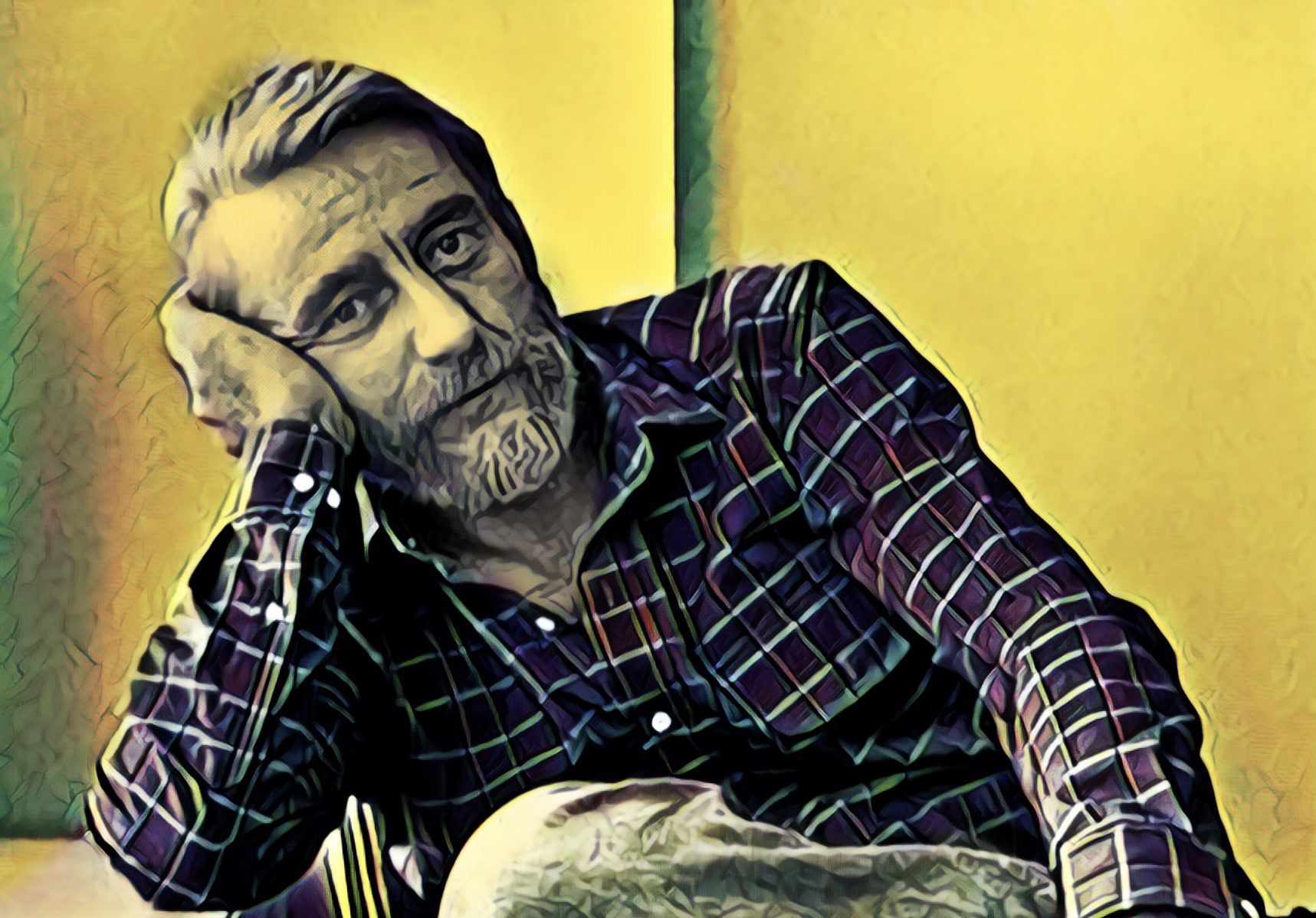
He has been known as Charlemagne, or Charles the Great, since the Norman invasion of 1066. Before that he was called Charles I, even though his grandfather was also a Charles. The leaders of the Franks were not so quick about declaring themselves kings. The previous Frankish dynasty were the Merovingian Kings, better known at the time as the “Do Nothing” kings. Perhaps the title of king had lost its luster. Charlemagne is also my 34th great grandfather.
Charlemagne’s grandfather was known as “Charles the Hammer”, it almost sounds like a pro-wrestler’s name. He was a very successful warrior. The ruling title was actually called “the Mayor of the Palace” the king might live in it, but Charles the Hammer ruled as mayor. For some reason the Carolingian dynasty also liked the family name of Pepin. Charlemagne’s father, son and uncle had that name. Maybe it sounds better in French.
So far, all of my royal ancestors have been connected through my mother’s Norwegian roots. But today I made a breakthrough, after years of collecting data on poor German farmers, and perhaps better off city burghers, I found a marriage to a minor count. A minor count can lead to a Duke, and generations of counts and dukes. I haven’t found any German kings or princes yet, but I’m sure they are there.
One of the counts had marriage connections to the Franks and suddenly I was related to Charles the Hammer, Pepin, and Charlemagne. I love the sudden explosion of data. I’ve taken it back even further than the Franks. I’ve found a direct connection to a Roman Senator of Gaul, around 300 AD. That’s 150 years before Rome fell.
So why was Charlemagne so great? Well, the first rule is that the victors get to write the history. They call Charlemagne the father of Europe. The shape of the countries in Europe has been based on the provinces of his empire. But he was also a great reformer. He actually passed laws on education and literacy, he provided guidelines on how to run a business and keep standardized records, he promoted the use of lowercase letters, he ruled for almost 50 years and he was not a “do nothing” king.
It would be somewhat of an error to think of him as French, he was Frankish, and that tribe had come from western Germany, and pushed the native Celts further west. And the Celts had pushed the Bronze Age Picts in the same manner. When the Romans came over the Alps and up from the coast, they ruled for over 600 years, creating a blended population. But the Romans rarely crossed the Danube, on the other side was barbaric Germans, dense forest, and death to their Legions. Charlemagne crossed the Danube easily and united much of even Eastern Europe.
It’s no wonder that the Pope crowned him the first Holy Roman Emperor in over 300 years. Charlemagne didn’t know it, but the Pope even expected him to rule over Constantinople. He didn’t go there.
We don’t know where he was born, but we know he died in Aachen and was placed in his tomb in Aachen Cathedral. Apparently he was entombed sitting on a throne for the first 200 years. Then they opened the tomb and laid him flat. Years later they put him in an elaborate casket where he remains. At one point they took measurements. He was between 6 foot and 6 foot 5. Above the 99 percentile of the time.
My 34th great grandfather died on Jan. 28, 814. I really do think he was great.


Theodoric the Great
This is a story about my 44th great grandfather. I suppose I can call him “granpoppa”. But it’s not necessarily going to be a good story. Sometimes people live in times that are “significant”, sometimes we are not just along for the ride, but we are active players in the unfolding of history.
Unfortunately, history has gotten a bad reputation. It’s all about dates and places, it’s impossible to know them all, and history keeps happening, so it just get worse. Often people will say they can only remember two dates from history. One is 1066, when William the Conqueror invaded England, and the other is the Fall of the Roman Empire in 465.
This is a story about the fall of the Roman Empire, and it is about the dates and places, but mostly it’s about people. Technically it’s about my “granpoppa”, and the people that he knew.
The big picture of the time was that this was coming near the end of a thousand year cycle of political, social, and artistic development. I don’t think that anyone knew it was coming to an end, but then we never do. The Roman Empire was enormous, it stretched from England to Egypt, from Spain through Turkey, it would be tough to manage even with today’s modern technology. The development of Roman roads was a huge step forward, but you could only travel by foot or horseback. In fact, the government had attempted to split the government into two centers, Rome and Constantinople.
Rome was the Western Empire, and it had the Vatican and the history of the Empire. Constantinople was a newer city, founded by a very forward thinking Emperor Constantine. It sat on the crossroads between the Black Sea and the Mediterranean Sea for shipping traffic, and also between the land bridge of Europe and Asia. On paper it would seem that having two Emperors would split up the load, and provide continuity from end to end in the Empire.
The problem is always about people, their experience, and their egos. The two emperors did not always bring the same qualities to the job. The western empire had stopped providing the basic Roman soldier that was culturally linked to the Empire. They had filled the first line soldiers, and most of the leaders, with German mercenaries. It was a bad decision to trust the safety of the Empire to people that were hired hands.
So, where does my 44th great grandfather come in? Theodoric was the son of a barbarian leader. His father was influential, so much so that the Eastern Roman emperor had demanded that his son become a hostage in the city of Constantinople. Theodoric was almost a Hollywood “Star Wars” kind of epic character. Theodoric came to a very cultured city at eight years old. He was given the best care, and was taught to read and write, and exposed to history and culture.
Was he a German barbarian, or was he a citizen of the empire? Or was he given the tools to take down an empire?
It all came to a head when the western empire had a very weak and inexperienced leader. The German mercenary leader Odovacar easily dethroned the sixteen-year-old emperor Romulus Augustalus, because he could. Odovacar walked into the city unopposed. However, even if he called himself a “king”, Odovacar was always under the rule of the Eastern emperor.
This did not impress the the Emperor Zeno, he was always trying to play the German barbarians one against the other. When Theodoric went back to his home, he rose to the leadership of the Visigoths tribes. Not only that, he began to blend in the Vandals, the Ostrogoths, and other groups like the Gepids. Emperor Zeno looked for someone to bring Odovacar under control. He went so far as to order Theodoric to attack Odovacar.
At first Theodoric was defeated by Odovacar in 490, but later that year the tables were turned and Odovacar was soundly beaten. Both sides kept their armies in the field for several years. Finally, in early 493, Theodoric took the strong city of Ravenna, a place that Odovacar often went after he lost a battle. On March 15, 493, a banquet was organised in order to celebrate a treaty that would end the conflict. At this feast, Theodoric, after making a toast, killed Odoacer. The Ides of March occurs again in Roman history.
In the end, Theodoric solved his political problems with the diplomacy of a sword blow. Emperor Zeno was at first thrilled, then he realized that Theodoric was ten times the threat to the Eastern Empire.
Theodoric drew his sword and struck him on the collarbone. Along with Odoacer, Theodoric had the betrayed king’s most loyal followers and slaughtered them as well, an event which left him as the master of Italy.
Theodoric was driven to find land for his people. The Huns had pressed on them from the East, and the Western empire did not want to have barbarians living in the empire, they could fight for them, but they didn’t want to live with them.
There are some interesting ideas of why Rome fell. 1. Lead Poisoning, 2. Decline of Civic Virtue and Adoption of Christianity, 3. Military, Political and Economic Decline, and 4. Disease. That’s a lot to digest and think about.
I think Rome fell because people made decisions, sometimes good, sometimes not. My 44th great grandfather Theodoric was there at the center of it.