Latest renderings

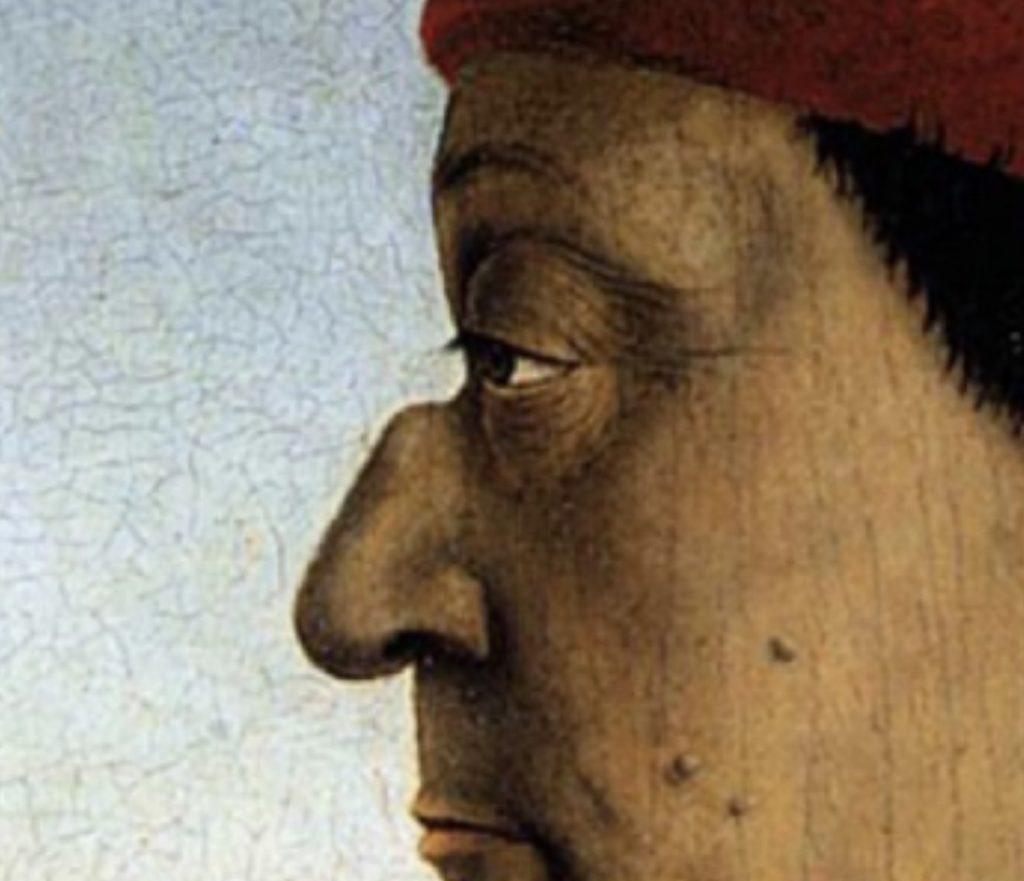
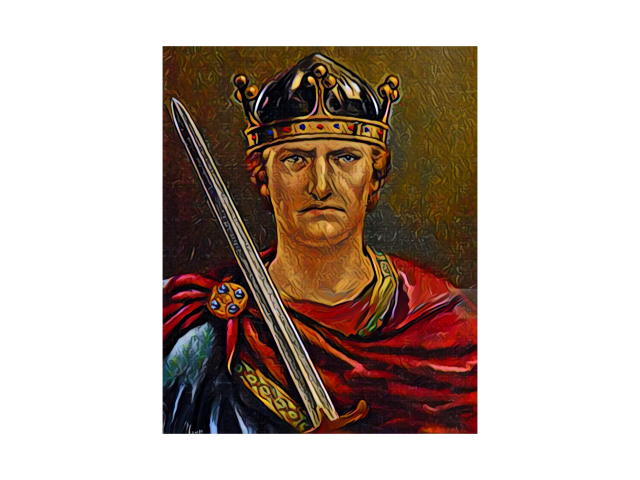
I have been looking at ancient sculpture, recognizing that most were painted realistically afterwards. Thinking that rendering in color might bring something more to the Stone.

Calpurnia
Pompey
Julia Caesar, Pompey’s wife and Julius Caesar’s daughter
Julius Caesar
Julius’s mother
Posted in Commentary | Leave a comment

Lucius Cornelius Sulla Felix

Most commonly know as simply “Sulla”. So much has been written about Rome, the Republic and the Empire. Fortunately there are a lot of surviving documents written during and soon after the events being described. Unfortunately, the documents written about specific characters generally fall into two camps, 1) “they were the best for Rome”, 2) “they were the worst for Rome”. I suppose things haven’t changed much.

My 68th great grandfather owned the word “dictator”. I think it was first applied to him. For centuries Rome was a republic, dedicated to the concept that good government was made by having a concensus opinion developed by representatives. It still is a sound idea. Of course their choices of representatives excluded a bunch of folk. They did have plenty of wealthy families having senator seats, and of course the military, and the great landholders. The common folk? Not so much.

Was Sulla really my great grandfather? Who knows, he was someone’s. I have reason to believe the data that led to him. I didn’t know where it would lead. After hours of clicking the button that said. “He was the son of…”, I would come to the end of the line. Then I would back up to another great grandfather, and click more buttons. The data wasn’t there for some lines. This particular line led to Rome, and considering that thousands have studied Roman lineage, and that hundreds of Roman writers have written about their heritage, well, the data seems better than average, so yeah, Sulla seems to be my great grandfather.

So what do I know about Sulla, more than that he was a dictator? I’ve seen him portrayed in movies, he seemed pretty harsh. But then, here is a man that went against everything that he society held dear. He seized control! He had a better plan for government, he would make the decisions, it would be done his way. Was he egotistical? Or was he responding to incompetence?

In either case, his actions set the stage for future leaders. You could take control, it was possible to undo structure. It could lead to Empires with an Emperor. In fact there is no doubt that years later Julius Caesar would say, “if Sulla can do it, so can I!”

I suppose every strong man that overthrows democracy can look to Sulla as the inspiration, because it started with him. We had lots of experiences with warlords and kings, but they generally came from a history of chaos and anarchy. This was different. The government might have been broken, but the structure to recover was there.

There are several books written about the person of Sulla. Now that I have this curious connection I am inspired to develop a Kindle account.

Lucius Cornelius Sulla Felix
“The Dictator“
Posted in Commentary | 3 Comments

This is a Sad Tale

There was a people that were displaced, and finding it hard to make their way in the world. In the east there were hordes of men on horseback that were killing and enslaving the survivors. Each year they seemed to be pressing valley by valley, forcing people to flee West into the lands of the hated Romans.

There wasn’t a specific reason for the hate, except that the Romans were filled with themselves as the rulers of the world. And that they looked down on the people, calling them barbaric. They sat on one side of the Great River, in their log forts, traded small amounts, but kept the people from rich lands, and safety from the real barbarians in the East.

One of the only methods of gaining entry was to sell your fighting skills in their army. That way you could get a small piece of land secured on the other side of the river, to raise your family.

You fought, bled, and died for Rome, but she did not honor you. Many of the mercenaries rose in the ranks, became generals commanding legions, but not Roman legions. One such general was my 47th great grandfather Theodemir, who was King of the Franks, living in Gaul. He fought for Rome, and the many political factions in the Senate. His father was a Roman Consul, Flavius Richomeres, leader of Rome. But Richomeres had married Ascyla of the Franks, his mother. There was bare recognition of his barbarian wife and child.

When Flavius Richomeres died, Ascyla went north to live with her son. As King of the Franks, Theodemir worked hard to get as many of his people on the safe side of the river, away from the barbarians of the East. Factions in Rome were not happy about this. Eventually Theodemir aligned himself with Senators that fell out of favor, and an army was sent to Gaul to punish the Franks. The memory of lost Roman legions fighting in the Teutoburg Forest came back to them, Emperor Varus had led three Legions to their deaths 400 years earlier. Rome still remembered this. Theodemir was captured, shackled, and brought to Rome, along with his family, and his mother, the widow of the former Consul of Rome.

The friends in the Senate were quiet, they were barbarians after all. The entire family was executed by sword August 14, 414. My 47th great grandfather and my 48th great grandmother gave their lives to Rome, but they were not honored.

Posted in Commentary | Leave a comment

Count Godefroi I, the Captive

Godfrey I (died 1002), called “the Prisoner” or “the Captive” ( le Captif), sometimes the Old (le Vieux), was the count of Bidgau and Methingau from 959. and the sovereign count of Verdun in 963 to his death. He was also my 32nd great grandfather.

It seems that a few of my relatives have earned a sobriquet, a nickname. Some were interesting twists “Barefot” was actually “Bareleg” because he had taken to wearing kilts. “Bluetooth”, because he had a dead tooth root, or that he loved blueberries, perhaps both. Some even had the phrase “the Great”, although that appears to have come later in their time. I don’t exactly see a friend actually say, “Oh, look, here comes “the Great!”.

Then there are the very misleading ones, “the Unready”, which apparently was because he took bad advice. Or even “Hardrada” because his advice was hard. Worse yet, “the Simple”, lets hope that he wasn’t also vicious.

This relative of mine was apparently called “the Captive” or “the Prisoner”. To his face!

The whole cultural to the royals at this time was war and military showmanship. And this was not about going around the countryside “righting wrongs” and freeing damsels in distress. In fact, I’ve read at least a dozen times when my relatives were being carted off as booty. From both sides! The royal Houses basically tried to keep their power by having enough children to marry with political advantages.

And when that didn’t work they simply attacked.

The spiritual leader at the time, the Pope, was constantly trying to put out fires. He was beseeched from all sides to end the senseless fighting. Well, technically, he was only beseeched by the losing side. He didn’t have much power, apart from ex-communicating, but the Pope did that quite often. Sometimes it worked.

Much has been written about the reasons for the Crusades, unfortunately, much has been poorly researched, and they target other agendas. But one thing was apparently correct. The Pope saw that asking the royal Houses to go fight in a distant place would keep them from fighting each other in their own countries. Unfortunately they fought each other in the distant lands as well.

My 32nd great grandfather apparently was on the losing side of at least three conflicts in order to earn the sub-title “the Captive”. It was lucky that he wasn’t killed. It’s true that battles were very bloody, but unless it was in the heat of a battle, or being drowned by running away, most royals survived the battles.

There was good reason for this. Royals either had money, or they could raise money, and soldiers were not paid a salary, they took their wages in loot or ransoms, provided they won.

Another thing I learned is that the development of better armor extended lives. Better armor meant encasing the whole body in steel, and it was very difficult to recognize who was who on the battlefield, so there was lots of flags around to let people know who to fight. Should you stray from the flags you could always be known for the emblem on your shield, if you lost your shield then your cloak had the same emblems, and perhaps the crest on your helmet had your symbol.

The picture that I am painting is that the two sides would face each other as different sides in a conflict. Yes, there might have been significant “reasons” for the conflict… but one thing is for certain. Over there, under the colorful flags, were people that if I can capture, would set me up for life, and I wouldn’t have to fight these wars anymore. Kill or wound anyone getting in the way, but head for the colorful royals and make them your prisoner.

Another painful reality is that the price desired was always more than what was available, so you had to keep your prisoners until the sum was raised.

My great grandfather was captured three times and spent a total of fifteen years in three different dungeons. Perhaps some treated him better than others.

I don’t know if my great grandfather was a good man, losing doesn’t mean that you were bad, it’s just that it was bad for you. Walking around around with the nickname or “the Captive”, not only reminded you that you picked the losing side, but it also meant that your family, your house, and your lands, had to raise lots of money to return you to your castle on the the hill.

That’s a life long burden.

Posted in Commentary | Leave a comment

Latest Sketchbook work…

Ragnar Sigurdsson
My 34th great grandfather
Vseslav Bryachislavich, the Sorcerer of Kiev.
My 26th great grandfather.
Saint Olga Elena Prekrasa
My 29th great-grandmother.
Fulk V, King in Jerusalem.
My 26th great grandfather.
Bertrade Montfort.
My 25th great grandmother.
Posted in Commentary | Leave a comment

Dusk

Dusk brings quiet. The noise of work slows, even the birds seem to shelter in place. We are still sheltering in place. One early evening, after about a month of sheltering, I heard what appeared to be a coyote. It seemed very close, close enough to upset my dog, so he barked. I’ve heard them before in the neighborhood, so it’s not unusual, but this was close. Then dusk took over and it was quiet.

The next day, about the same time, a few minutes after sunset, I heard the same clear call, two or three times, then it was quiet again. The following day it was the repeated. Now I had figured that a local dog had learned the howl, that’s why it was so close, and now a few other dogs were answering the call. My dog just barked.

This has been going on for about a month, same time, same duration. There have been times when I thought maybe it’s not a dog, or a coyote. It was too plaintiff, there was a subtle ache to the timbre.

This evening we took a short walk through the neighborhood at dusk. The dog needed his walk, we had gotten about two blocks from home when I heard the first howl, I had learned the voice, I recognized the pitch and volume. It came from the house directly across the street from where I was standing. It came from the back porch that I could see. It came from the man standing on the porch, the local neighbor.

His howl was promptly answered by yet another neighbor three or four houses down, and yet another neighbor two or three streets away. For two or three minutes I was surrounded by howls from every corner of the compass, and then dusk took over and it was quiet again. My wife howled softly.

The shelter in place does keep you safe, but it also brings stress.

Posted in Commentary | Leave a comment

Fulk, King in Jerusalem

He was my 25th great grandfather, also known as Fulk the Younger. He was the Count of Anjou (as Fulk V) from 1109 to 1129 and the King of Jerusalem from 1131 to his death. During his reign, the Kingdom of Jerusalem reached its largest territorial extent.

Yes, my great grandfather was a Crusader, not only he, but so were more than two dozen of my great grandfathers as far as I can tell. At this point I think it is important to rant a little bit. It is certainly not politically correct to support Crusaders. Not only were they vicious killers, but they went to a country to murder the inhabitants and set up their own kingdoms. And they didn’t really discriminate, if you didn’t speak French, German, English, Italian, Spanish you were potentially slaughtered. Thousands of Greeks, Jews and native born Christians were victims. This is not in all cases, but it happened. I recall reading about the fall of Jerusalem, where the Crusaders killed so many that the blood ran in the streets and collected in the lower parts of the city, where it was up to the horses knees.

Yes, I’m glad this was in the past.

So the rule for critical thinking is not to judge historical individuals out of their own times. That’s pretty hard unless you make the effort to study the times.

In Christian history there was a period of “going on a pilgrimage”. We have proof of that in English literature with Canterbury Tales by Chaucer. And an even bigger pilgrimage was going on the Camino de Santiago, the road to Saint James Cathedral in Compostela. This makes for some interesting reading. There is even a current movie about a father undertaking this journey. It may have started earlier but written records began appearing around 1000. Traveling to visit the grave of Saint James was an act of piety.

It didn’t take long that hundreds of pilgrim were heading to the Holy Land. There had been dozens of monks that had made the trip, but now there were crowds going. It didn’t take long before the local authorities began to abuse these wayfarers. The authorities were not always Christian.

The first crusades were from 1096-1099, the first was often called the People’s Crusade. Led by a French priest called Peter the Hermit, it was mostly comprised of the poor or Europe. With few actual soldiers they passed through Germany, committed many massacres, largely anti-Jewish, and when the Emperor at Constantinople got rid of them they were set upon by the Seljuk Turks and they were massacred, all 60,000, miles before they got to the Holy Land.

The Princes Crusade was the second part of the first crusade. It was better led by five basic leaders of Europe, Raymond IV, Count of Toulouse; the Italo-Normans Bohemond of Taranto and his nephew Tancred; the brothers Godfrey of Bouillon and Baldwin who led forces from Lotharingia and Germany.

The total amount of people attacking was well over 100,000. By chance the main Seljuk army was busy somewhere else, so the Crusaders were successful and set up at least four principalities, the County of Edessa, the Principality of Antioch, the Kingdom of Jerusalem and the County of Tripoli

The intention was to rule the Holy Land and provide protection to pilgrims.

According to Wikipedia…”The causes of the First Crusade are widely debated among historians. While the relative weight or importance of the various factors may be the subject of ongoing disputes, it is clear that the First Crusade came about from a combination of factors earlier in the 11th century in both Europe and the Near East. In Western Europe, Jerusalem was increasingly seen as worthy of penitential pilgrimages. The Seljuk hold on Jerusalem was weak, and the group lost the city to the Fatimids, and returning pilgrims, such as the Great German Pilgrimage of 1064–1065, reported difficulties and the oppression of Christians. The Byzantine need for military support coincided with an increase in the willingness of the western European warrior class to accept papal military command. Western Christians wanted a more effective church and demonstrated an increased piety. From 1000 there was an increasing number of pilgrimages to the Holy Land using safer routes through Hungary. The knighthood and aristocracy developed new devotional and penitential practises that created a fertile ground for crusading recruitment.

The motivation of the Crusaders is unknown. There may have been a spiritual dimension seeking absolution through warfare. At one time historian Georges Duby‘s theory that crusades offered economic and social opportunity for younger, aristoctaic landless sons was popular amongst historians but this was challenged because it does not account for the wider kinship groups in Germany and Southern France. Gesta Francorum talks about the opportunity for plunder and “great booty”. Adventure was another explanation including the enjoyment of warfare. As was the fact that many crusaders had no choice as they obliged to follow their feudal lords.”

There are many scholars that have quietly written about the positive aspects of the Crusades, but I’ll leave that to your own research. Back to my 25th great grandfather.

Fulk was born at Angers, between 1089 and 1092, the son of Count Fulk IV of Anjou and Bertrade de Montfort. I have already written about how Bertrade deserted Fulk in 1092 for Philip I, who she bigamously married.

He became count of Anjou upon his father’s death in 1109. In the next year, he married Ermengarde of Maine, cementing Angevin control over the County of Maine. We don’t know if he got a divorce from Bertrade.

Fulk went on crusade in 1119 or 1120, and became attached to the Knights Templar (Orderic Vitalis). He returned, late in 1121, after which he began to subsidize the Templars, maintaining two knights in the Holy Land for a year. Much later, Henry arranged for his daughter Matilda to marry Fulk’s son Geoffrey of Anjou, which she did in 1127 or 1128.

Baldwin II had no male heirs but had already designated his daughter Melisende to succeed him. Baldwin II wanted to safeguard his daughter’s inheritance by marrying her to a powerful lord. Fulk was a wealthy crusader and experienced military commander, and a widower. His experience in the field would prove invaluable in a frontier state always in the grip of war.

However, Fulk held out for better terms than mere consort of the Queen; he wanted to be king alongside Melisende. Baldwin II, reflecting on Fulk’s fortune and military exploits, acquiesced. Fulk abdicated his county seat of Anjou to his son Geoffrey and left for Jerusalem, where he married Melisende on 2 June 1129. Later Baldwin II bolstered Melisende’s position in the kingdom by making her sole guardian of her son by Fulk, Baldwin III, born in 1130.

Fulk and Melisende became joint rulers of Jerusalem in 1131 with Baldwin II’s death. From the start Fulk assumed sole control of the government, excluding Melisende altogether. He favored fellow countrymen from Anjou to the native nobility. The other crusader states to the north feared that Fulk would attempt to impose the suzerainty of Jerusalem over them, as Baldwin II had done; but as Fulk was far less powerful than his deceased father-in-law, the northern states rejected his authority. Melisende’s sister Alice of Antioch, exiled from the Principality by Baldwin II, took control of Antioch once more after the death of her father. She allied with Pons of Tripoli and Joscelin II of Edessa to prevent Fulk from marching north in 1132; Fulk and Pons fought a brief battle before peace was made and Alice was exiled again.

In Jerusalem as well, Fulk was resented by the second generation of Jerusalem Christians who had grown up there since the First Crusade. These “natives” focused on Melisende’s cousin, the popular Hugh II of Le Puiset, count of Jaffa, who was devotedly loyal to the Queen. Fulk saw Hugh as a rival, and it did not help matters when Hugh’s own stepson accused him of disloyalty. In 1134, in order to expose Hugh, Fulk accused him of infidelity with Melisende. Hugh rebelled in protest. Hugh secured himself to Jaffa, and allied himself with the Muslims of Ascalon. He was able to defeat the army set against him by Fulk, but this situation could not hold. The Patriarch interceded in the conflict, perhaps at the behest of Melisende. Fulk agreed to peace and Hugh was exiled from the kingdom for three years, a lenient sentence.

However, an assassination attempt was made against Hugh. Fulk, or his supporters, were commonly believed responsible, though direct proof never surfaced. The scandal was all that was needed for the queen’s party to take over the government in what amounted to a palace coup. Author and historian Bernard Hamilton wrote that Fulk’s supporters “went in terror of their lives” in the palace. Contemporary author and historian William of Tyre wrote of Fulk “he never attempted to take the initiative, even in trivial matters, without (Melisende’s) consent”. The result was that Melisende held direct and unquestioned control over the government from 1136 onwards. Sometime before 1136 Fulk reconciled with his wife, and a second son, Amalric was born.

Securing the borders

Jerusalem’s northern border was of great concern. Fulk had been appointed regent of the Principality of Antioch by Baldwin II. As regent he had Raymond of Poitou marry the infant Constance of Antioch, daughter of Bohemund II and Alice of Antioch, and niece to Melisende. However, the greatest concern during Fulk’s reign was the rise of Atabeg Zengi of Mosul.

In 1137 Fulk was defeated in battle near Baarin but allied with Mu’in ad-Din Unur, the vizier of Damascus. Damascus was also threatened by Zengi. Fulk captured the fort of Banias, to the north of Lake Tiberias and thus secured the northern frontier.

Fulk also strengthened the kingdom’s southern border. His butler Paganus built the fortress of Kerak to the east of the Dead Sea, and to help give the kingdom access to the Red Sea, Fulk had Blanchegarde, Ibelin, and other forts built in the south-west to overpower the Egyptian fortress at Ascalon. This city was a base from which the Egyptian Fatimids launched frequent raids on the Kingdom of Jerusalem and Fulk sought to neutralise this threat.

In 1137 and 1142, Byzantine emperor John II Comnenus arrived in Syria attempting to impose Byzantine control over the crusader states. John’s intention of making a pilgrimage, accompanied by his impressive army, to Jerusalem alarmed Fulk, who wrote to John pointing out that his kingdom was poor and could not support the passage of a large army. This lukewarm response dissuaded John from carrying through his intention, and he postponed his pilgrimage. John died before he could make good his proposed journey to Jerusalem.

Death

In 1143, while the king and queen were in Acre, Fulk was killed in a hunting accident. His horse stumbled, fell, and Fulk’s skull was crushed by the saddle, “and his brains gushed forth from both ears and nostrils”, as William of Tyre describes. He was carried back to Acre, where he lay unconscious for three days before he died. He was buried in the Church of the Holy Sepulchre in Jerusalem. Though their marriage started in conflict, Melisende mourned for him privately as well as publicly. Fulk was survived by his son Geoffrey of Anjou by his first wife, and Baldwin III and Amalric I by Melisende.

Legacy

According to William, Fulk was “a ruddy man, like David… faithful and gentle, affable and kind… an experienced warrior full of patience and wisdom in military affairs.” His chief fault was an inability to remember names and faces.

William of Tyre described Fulk as a capable soldier and able politician, but observed that Fulk did not adequately attend to the defense of the crusader states to the north. Ibn al-Qalanisi (who calls him al-Kund Anjur, an Arabic rendering of “Count of Anjou”) says that “he was not sound in his judgment nor was he successful in his administration.” The Zengids continued their march on the crusader states, culminating in the fall of the County of Edessa in 1144, which led to the Second Crusade (see Siege of Edessa).

Family

In 1110, Fulk married Ermengarde of Maine (died 1126), the daughter of Elias I of Maine. Their four children were:

Geoffrey V of Anjou (1113–1151), father of Henry II of England.

Sibylla of Anjou (1112–1165, Bethlehem), married in 1123 William Clito (div. 1124), married in 1134 Thierry, Count of Flanders.

Matilda of Anjou (1106–1154, Fontevrault), married William Adelin; after his death in the White Ship disaster of 1120, she became a nun and later Abbess of Fontevrault.

Elias II of Maine (died 1151)

His second wife was Melisende, Queen of Jerusalem

Baldwin III of Jerusalem

Amalric I of Jerusalem

It’s possible that this is Bertrade before she left him.
Yes, he was a Plantagenet, with future English kings in the making.
Posted in Commentary | Leave a comment

Bertrade de Montfort

She was my 25th great grandmother, and a very interesting lady. First, she must have been extremely beautiful, and secondly she didn’t seem to mind being a bigamist. She was born in 1070, and lived to 14 February 1117.

She was the daughter of Simon I de Montfort and Agnes of Evreux. Her brother was Amaury de Montfort.

The chronicler John of Marmoutier would recount:

‘The lecherous Fulk then fell passionately in love with the sister of Amaury de Montfort, whom no good man ever praised save for her beauty.”

Bertrade and Fulk were married, and they became the parents of a son, Fulk, who became King in Jerusalem.

However, in 1092 Bertrade left her husband to go live with King Philip I of France. Philip married her on 15 May 1092, despite the fact that they both had spouses that were living. He was so enamoured of Bertrade that he refused to leave her even when threatened with excommunication. Pope Urban II did excommunicate him in 1095, and Philip was prevented from taking part in the First Crusade.

According to Orderic Vitalis, Bertrade was anxious that one of her sons succeed Philip, and sent a letter to King Henry I of England asking him to arrest her stepson Louis. Orderic also claims she sought to kill Louis, first through the arts of sorcery and then by poison. Whatever the truth of these allegations, Louis succeeded Philip regardless.. William of Malmesbury says:

“Bertrade, still young and beautiful, took the veil at Fontevraud Abbey, always charming to men, pleasing to God, and like an angel.” Philip died 29 July 1108. She lived on until 1117.

Her son from her first marriage, Fulk V of Anjou, later became King of Jerusalem iure uxoris. The dynasties founded by Fulk’s sons ruled for centuries, one of them in England (Plantagenet), the other in Jerusalem.

Children

With Fulk IV, Count of Anjou:

Fulk of Jerusalem, Count of Anjou and King of Jerusalem (1089/92–1143)[2]

With Philip I of France:

Philip of France, Count of Mantes (living in 1123)[3]

Fleury of France, Seigneur of Nangis (living in 1118)[4]

Cecile of France (died 1145), married (1) Tancred, Prince of Galilee;[5] married (2) Pons of Tripoli[

Bertrade with Philip
Perhaps after Philip died and she went to a nunnery.
Posted in Commentary | Leave a comment

So, I’m learning a lot…

Who knew that heraldry is a thing. I mean, as a graphic designer I was certainly aware of the concept, but I treated it more like a primitive logo. Not so… it has rules, and structure, and meanings… very complicated.

Another thing I learned is the reality of tribes. In Scotland you can still speak of clans, but I don’t think modern Germany or France has a clue about tribal structure. Apparently it was almost as important as the Native Americans, if you came from the Crow nation you knew you were a Crow. People in Europe today don’t know if they are Goths, Ostrogoths, Rus, Vandals, Gepids, Visigothic, Alamanni, Heruli, Jutes, Fresii, Burgundians, Churusci, Cimbri, Suebi, Geats, Marcomanni, Salians, or the Ubii. This is just a small sampling of the tribal names that I’ve run across in reading Roman history. Google appears to have well over 100 distinct tribal names, and generally where and when they lived. I’m pretty sure they are all gone now, although a few live on in relation to the land. There are still Swabians because the countryside is Swabia, like there are Lombards because they lived in Lombardy. In fact, in other languages they do not use the word “German”, but use “Alamanni”, or a variation. I think I insulted a friend because I suggested Charlemagne wasn’t French, he was a Frank. French didn’t exist for quite a while.

So now I know that fifteen straight great grandparents were kings/queens or warlords of the Alamanni. And 22 straight great grandparents were leaders of the Herulii. I don’t think that much DNA information has survived all this time, but it means a little more to me when I read about them as historical characters. I’m partly Alamanni, but not Marcomanni. I’m partly Herulii, but not Burgundian. At least so far as I know.

Like I said, I’m learning a lot.

Rus
Wessex
Posted in Commentary | Leave a comment

Royal Crests

These are the crests of the lines that I have recently discovered in the genealogy of my father, and my mother. It turns out there is an entire field of study in the creation and meaning of crests. I have some reading to do.

Ha! And the first thing I learned is that crests is mostly wrong. Better to say Coat of Arms, although that’s not completely right because it really refers to an actual coat with the devices. Oh well…Coat of Arms is pretty good.

Posted in Commentary | Leave a comment