Fulbert de Beine de l’Aigle, 1st baron de l’Aigle, the founder of the castle and dynasty of l’AIGLE.
So this story is about a family that was on the edge of history. Fulbert was a common name in Normandy. There have been a number of attempts to research back beyond 1000 AD.
We know that a castle was built in l’Aigle, around this time, as well as a church. No trace of the castle, but some of the early church can still be seen in the bell tower. Most of the church was built in 1500s.
The reason for the castle appears to be in controlling the traffic on three rivers that are nearby. Why the area was known as “the eagle”, is unknown.
William, the illegitimate son of Robert I, of Normandy was considering a bid to assume the crown of England. It was widely known that a successor was not firmly in place.
The Danes had ruled England for almost fifty years, and Edward the Confessor had brought the House of Wessex back to the throne. King Harald of Norway thought that he should be king. King Harold Godwinson actually took the crown for a few weeks. Harold fought Harald, killed him, then had to go fight William at Hastings.
William had the disadvantage of invading by sea. If Harold could get the upper hand, he could push William into the Channel. The problem is that Harold had just marched his men down from York, where 2/3rds of his best “housecarls” had died fighting Harald at Stamford Bridge.
Considering everything, King Harold might still have won, except for an arrow in the eye. The rest of the Anglo-Saxon army collapsed and ran to their homes. Several Saxon lords had gambled on William winning, even helping him with river crossings, so they were left alone.
Fulbert’s son Engenulphe, was a leader in William’s army, and he died chasing the fleeing Saxon’s after Harold’s death. Fulbert had also died in 1066, but not in the battle. He had stayed in Normandy, sending his son to fight.
So now Engenulphe had a daughter named Bertha. She was born in the newly built castle in Normandy, the daughter and granddaughter of the Lord of Normandy. She probably could have stayed there- after all, her father had died chasing the enemy near Hastings. Instead, she came to England, the daughter of a heroic Norman. She was 26 years old in 1066. She was going to part of the new ruling class.
She met Henry de Ferrieres in England. She may have known of him from Normandy, he was four years older. Henry had made the decision that if they won the battle, he would stay in England. Henry just had to ask William what part of the country would he be allowed to rule. Most of the country was available to be seized, only a few Saxon lords kept their land.
In Tutbury, Staffordshire, there is a ruin called Castle Hill that is most likely the castle that Henry built, and he died there in 1101. Bertha lived almost another thirty years and died in nearby Darley, known today as Derby.
Bertha’s son and grandsons continued building Norman Castles throughout England. Through marriage and alliances, the family spread through England. Oakham Castle in Rutland, Arundel Castle in Sussex, Alnwick Castle, in Northumberland, and Appleby Castle in Westmorland, to name a few, were all homes to the descendants of Fulbert de Beine de l’Aigle.
Fulbert de Beine de l’Aigle is the 32nd great grandfather of my grandkids Isaiah, Abby, and Noa.
My paternal haplogroup is Haplogroup A, which was centered in and around Kenya about 250,000 years ago, at least this is what the science of DNA tells me. Sometime around 76,000 my ancestors moved north near the Horn of Africa as the haplogroup DE-M145.
Something dramatic must have happened because 3,000 years later my halogroup changed to E-M96. There is one theory that some folks crossed over to Asia for awhile, then decided it was too tough and came back home to Africa.
E-M96 morphed into E-M78 and around 23,000 years ago they left Africa and started heading up the east coast of the Mediterranean to Bulgaria. It is also possible that some E-M78s came directly from a North Africa as Pre-Sea Peoples, invading Europe by boats.
Finally around 11,000 years ago, the haplogroup morphed into my current E-V13 group.
My maternal haplogroup was similar. In and around Kenya, 160,000 years ago I was haplogroup L. Then in upper Egypt, around 65,000 years ago it was L3. Then it was N in Saudi’s Arabia 59,000 years ago. About this time we went back to Africa.
57,000 years ago we left Africa for the last time and went to the Mid-east as haplogroup R. We stayed there quite awhile. Somewhere about this time a few of my mothers were Neanderthals. I have 3 to 4% Neanderthal markers.
Around 18,000 years ago the maternal haplogroup morphed into H in the Caucasian mountains, and then as Aryans went to India and Europe. I suppose going to Europe through the Balkans they met my paternal haplogroup E-V13. Haha!
Here is what I believe, we probably went west, following the edge of the retreating glaciers into Europe, as Hunter gatherers. Our primary hunting style came from Africa. We were not fast, but we were steady. Nearly all of our game could not sweat. They could run faster, but we could track them and keep up the hunt because while we ran we could cool down by sweating. They could not! Eventually they would lay down exhausted and we could dispatch them with a rock if necessary. Of course we also developed sharp sticks with flakes of stone.
It’s also possible that the women who stopped in the Fertile Crescent for thousands of years had picked up the concept of farming, and we should thank them.
Farming, led to cities, cities led to storage silos, silos led to writing systems and defensive walls. Defensive walls led times of peace to make art, write poetry.
Yes, sure… I understand the internet. At one point in time I even taught the basic history in a few of my classes.
I didn’t know at the time, but I even lived the prehistory of the internet.
War is a curious thing, yes it is bloody, scary, and full of mayhem. But it is also the cause of much of our art, literature, and things that we cherish as a civilization. For example, in the US we have something called the Interstate highway system. Designed freeways that links both coasts, which are thousands of miles from each other.
One might think it was designed for trade, and yes, it is used for trade. One might also think it is used to take families on vacations to other states. It is used for that as well.
But in the designs for lane widths, and overpasses, it is designed to handle Sherman tanks on a trailer. President Eisenhower had intimate knowledge of the German Autobans and he felt the need to protect his country with the same type of system, and when he became President he helped to create the interstate highways that we use today. It doesn’t matter that we now have airports.
In the same way we captured some Nazi scientists that experimented in rocket design. Sending the first inter-continental rocket/missile to our enemies (Soviets) was an important objective. At first we had the idea that Virginia or maybe Maine was a good launch base, but then Soviet subs could knock them out.
So add a little more fuel and the missile silos could all be in the mid-west under the corn and wheat fields. Once that was done, the Soviets had their own inter-continental missiles that could target our silos. Someone looked at the map and realized that if the missiles were launched it would cut our country in half. The West coast would not be able to communicate to the East coast. Since we were talking about land lines, the decision was made to install hundreds of switches behind “node” or hubs of communication connections. Looking from above it looked like a puzzle, or a “web” of connections. If a missile blew up this part, the signal would wrap around and go through another node. More missiles? More nodes!
This system was Arpanet, and in the Army I used it everyday for cryptographic communication. The Pentagon realized that putting a node at all the universities around the nation was an easy way spend defense money. Time went on, satellites went up.
Soon, the Pentagon realized that the satellites duplicated the ground system with better technology. So they gave the Arpanet system to the education systems where the most “nodes” were. For a few years they had fun sending messages from one .edu to another .edu with green blinking cursors. Then suddenly, other .orgs showed up, the “Internet” on the “web” got larger. There was nearly a riot when the first “.coms” appeared. How dare they pollute the system with crass profit makers?
Okay, enough, we know what happened next. All I’m saying is that we don’t realize how important building a good defense, creates the opportunity for a renaissance.
Today I pondered my weeks email. I’ve been writing to Magnus who lives on Faroe Islands, off the coast of Scotland. His family has lived there on and off since the 1500s.
Hare Krishna has liked my blog for years, he lives in New Delhi. While I don’t know much about him. He has read hundreds of my thoughts.
Manfred has just retired in Germany. He loves to sail and travel with his family. We share several letters a month.
I’ve just started a communication with Johan in South Africa. His family has been there well over two hundred years. I love the way he thinks.
I understand the internet, but sometimes it just shocks me anew.
I was single again, newly discharged from the Army. It had seemed to be a good idea to purchase some sort of transportation device. When I was in high school there was a daily newspaper column in the classified want-ads. A free listing for things under $50. Sometimes a running car was listed there.
I was dirt poor, going to college, waiting for my veteran’s benefits to kick in. 50% of my food was eaten out of my Victory Garden. My parent’s always had a small Victory Garden during the war, and they had kept it up for years afterwards. They had moved up to Tacoma, WA and I had taken their duplex for a small monthly rent, until I got on my feet. And I ate out of an ever decreasing Victory Garden.
The choices for transportation remained very slim, no cars under $50 that ran. My best friend had gotten married, and he had a 450cc Honda motorcycle that he needed gone. I bought it for $50 down payment, and something each month until it was entirely paid. It took months and months.
It was my 100% transportation so I put a lot of miles on it pretty quickly. Not a lot of interstate travel, it was a little too light for road-trips, but it was a great commuter, and local ride. I think I rode three years, or 12 seasons. Lots of cold, rain, blazing heat and everything in between.
I had dropped out of college to take a temporary one year position at the college, with no heath benefits. It was a time to save money in order to transfer to a four year school. My plans came to a crashing halt, when I crashed and was crushed by a car that “t-boned” me. I was broken, my motor was broken, and someone stole my wreck while I was in the hospital.
It was the end of my riding days. Although I did remember them fondly every time a decent bike would pull up beside me, and thunder ahead on the road.
I had a 40 minute commute on a slightly twisting two lane road that paralleled a beautiful reservoir. I used to ride my Honda on this same road. I lived in a nice apartment looking over the Bay, but I met a young lady that lived in the Valley. This two lane country road was the best way to go see her.
This was fine for the first month, but as the weeks went by, I began to get uneasy. I had a foreboding that the road was going to be my end. Some horrible accident was heading my way, a deer crossing, slipping on water, head-on with a truck, or just not making a corner with too much speed.
So I faced a few choices. I could buy a safer vehicle, I could move closer to the girlfriend, or I could end the relationship. I chose to end the relationship. I really liked the motorcycle.
A few months later I had my accident on the way home to my apartment, miles from that two lane road.
Fast forward ten years…
I’m back on that same two lane road, commuting on it twice a day in a safe vehicle. Periodically I’m behind a motorcycle for a few miles, but they eventually move ahead because they corner faster. I remember my days riding the same curves and I smile to myself.
This day was in the early winter, there was a brisk cold wind from the north. I had my heater on, and I was comfortable. The rider had a warm leather jacket, boots, gloves, and helmet. He looked well equipped. He also had a long warm scarf wrapped around his neck. He was in the weather, but he looked comfortable.
As I watched him tilt, side to side while taking the curves, I remember again the same movements. Just before he disappeared I saw that his scarf had unwrapped a turn, so it looked like a flag flying behind him, or maybe a WWI fighter pilots scarf. It was cool!
Then I thought I saw the scarf get longer. I was ill-at-ease, so I accelerated to see better. It was hard to catch-up. He cornered much faster, but I was faster in the straight portions. Finally I could see that the scarf was now flopping around almost above the rear wheel. It was a very long, flopping flag.
The dance at the end of the scarf went side to side, then it went up and down. When he slowed for the corners, it fell to the rear seat. Then it got a few inches longer. Now it was possible that it could caught on the chain.
It hit me so quickly that it took my breath away for a few seconds. I had read about the death of Isidora Duncan, I might be behind a future decapitation, unless I could get him to stop.
I raced ahead, honking my horn repeatedly. That only caused him to go faster in the straightaways. It made it worse. I stopped honking and focused on pulling along side of him, except he was generally much faster, so I had to be unsafe to catch up.
Maybe he was tracking me in his mirrors, because he wouldn’t let me pass him, or let me come alongside. I was almost on two wheels coming around the corners, and the thought occurred that this road was going to be my death in a car, not on a motorcycle.
The last long straightaway was coming up, I knew the road well. I floored the gas while coming out of the turn and went in the oncoming lane to pull up beside him. I honked my horn, then made choking gestures after pointing to his scarf.
It was like a game of Charades. Confusion in his eyes, then a sudden awareness, almost a smile, then terrible fear. There was a curve coming up, he was slowing down, the scarf was falling to his chain, but he was also pulling it back to the front.
Meanwhile I was still in the oncoming lane, a car might be coming around the corner, and I was still going far too fast.
Nothing happened… it wasn’t meant to be. I hope he had a future, a life, and a family. He waved goodbye, I continued my commute, and I think about it every few years, thankfully.
It has been awhile since my last ponder. I’ve been struck by things a lot, but when it comes to wrestling to put it into words, then comes the judgement. “It’s not really that interesting”, “It’s more like a Seinfeld rant, like the show about nothing”, and worse yet, “I’ve bored myself before I finished writing.”
The problem with judging myself is that I don’t play fair. I use every flaw that I have to point out why I should stop. And at some point Lao Tze is remembered, “Those who know, do not speak. Those who speak, do not know.”
Okay, I’m going to push through this by admitting up front that I do not know a thing.
But I have the “feeling” of knowing sometimes. Not a lot, not volumes… and certainly much less “knowing” is felt now that I’m older. I knew so much more, when I was younger. Obnoxious, pretentious, so filled with myself because I was certain. I took the “feeling” of knowing something to the extreme.
Yes, I had that “feeling” then, as I do now. I just did different things with it.
Take the title of this ponder, “The Smallest is the Greatest”, I have the “feeling” of truth behind this, but it is not obvious. It sounds a bit like scripture, and I think some of the best scripture is experiential. That’s why parables are so powerful. Sounding like scripture is very convincing. the question I have is how “time” changes truth.
We have atoms frozen in time as a small particle. Atoms combine with other atoms, molecules build upon molecules… add time and we get everything that we see, everything that we can measure. The the statement “smallest is the greatest” becomes a fact.
Add even more time, and the greatest becomes the smallest because of entropy. Everything is changing in a wave, building and breaking down. The “feeling” of truth is based upon a “window of time.” So I’m left with the question, “Some truth is impacted by entropy, but does that mean all truth is impacted by entropy?
I believe in the “feeling” of truth about eternity. Does entropy effect truth, like a basketball dribbling unaided in an empty gymnasium?
A person close to me dies. For weeks or months I have “the feeling” that their eternal spirit surrounds me, but then entropy occurs, and something that was eternal is not so much? And I no longer feel the presence of my friend or relative. Or is it just because I’m flawed and I forget?
Here’s a thought, eternity excludes entropy. Entropy exists, but it doesn’t exist everywhere. My son reminded me that I once had a sister that died before I was born. But I’ve always felt her presence. Entropy has not impacted her eternity. And since that is true, then all those that have recently died are not impacted as well. By extension, all those that are eternal beings still exist, and they are not impacted by entropy.
I remember when I was first accused of “feebleness”. It was every week when my golfing friends would say, “OK, we’ve got Ed now, his legs are just about gone”.
It would always be on the second nine holes, when they felt the need to joyfully verbalize their observation. As for me, I had no idea that I was running out of gas until they would faithfully remind me every week. At first, I thought it was just our usual friendly competitive harassment, but eventually, I came to realize that it was TRUE!, my legs were going fast! Me-O-MY, what am I going to do?? I remembered some words from a song 🎵 “They say that I am feeble with age, Maggie, . . my steps aren’t as spritely as then.”🎵 I needed to correct this fast, so do I need to see a doctor?
Well, the solution to this health problem turned out to be simple and quick — I began to rent an electric golf cart for the second nine holes. Leg problem?, what leg problem?
Then there was the time when I first noticed that people were starting to call me “sir”. This was not a bunch of young people addressing me as sir because of good manners. No Sir!, these were people of all ages calling me Sir!! Now, I understand military “sir”, and southern manners “sir”, but WHAT IS HAPPENING TO ME HERE?
Then one day, about ten years ago, I finally got it; I was 70, and was fishing on a dock, and talking some fishing to a guy that I had just met. When we were finished talking, he whirled around, and said, “Well, I’ll see you around, old timer”. Huh?? As he walked away, I looked back over my shoulders, and sure enough, I was the only guy there — he was actually talking to me!, . . calling ME an old-timer! I felt like saying, “Hey, dude, You talkin’ to me?”
When I was about 40, my optometrist said, “Yep, you’ve got 40 year-old eyes alright”. We’ll, yeah,. . but, I really would have been ok with just, “Everything looks great, Ed”. When I received my heart stent, the blood and oxygen began to flow normally again, but my mind was already healthy, filled with good memories, and my mostly always present rock n‘ roll mental vitality.
So yeah, being called an “old timer” for the first time in my life was rather shocking; I can’t believe this is actually happening to me! And it’s happening just when I oftentimes enjoy self-identifying as a teenager! These people need to get a clue; they should know that when I get up in the morning, a little after my first Aleve tablet kicks in, I can still break into a painless arthritic happy-dance!
Maybe it was my walk; did I suddenly adopt the “old man walk”?, duck waddling from side-to-side? Nope, I checked it, my gait was straight, albeit slightly stooped at times. I don’t know exactly what is happening, but all my doctors stubbornly insist on measuring my height at 5’ 7”, when my driver’s license has always plainly shown the truth to be 5’ 8”. They all must be talking to one another to get their stories straight.
Now, in these times, everyone is saying that “Age is just a number”, well of course that’s true, it is just a number, but the whole truth is that sometimes the “number” can turn out to be a not-so-good one, so I’m just trying to manage the number the best I can, and as we age, that’s about all we can do.
My wife, Joanne, always managed her number well, and when she was struggling with late stage Parkinson’s, I used to sing her the words of a song, in my out-of-tune voice;
🎵 To me you’re as fair, as you were Maggie, . . when you, and I, were young. 🎵
Hopper is a painter without any sense of humour, he paints without wit, without self-awareness. His clown just couldn’t be happy. We may have to accept the fact that Hopper painted the sad clown smoking a cigarette in a café because he felt it to be a poignant scene. Soir Bleu is a vivid and monumental work painted in New York in 1914, almost four years after Hopper’s last travel to Paris.
He created this allegory of melancholy from reminiscences and the huge scale of the painting is proof of how strong an impression Parisian life had made on the young Hopper. The painting is a synthesis of many trends in French art of the end of the nineteenth century, especially in its focus on café and street culture popularized by Edgar Degas and Henri de Toulouse-Lautrec, both artists Hopper deeply admired. Not long after its completion, he showed it along a painting of a New York street.
Critics were generally positive about the New York painting, but they were less enthusiastic about Soir Bleu. This was the reason why Hopper rolled the painting up and put it in storage. It wasn’t seen again until long after his death. After Soir Bleu, Hopper focused almost exclusively on American subjects.”
Wow, he rolled the painting up for almost fifty years?. He was serious about rejection and loneliness. I’ve been reading about his personal life, he was married a very long time, but not happily. He wasn’t easy to live with. His wife Josephine document all his work, and was an accomplished artist herself. He spent many hours degrading her work. He was not a nice man, but I have always loved his work.
Unfortunately, he is another artist where the work is great, but the person is not. Caravaggio, Egon Schiele, Gauguin, and now Edward Hopper. Troubled souls.
I decide to have some fun with a few of Hopper’s paintings,
Painted in NYC in 1942, by Edward Hopper, the year after Pearl Harbor.
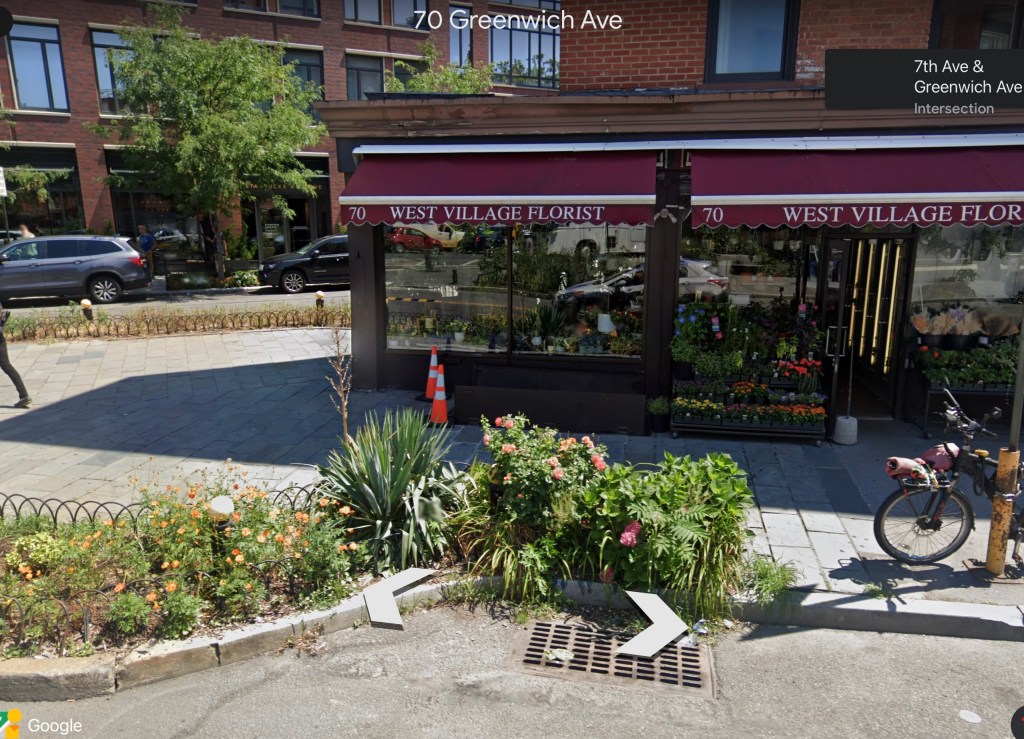
At the intersection of Greenwich Avenue and Seventh Avenue South, 1926.Preliminary sketchFrom Google Earth
Not absolute proof, but it fits the composition.
A lot of critics have written about Nighthawks, many have mention that it is the most recognized American painting of the last century. But why? It’s probably not because of what is there, it’s what is not there!
It’s a long rectangle that seems too long, in fact, most people only see a cropped version, because the editors of newspapers, magazine, television, are uncomfortable with the real proportions. The painting is complete, there is stuff going on, but the sense of meaningless emptiness is disconcerting, hence the crop. And the crop is usually around the three people, why include the fourth person? His back is to us, there’s no need to give him space. Why include the sidewalk, no one is walking there.
Hopper’s intention was to paint the loneliness of the big city, eyes that don’t meet, and hands that don’t touch.
In my tribute version I wanted to focus on the light reaching out to the sidewalk and to the buildings across the street. The diner was acting like a lighthouse, to bring safety and direction to ships in the night, like birds in flight, like nighthawks.
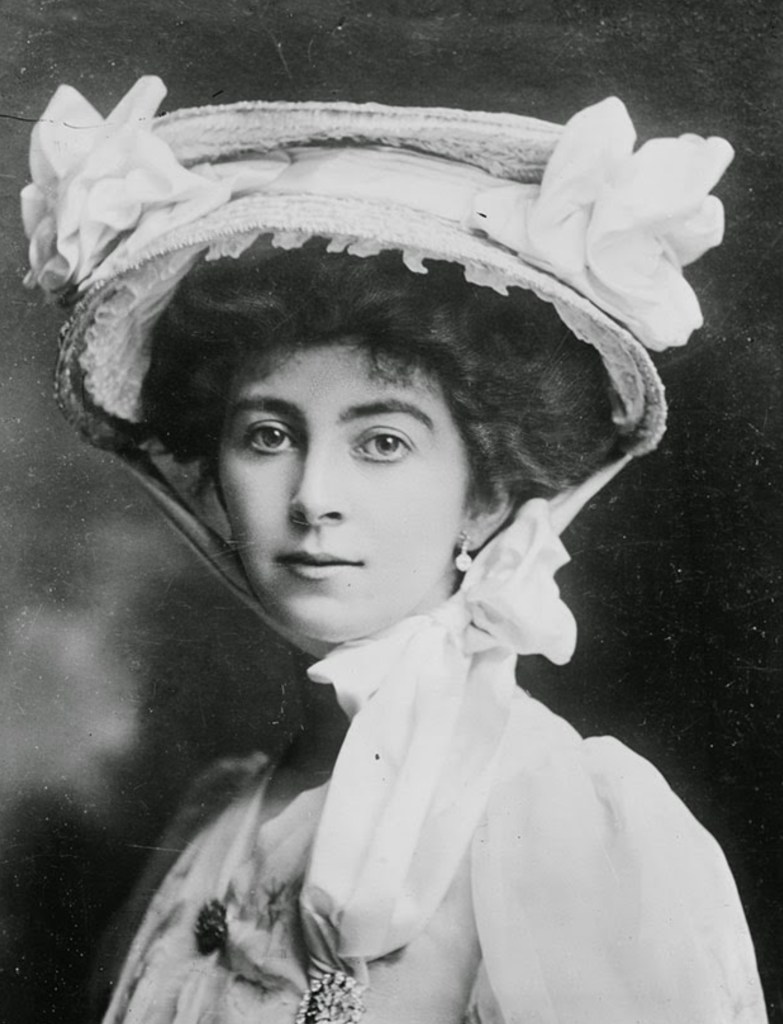
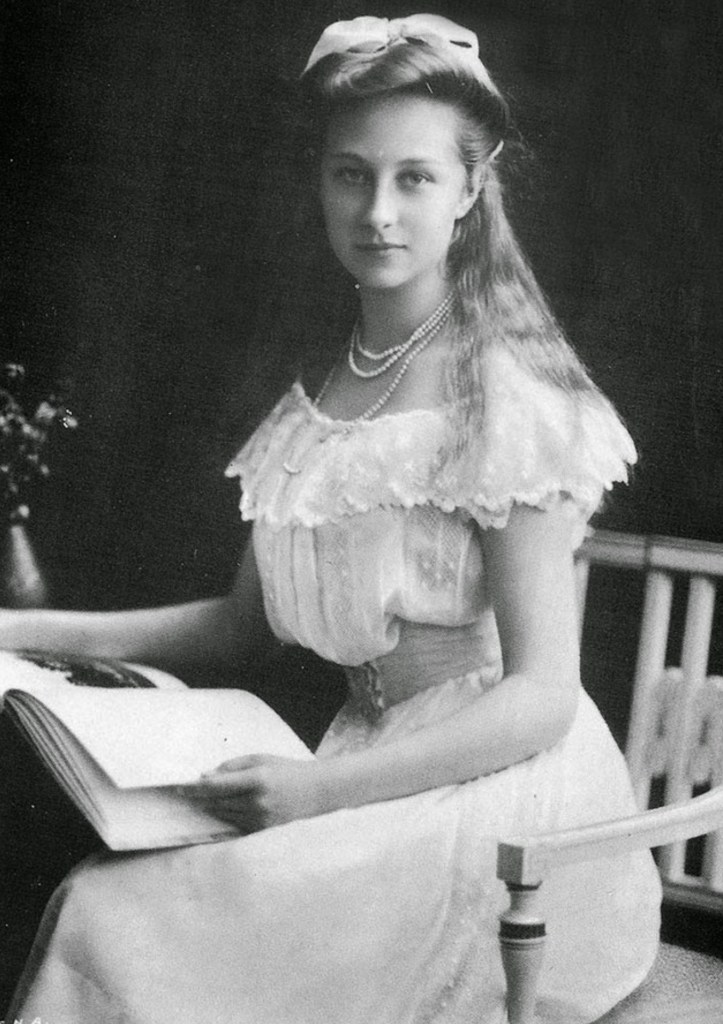
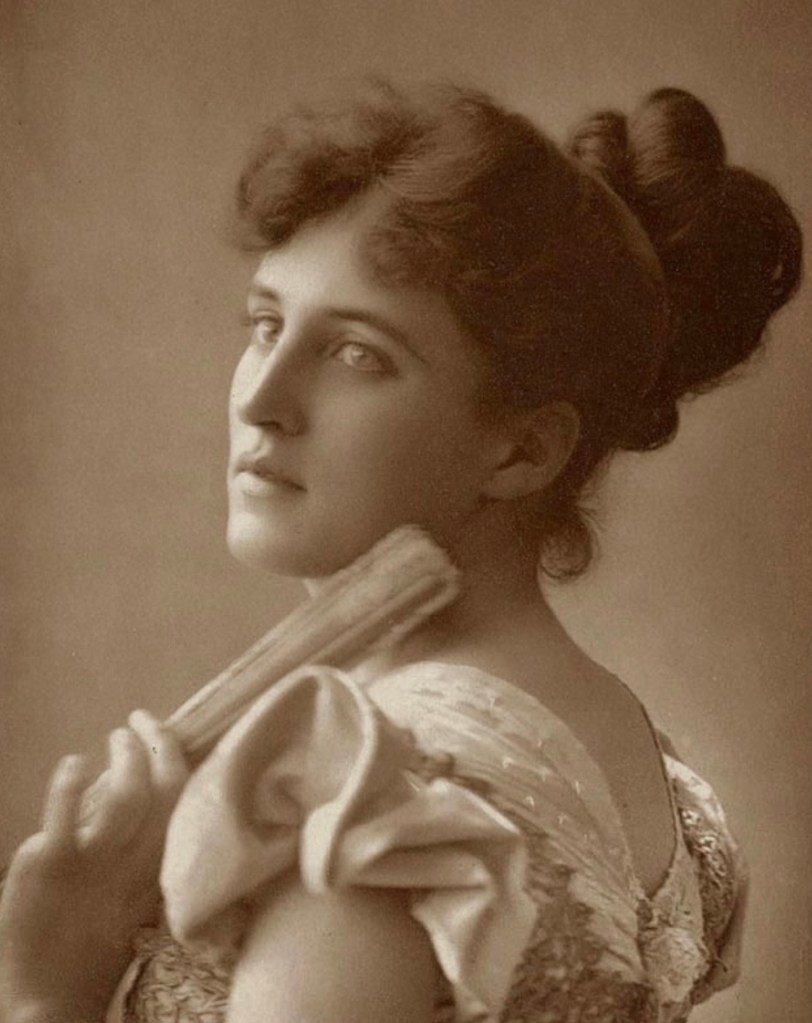
All this research about Sarah Bernhardt has lead me to rediscover what is called the Belle Epoch, or Beautiful Age. We recently used the label Beautiful People on some of the standouts of the 60s and 70s. Apparently we have always had Beautiful People, it’s just that we didn’t have a lot of photos to prove it.
It certainly became a thing in the 1870s, 1880s, and right up to the 1930s. It does seem that the Hollywood starlets pushed the Belle Epoch folks off the newsprint,
I have collected nearly one hundred images. Here are a few of my favorates.
Several weeks ago, I watched a YouTube fishing video where the User’s I.D. happened to be Brats&Mustard. The video was all about fishing, but as I watched the video, I just kept thinking about Brats&Mustard — was it only because I am half German?
All day long, thoughts of Brats & Mustard crept into my consciousness. The more I thought about it, the more I wanted it. While watching TV, I thought of Brats & Mustard — while washing the dishes, Brats & Mustard —vacuuming, Brats & Mustard. Then sauerkraut popped into my mind — I wanted that too. Now, I like sauerkraut, but I can’t remember ever having eaten Brats & Mustard; today I vowed that I will have it with some sauerkraut.
So, I sat down to a lunch of Brats & Mustard, with sauerkraut, and beer. Then, I made the regrettable mistake of devouring it all, very quickly, without the slightest thought of savoring even one bite. Like so many other things in life, I kind of messed up my meal — I could have enjoyed it so much more, by just chewing and swallowing slower, by letting the taste linger. In life, I know there are no do-overs, but there are start-overs — so I thought, I’ll do better next time.
Now and then, I still crave Brats & Mustard, and after learning of the great health benefits of sauerkraut, I always include it.
So the words Brats&Mustard, and one German surname are few — but they had quite a bit of power.
Uncle Ed
Periodically I have guest posts, this is from my older brother!







The Eagle
Fulbert de Beine de l’Aigle, 1st baron de l’Aigle, the founder of the castle and dynasty of l’AIGLE.
So this story is about a family that was on the edge of history. Fulbert was a common name in Normandy. There have been a number of attempts to research back beyond 1000 AD.
We know that a castle was built in l’Aigle, around this time, as well as a church. No trace of the castle, but some of the early church can still be seen in the bell tower. Most of the church was built in 1500s.
The reason for the castle appears to be in controlling the traffic on three rivers that are nearby. Why the area was known as “the eagle”, is unknown.
William, the illegitimate son of Robert I, of Normandy was considering a bid to assume the crown of England. It was widely known that a successor was not firmly in place.
The Danes had ruled England for almost fifty years, and Edward the Confessor had brought the House of Wessex back to the throne. King Harald of Norway thought that he should be king. King Harold Godwinson actually took the crown for a few weeks. Harold fought Harald, killed him, then had to go fight William at Hastings.
William had the disadvantage of invading by sea. If Harold could get the upper hand, he could push William into the Channel. The problem is that Harold had just marched his men down from York, where 2/3rds of his best “housecarls” had died fighting Harald at Stamford Bridge.
Considering everything, King Harold might still have won, except for an arrow in the eye. The rest of the Anglo-Saxon army collapsed and ran to their homes. Several Saxon lords had gambled on William winning, even helping him with river crossings, so they were left alone.
Fulbert’s son Engenulphe, was a leader in William’s army, and he died chasing the fleeing Saxon’s after Harold’s death. Fulbert had also died in 1066, but not in the battle. He had stayed in Normandy, sending his son to fight.
So now Engenulphe had a daughter named Bertha. She was born in the newly built castle in Normandy, the daughter and granddaughter of the Lord of Normandy. She probably could have stayed there- after all, her father had died chasing the enemy near Hastings. Instead, she came to England, the daughter of a heroic Norman. She was 26 years old in 1066. She was going to part of the new ruling class.
She met Henry de Ferrieres in England. She may have known of him from Normandy, he was four years older. Henry had made the decision that if they won the battle, he would stay in England. Henry just had to ask William what part of the country would he be allowed to rule. Most of the country was available to be seized, only a few Saxon lords kept their land.
In Tutbury, Staffordshire, there is a ruin called Castle Hill that is most likely the castle that Henry built, and he died there in 1101. Bertha lived almost another thirty years and died in nearby Darley, known today as Derby.
Bertha’s son and grandsons continued building Norman Castles throughout England. Through marriage and alliances, the family spread through England. Oakham Castle in Rutland, Arundel Castle in Sussex, Alnwick Castle, in Northumberland, and Appleby Castle in Westmorland, to name a few, were all homes to the descendants of Fulbert de Beine de l’Aigle.
Fulbert de Beine de l’Aigle is the 32nd great grandfather of my grandkids Isaiah, Abby, and Noa.