
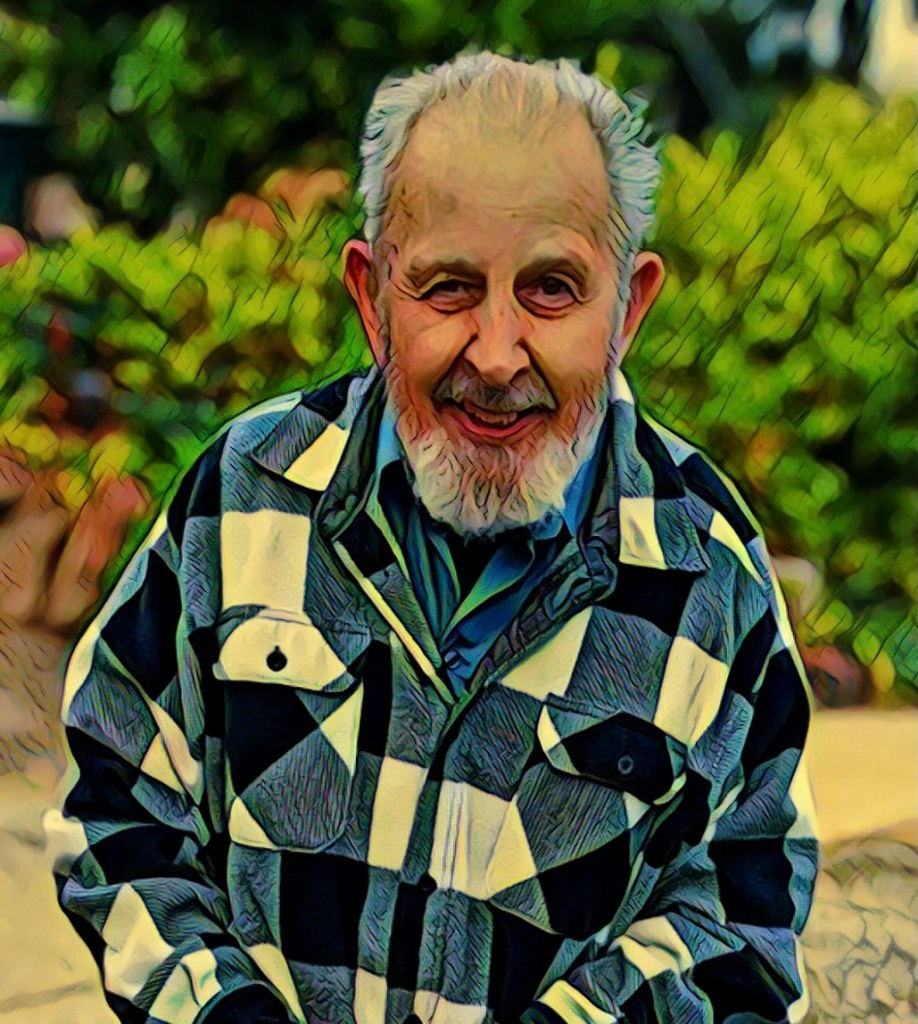
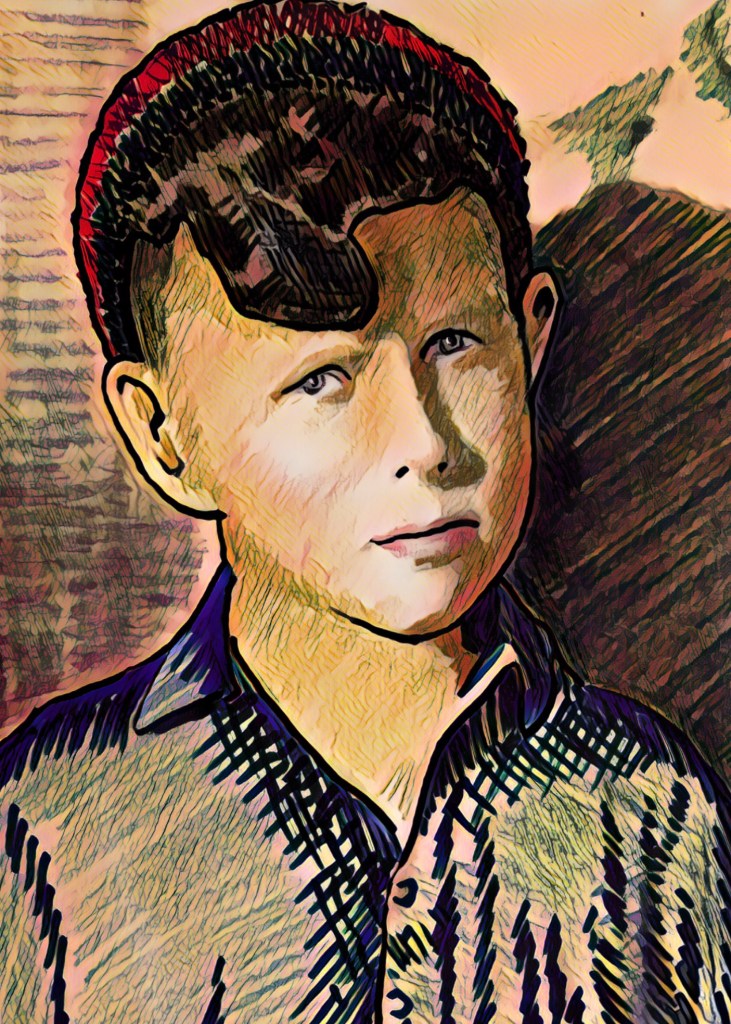
I am not my brother’s biographer by any means, but on his 91 birthday I feel it necessary to celebrate his life just a little bit. If I do not have things exactly right, I apologize.
He was born at a tough time in history, the Great Depression still held the country in a cold grip. Our mother was young in age, and even younger in spirit. Bob often said that Mom grew up with him. Economics made growing up tough, and relationships were not smooth.
The war came, and the family physically split as my father traveled to the West coast to build ships, leaving Bob as the man of the house at 12 or 13 years old.
Disaster struck as our sister Gayle contracted Scarlet Fever. At that time there was no effective cure. Penicillin was known, but only available for the military. Gayle died in 1944, three days short of her eighth birthday.
Mom had given birth to Edwin Elgin a year before, and Dad still had to work in the shipyards, but Mom was determined to bring the family together, and moved West.
Bob enrolled in Richmond schools, I believe he went to Longfellow Junior High, then he went to Richmond Union High School, class of 1949. I think my mother missed the graduation ceremony because she was in the hospital giving me birth.
The family was still living in wartime housing and Bob had several jobs while still in high school. I know that he worked in the Ford Motor plant for a time, and then he worked at Felice and Pirelli, the F&P cannery in Richmond.
Bob met Dorothy Carraher, and married her in 1950, and had Robbie in 1951. I was an uncle at two years old.
At that time Bob was living in San Diego near the beach. My brother Ed when down to stay with them several different times, nearly drowned, and had many adventures. I missed out!.
The marriage relationship had problems, and I’m unsure if the Army was involved. In any case, Bob signed up for a hitch in the Army, to become a paratrooper. The Korean War was over but the Cold War was just starting.
After basic training Bob was sent to Germany to prepare to defend the Fulda Gap. According to documents discovered later on, the Soviets had thousands of tanks prepared to push though the Fulda Gap at any time. Some reports say that hundreds of tanks were started, and at idle, waiting for orders to go to war.
Bob finished his time in Germany and went back to the his post in Kentucky, with the 101st Airborne. I know this because he had given me a shoulder patch of the Screaming Eagle, which I promptly sewed on to my motorcycle styled hat. Bob had also purchased a Harley Davidson motorcycle like many veterans, and rode it cross country several times.
On one visit he left me the black cloth, white vinyl, visored hat that I wore nearly everyday. And the hat was even cooler with the Screaming Eagle patch sewn on above the visor. Thanks Bob!
I suppose it was possible that Bob would only do one three year hitch, then get out, but then another life changing event happened.
Bob went to a local bar near the post with several friends. A fight broke out between the locals and the soldiers. Fists were thrown, chairs were thrown. Bob stepped up to stop a chair being thrown at his friend. I believe it was the bartender that fired a .45 at Bob’s stomach, and he went down.
Obviously a family crisis, my mother had never flown in a plane, but she went to Kentucky to be by his side. Bob pulled through, the bullet lodged in his spine, and it wasn’t removed. His days as a paratrooper ended, they wouldn’t allow him to jump with the bullet still in him, and he shifted his Army training to helicopter maintenance. He also decided to stay in as a “lifer”.
Eventually he became an instructor in the helicopter maintenance program and was stationed in Virginia. He moonlighted as a cab driver, decided to buy a Norwegian built, 10ft sailing dinghy, to sail on Chesapeake Bay.
He eventually shipped that dinghy to my father, and that’s how I learned to sail.
Somewhere about that time Bob went to Korea for a year. My other brother, Ed, had also joined the Army and was stationed in Korea. They managed to meet up for a small family reunion.
After coming back to the states, Bob was stationed at Ft. Lewis, Washington and continued working in helicopter maintenance. For a time he entered civilian life and worked at Boeing Aircraft while maintaining his Army reserve status. He also started a family with Peggy, had two daughters and bought a home in Tacoma.
Then he joined the National Guard full-time and ended his career in the service as a top sergeant, the highest enlisted rank.
By this time the Viet Nam War was raging. Bob had tried several times to get released to go over, but he was refused as the service needed him stateside.
I was playing the odds. How likely would I be drafted when both of my brothers had served in the Army, and one was still in the service? I was drafted.
I was also sent for basic training to Ft. Lewis, the same post where my brother was assigned. On one weekend he came to visit me. I had decided to reenlist for a three year hitch and Bob gave me some advice.
I was just a private, not even a Private First Class, I had no rank, no service medals, I was just a boot with green fatigues. And I was in meeting with a “lifer”, with more stripes than all my drill sergeants put together, and more time in the service than any of my officers. It was pretty special!
Retirement did not slow Bob down. He continued to read volumes of books on everything, he took his truck on dumpster runs, and he bought ten acres of woods near Mt St. Helens.
Going to the woods was his favorite thing. He built a two story cabin with found materials from the dumpsters, and filled his house with “hidden treasures”. All the while developing his skill at creating jigsaw art.
He has slowed down in the last years, he doesn’t race dragon boats in the bay of Tacoma anymore, and he hasn’t played pickle-ball in years, but he does walk the neighborhood under watchful eyes. And he is wonderfully loved and admired, full of wit an humor.
I am in awe of my older brother, and I wish him a great year in 2023.






An “Icky” Day
There were dozens of kids living in the Wartime Housing Authority in the 1950s.
Naturally, with all those kids in the neighborhood there were a few that were not so nice. In fact, some were downright terrifying. There was one slightly older kid, that was called “Icky”, but not to his face, everyone knew him as Icky. Even his mother used it sometimes.
Icky often had a kitchen butcher knive tucked in his belt as he terrorized the neighborhood, broke up marble games, yelled and chased kids to their homes.
He chased my brother Cork home one day, holding a Daisy Winchester BB gun. At the last few steps he aimed, and fired it at Cork, and it hit him in back of his ear. Shot in the ear by Icky! Back shot by Icky! How low can you get?
I believe the police was called, and they knew about Icky. I have this memory of me being old enough to watch through the front window as I pulled the curtain to the side. People were standing on the stoop and in the front yard. I don’t know if Icky was there. I had drunk half of my glass of milk. Left it there on the window sill, then I went out on the stoop to see better. The curtain returned to its normal position, hiding the half drunk glass of milk.
The memory might have disappeared if that was all that happened. Several weeks, or maybe even months later, I happened to move the curtains to look out the window. There was my glass from the day of Icky, and there was this “icky” blob of dried milk in the bottom of the glass. I had no idea that milk would do that over time. It smelled bad, and looked worse. I was afraid that I would get in trouble so I took it outside and threw it in the trash. We had one less glass in the kitchen, no one noticed.