Are thoughts granular? If so, then what is the space called between thoughts? Also, if thoughts are granular, do they have hard edges, or soft, squishy edges that are sticky? Are thoughts in three dimensional clumps? Are they linear? Or they only appear linear from the thinker’s perspective? Is there any other perspective possible?
If thoughts are electrical firing of synapses, do they flow, like electricity? Electrons being “excited”, bouncing around, exciting their neighbors, not actually moving like water molecules flow, but the “excitement moves from one regional synapse to another. Cascading like billiard balls on a table.
Watching television, I see movement. An actor walks across the screen. Being interested, I get closer. It’s harder to see the actor because I’m beginning to see the dots of the actor. The actor is made of thousands and thousands of dots in a rosette of red, green, and blue, against a dark background. The actor continues to move, and I get closer.
The dots don’t move, they just change color. There is no movement. The actor moves because the dots change color. Our eyes follow the changing color and interprets this as movement. Is it movement because I see it as movement? The actor on television is an image. It is only two dimensional, but when the actor turns it appears three dimensional. If the image was a photograph, the actor would get distorted as he turned, eventual he would disappear as a two dimensional figure on edge. The actor doesn’t turn, the dots simply change color. The turn is not real, it simulates a turn. There is no movement.
Images are not the actual object. Even the projected image on the back of our retina is not the object. Objects exist, but we only see shadows of the object, full color shadows… an image, not the real thing. Things do not have resolution, they have edges. Images are dependent upon resolution, edges depend on resolution.
Finding the edges of things determines the shape. Recognizing shapes is rewarded in the Cave of Socrates. Mere shadows, but real rewards.
“This glass is empty”, yet filled with air. Unless it is in space, when it is filled with… space?
The edge of a cloud exists at a distance, but slowly disappears the closer you get. In fact, there is no edge, only the appearance of one.
The distance around the island of England is infinite, unless you take the short cuts, and avoid the fractals.
So… I finished all three sections of Rovelli’s “The Order of Time.” I know less now then when I started. I’m not sure that I understand “when”. I’m certain that I don’t understand “now”.
Strangely enough, I had three separate thoughts while finishing the reading, each one more disconnected. The first thought was directly related to a phrase in the text, “glass half-full”. The then thought was tangentially connected to a statement of clouds, the third thought was a distant memory of “infinite” fractals of a natural seashore. I don’t know why it came up.
I’m not sure I enjoyed the book. If I reread it, will I know even less. If I keep rereading it, will I eventually disappear?
I have previously written about time, well… I wrote about my reaction to a summary of the current ideas of time, set out by physicists. To their credit I agreed with a number of their statements. How can I disagree you might ask? What degrees do I currently hold in physics?
My disagreements are based upon the fact that I am human, and I don’t let my lack of knowledge hinder my opinions. Basically, my disagreements were based in the absolute statements made. We can’t measure yet… not that we can’t measure. No evidence yet… not that the lack of evidence is absolute. It’s a clever way to disagree without understanding the salient points.
I have a good friend that suggested a book by Carlos Rovelli, “The Order of Time”. According to the reviews, this book gives a very good summary of the current views concerning time. The author suggests that his book is in thirds. The first third is a very simple explaination, the middle third gives a little more detail, and the last third is a wild ride through the cosmos.
I may have made that up because I forgot the details of the last third, but you get the idea. I am barely through the first third. So far I’m wondering where the simple is… I know that it is there, because the illustrations include characters from the Smurfs. I can see the smiles from the copyright lawyers. A book about time written by a leading physicist wants to use Smurfs to illustrate his points.
I’m a little stuck on the first point. Time is slower at my feet, and faster at my head, compared to a reference at my navel. Hmmm. Second point, time is slower if I live on a beach versus living on a mountaintop. Time is slower if you don’t move, time is faster if you run around. Time requires heat. Heat only goes towards cold, never cold to heat. Time only goes forward. I think I listed a few more points in this simple chapter, each with Smurf explainations.
Oh yeah, time is slower if you move the watch faster, like on an airplane, so speed can make time slower and faster… depending.
I can’t wait until I get through the middle part of the book.
Maybe he liked blueberries, or more likely, he had poor dental hygiene and his front teeth had died at the roots. In any case, history now knows Harald Gormsson, king of Norway in 895, as “Bluetooth”. This becomes important to us because the inventors of the technology to connect devices to computers, named their product “Bluetooth”, and even used the Nordic runes to create their logo. They could have given a nod to Hedy Lamar for her contribution, but an early medieval Norse king was chosen.
Millions of devices use “Bluetooth”, from speakers to microphones, earbuds, printers, and headsets. It’s the most popular wireless conn ection. With clever renaming, a new device was named “Blueteeth”, referring to a pair of glasses that acted as a “heads up display”.
Several attempts had been made by different tech companies to create monitor glasses, but this one had great promise. Heavily mirrored from the outside, it was almost impossible to tell if they were projecting an image or just acting as sunglasses. The technology was so small that the frames easily concealed all electronics, using common hearing aid batteries. The glasses were designed to blend in as just another pair of sunglasses.
The user had a finger ring as a controller, to scroll through and select menus that were on screen. There were several choices of transparency from complete opacity to a faint display. The practical theory is that using close focus you saw the information on the glasses, and the distant focus saw straight through information to the outside world. When the opacity increased it was like putting on blinders with two tiny monitors in front of each eye.
No one studied how this might affect normal vision. Produce a thousand units, test them, and then see how it goes,- that was the manufacturer’s concept.
Most people used a smart phone for the computing source, but that was somewhat limited; a powerful laptop or tablet was a better connection. The best connection was an even more powerful desktop unit. Of course the ability to be mobile was a huge attraction, so text based information was optimal for use and battery life. Apps on the phone made this an easy choice. Full blown color animation and movies were still best by using desktop or gaming units.
Wallace was one of only six beta testers for the device. He was given a Series 2 device, by a separate company that hired screened users, and had applicants sign a non-disclosure agreements, and also have a security background check. Wallace was someone to be trusted, and would use the device in normal, and unusual approved tests. Wallace never asked what happened to Series One, it could have caused brain cancer but, he didn’t ask. Wallace accepted the technology, and immediately focused on the mobile text based apps, and then took the glasses on a tour through the city.
The GPS apps made navigating a breeze. It did take a few trips around the parking lot to get used to the switching focus, but after a few minutes it was very natural, and Wallace thought that even the state police would approve, so long as only the GPS was used. Connecting to social media while driving was probably not a good idea. Wallace made a few connections but didn’t tell anyone how he was connecting. Typing using the finger ring was tedious, but he was getting faster, better than his one finger hunt and peck, and the built in AI helped with auto-correct.
After a while, Wallace parked his car and went for a walk. He stopped at a sidewalk vendor and bought a latte, then strolled along the waterfront. He was scrolling through the menu choices when he approached some steps. He switched hands to grab the handrail, and the latte splashed a little though the hole in the lid. Wallace didn’t notice that the latte splash had hit his finger ring. The display blinked a few times then settled. The menu options seemed longer, then it blinked some more. Wallace walked on, but the finger ring no longer seemed to change the menus, and suddenly there were different text messages being displayed.
Wallace read with interest, then the message disappeared before he could finish reading. At first he thought some friend was texting him, but he was getting both sides of the conversation.
He was eavesdropping! The conversation disappeared as he walked away from one of the sources. Wallace looked around at the other people nearby. Someone appeared to be texting a little further ahead. It should have been impossible because he hadn’t “paired” with any device. Somehow his glasses were allowing his phone to connect to nearby Bluetooth transmissions.
In another minute or so Wallace was near enough and the text came through, he could actually scroll up to see the messages he had missed. The messages were directions to a local coffee shop that he could see directly ahead. Before he had gone too far the messages disappeared as a man crossed his path with an angry expression, and a finger jabbing at his phone.
The message came through to Wallace immediately. The man was angry with Alice and demanded that she stop seeing Stephen. Alice did not respond. Wallace could see that there was much more jabbing at the phone, and the indicator was telling him that the man, his name was Sam, was typing. It was a long paragraph, Wallace had kept walking and was soon out of range.
Was it the latte that caused this to happen? Or, did the device have a setting to piggyback on Bluetooth pairing? Wallace decided to sit on a bench and scroll through the various menus. The finger ring didn’t appear to be permanently damaged by the splash of latte. The messages had disappeared. Maybe this was just a one-time glitch, something worth a paragraph in his report to the company? He accessed the notepad through the glasses, and wrote a brief summary of his encounters, planning to expand it later.
“There was a brief flicker, and it appears that the device can pickup nearby Bluetooth based messages. It’s probably something that should be checked as a simple security update. It isn’t steady, and has disappeared, but should be checked out.” Wallace had dozens of security updates on his phone system.
Wallace thought about the potential problems of this type of security leak. Eavesdropping might be an interesting past-time for jealous partners, but the hard-core gamers that wanted this device, wouldn’t be interested in that feature. He thought the commuters would be the biggest market, checking stock prices, catching the latest news, maybe even watching music videos. It was the same activities that occur now, just with a better monitoring device. We get security notices all the time, no big deal. What reason would cause it to be intentional?
Wallace thought he would take a short train ride to the civic center, and headed to the station. While adjusting the finger ring there seemed to be a spot where the screen flickered once again. And the messages came back! Different messages kept appearing, and quickly disappearing, as more powerful signals shoved their way through. Wallace could not read them completely. There were dozens of people on the platform with their phones out, and busy jabbing fingers. Wallace caught one message, “Authorized to clean it up…” then it disappeared, replaced by a recipe for tuna salad. Then someone wanted to meet for a hotdog and beer at 5:00 pm. Finally,a cryptic message “…make it look like an accident.”
Wallace noticed the train coming, and the sign blinking for the civic center destination. He moved to the marked area where the train doors were to open. He barely felt the hand between his shoulder blades, as the train approached. Then he was flying towards the tracks.
The station was closed, it was arranged for buses to take passengers to the next station. Emergency services were still working on the tracks to clear the remains. One of the EMTs spotted the broken sunglasses, and said, “This might explain everything. I’m surprised that he could see anything with these on, they’re so dark!”
So… I’m coming back from my physical therapy in Berkeley, I could take the freeway, but instead I like to take the “back way” on city streets. It’s a tangled process to climb up to the Caldecott Tunnel, two lanes merge into one, right only lanes peel off into neighborhoods. You have to choose when to be in the “right” lane in order to avoid stopping at all the lights. A novice might add ten minutes to their travel time by the wrong choice.
I am making all the right moves, legal moves, choosing the left lane at times, avoiding the right turn only lanes… I notice a motorcycle to my right. We are stopped at the light, but her lane will turn into a right only lane once we get across the intersection. Not many people use that lane so I expect that the motorcycle will cut over in front of me, so I move carefully when the light turns green. To my surprise the motorcycle stays in the right lane all the way to the point where you must turn right, but then it cuts over to my lane. Very unexpected. Very illegal!
I was planning to let the motorcycle go in front of me, now it is seven cars in front of me. In terms of the cycle of traffic lights, it is now fives minutes in front of me. In terms of “the plan”, the driver, through force of will, is not where it’s supposed to be. It’s five minutes sooner!
I thought about this, and just yesterday I was behind a slow truck. I was heading to the same tunnel and I didn’t want to breathe diesel fumes in the tunnel, so I made several legal lane changes to put myself at a distance ahead of the truck. After the tunnel there was some sort of a traffic jam that slowed my progress. I again shifted a few lanes and got myself clear, only to find that I was once again behind that diesel truck.
Temporarily I was ahead of myself by five minutes, then I was back in sync behind the truck until my freeway exit. I hit the downtown at exactly 10:15, the roads were clear, I made it to my driveway safely about ten minutes later. I wonder what I would have encountered if I was five minutes earlier? I wonder if the motorcycle made it to the destination safely? Or is she now hours ahead of herself?
It was probably 1960, I was about ten or eleven years old. Old enough to collect rocks, I even had a geological sample as a toy. It was a 12×6 inch piece of blue cardboard, with a couple of dozen rocks glued on it, and descriptions printed beneath. Over the years more and more rocks were torn off, leaving jagged patterns of white where the rocks had been. The sample of obsideon lasted for many years. I loved the smooth green stone, glass-like.
Two houses away in my neighborhood there was an empty lot. It was a corner lot so maybe it wasn’t as attractive for speculators to build on. It was part of the level flood plain near the two creeks that were a few miles north. Nothing but Spanish cattle roamed here for years, and before that it might have been on the coastal trail for migratory Costanoan Indians.
There were four or five kids that were roughly the same age, children of the post-war generation that settled into homes after building Victory ships in the local shipyards. The empty lot was a perfect neutral meeting place where parents weren’t always looking over things.
We had cleared an area of weeds in order to use the flat ground as a playing field for our purees and cat’s eyes. Marbles! The only problem was this small rock that protruded about an inch from the surface. A couple of kicks should have dislodged it, but it stood steadfast.
Someone produced a pocket knife and we dug around the edges to loosen it. We went several inches and we discovered that the small rock was looking more like an iceberg, much larger below the ground than above. There was a moment when I thought we were looking at the top of an undiscovered future mountain. I thought maybe it was best just to break off the top and level the surface with dirt. I went home to get the sledge hammer out of my garage.
With the heavy hammer over my head, I came down hard on the left side of the peak. Perhaps hundreds of kids had tripped over that peak, but now it was going to be history. Smack! A sizable piece went flying off. It worked!
Then I examined the piece and found it was smooth, and shiny green. Obsidian! It was a giant iceberg of obsidian. A few of the other kids recognized it as well. We talked about it awhile, and came to the conclusion that it wasn’t the top of a granite mountain, nor was it a house sized boulder. Obsidian was generally smaller. Perhaps we could actually dig it out. We each went back to our garages to bring back tools.
After several hours of excavating, we had a good sized boulder laying in a pit. I estimated it was about the size of a large pumpkin, about 70 lbs worth. It took all of us to roll it out of the pit. I think we just set it aside, in order to fill in the pit, level it, and get on with our game of marbles.
This morning I woke with a question. “Where did it come from?”
Sixty years later I asked the question that was unasked at the time of the obsidian iceberg. In fairness, all rocks come from the dirt so I simply accepted that at the time. Later I took a college class in geology, and I learned obsidian was volcanic. There were no volcanos nearby that corner lot. Mt. Diablo was twenty miles away, but the same college class told me that Mt. Diablo was not a dormant volcano. It was once a pimple, an island in the inland sea of California. There is even a ridge of shellfish fossils near the mountain.
The nearest active volcano is Mt. Lassen in Northern California, 240 miles away! That’s a long ways to eject a boulder. i know that the last eruption of Mt. Lassen was in 1915, and that a cabin sized boulder, called ‘Hot Rock” was ejected and ended up five miles away. It was still sizzling three days later. If the obsidian came from Lassen, it was carried to that empty lot.
It’s possible that someone found it on vacation. Then brought it home in the trunk of a 1954 Plymouth, eventually cleaning the garage out by dropping it off in the lot. People do that. But I was thinking that this was a Neolithic treasure. Something that the local tribes had traded for, chipping off sharp edged tools anytime there wished. Arrowheads, spear points, skinning knives. It may have come all the way down from the Cascades in Oregon, traded from on tribe to another, incredibly valuable until it came in close contact with a culture that had iron and steel.
In the flat tidelands of San Pablo, near Wildcat creek, there was a small settlement near the Rancho San Pablo Abode. A few buildings were there, a hotel, a few saloons, the Catholic Church. The local Natives passed by, no official reservations. If they stopped, it would have been aways off to eliminate trouble, perhaps to lighten their load by discarding things that were no longer necessary.
The obsidian came from somewhere, for a time it was treasured and valued. It ended up in a neighbor where it was dug up by children. I know for a fact that is was loaded into a toy wagon, or on top of a deadly vehicle called a “Flexy”, brought to a garage, and then hit with a sledge hammer until it was in dozens of hand sized pieces. I know this because I held the hammer. And I gave the pieces to my friends..
This topic is one of those things that just makes you wonder. Is this the best way?
We have the phrase “Bite your tongue”, we say this to suggest that it might be best to stop talking. It makes sense because a bitten tongue is very painful and sometimes it is very difficult to speak after accidentally biting your tongue. Of course, it is almost impossible to intentionally bite your tongue, so the phrase isn’t very practical.
Since all bitten tongues are accidental, you might want to spend some time thinking about how to reduce the accidents. I tried to look up the accident rate of biting your ear. There isn’t any. There are some rates of biting other’s ears, but nothing on biting your own ears. The reason there are rates of biting your tongue is obvious. It is almost completely based upon the close proximity of tongue and teeth. In fact, the tongue is nearly completely surrounded by gnashing incisors and grinding molars. The tongue is in a nest of teeth!
This makes perfect sense if you think of the tongue only as a tool to position food for chewing and digestion. I suppose if we didn’t have a tongue we would use our fingers, but that would be unsightly at the dinner table. And we would still have a few accidentally bitten fingers. We need our fingers for other more important jobs.
This brings up the dilemma, our tongues also has other uses. Speaking and singing have brought our species into better communication. It would be safe to say that speaking led to writing, and writing led to civilization, so the tongue is possibly, (next to the brain), the most valuable organ of our existence.
(The brain is mostly safe, it has natural shock absorbers, it is almost completely enclosed in armor, the cranium. It is thoughtfully designed. The tongue, however, sleeps in a bed surrounded by knives and hammers.)
I’m writing this because I have recently been diagnosed with “geographic tongue”, where the surface of the tongue is slightly debrided, which irritates the tongue, causing it to swell slightly. I now have “Fat tongue”, which means the tongue does not sleep completely in “the nest”, and accidentally biting the tongue causes even more swelling, so it is an endless dilemma.
It would not be that important if I didn’t have to use my tongue to communicate. I’m taking this whole thing ae a lesson of sorts, I’m trying to listen more and speak less.
The ice cream sundae, a split banana, three scoops of ice cream, whipped cream topping, and a special cherry on top. It is a dessert like no other. In some way the cherry on top makes it special.
Have you ever had”fruit cocktail”? For some folks it is the best way to enjoy fruit. I do not have that opinion. For three different seasons I worked in a cannery owned by F&P. They canned fruit. The first season I was on the clean-up crew. I sprayed the machines, the belts, and swept the floors with live steam. I also wore a rubber suit while doing this. I had a hot steam hose in my hand, and I had two quarts of body sweat in my boots every night.
The second season I was hired to put the lids on canned peaches. I sat by a machine loaded with the lids that I maintained, sitting between a cooker of peaches in cans without lids, then my machine, and right behind me a cooker for peaches in cans with lids. Hundreds of thousands of cooked canned peaches.
I always looked at the lines of workers that sorted the peaches. As long as they had peaches on the conveyor belts, then I had to load lids in my machine. When the peaches stopped, then my day was over.
I watched the peaches get sorted with interest. Periodically a peach would come by with a spot of rot. The worker would dig into the peach with a coring knife and pop out the rot. The peach would then be tossed on a different conveyor belt. Peaches that fell on the floor would be sprayed with water and then go on that same belt. Only pristine peaches would stay on the belt heading to my cooker and lid machine.
Where did the other conveyor belt go, with the diseased and rejected peaches? On a break I followed the conveyor belt to another room in the cannery. It went into the Fruit Cocktail Room, where the rejected peaches were joined with the rejected pears, where both were chopped into bite-sized pieces, then grapes were added, and finally, nine cherry halves per can (depending on the size of the can). Then the can was filled with a syrup before going into the cooker.
Fruit cocktail was once rejected fruit, (except for the grapes and the cherries).
Later that week I made a plan to visit the fruit cocktail room to bag some samples. I headed straight for the cherry station. No one was around, so I got a paper cup and dipped into the 55 gallon barrel of cherries, making sure to include a little syrup with the full cup of cherries. As I turned down a secluded alley between the steam cookers, I took a big gulp of the paper cup. The first thing I noticed is that the syrup was nasty, tasteless water. The second thing was that the mouthful of cherries was completely tasteless, not even a shred of the expected taste of cherries. What a shock! I had to spit the half-chewed cherries into the nearest garbage can.
Somehow the cherries absorbed the syrup favor after the steam cooking, but the fruit itself had all the cherry flavor removed before being added to the can. That was a serious life lesson for me, and my opinion of “the cherry on top” changed after that.
The third season I was placed in charge of the machine that put nine half-cherries per can. The cans were empty in the machine, they were tipped to their side at the right position, and a narrow conveyor belt with a line of cherries riding on top would then be aimed at the empty can. Like a machine gun, you could hear nine half cherries hit the bottom of the can, and then the can would tip right side up, while another can behind it would be shot with another nine half-cherries. The cans would then go to the next station and receive a load of grapes before getting the rejected fruit and syrup.
My job was to keep the funnel full of cherries. I had a very heavy 55 gallon barrel of cherries to keep the funnel filled. It just so happened that I ended my time in the cannery because of the cherries. I was moving a barrel of cherries into position when I slipped slightly, and the handle of the moving dolly jabbed my right side with some force. Later that night I passed out from a swollen appendix.
The next day I made the local hospital famous for removing the largest infected appendix without having it burst. My appendix lived in a jar in the basement of the hospital for years afterwards. And after recovery, I never went back to the cannery.
The note is consequential, not tremendously important, but at least relevant. The note was written for a reason, and it met all of the requirements. Except for the last sentence.
I have a friend who specializes in the twist of the last sentence. I need more instruction from her, but so far it appears to follow a pattern. Write a note that responds to my note, give responses to the salient points to show that you are tracking, add a few personal references to show that you are not a robot or clever app. Then, at the very last, add a sentence about something intriguing, something that you would really rather write about, but haven’t quite worked out how to introduce it. It’s masterful!
This last sentence in a note was…
“In the meantime check out Alice Neel’s brilliant exhibition at the met.”
Okay, I’m assuming “the Met” is the Metropolitan Museum of Art in NYC. And Alice Neel had an exhibition there. Hmm, so who is Alice Neel? If she was an unknown my friend would have added a short description. She didn’t. Alice Neel is a person that she assumed that I’ve known, or that I should have known. But I’m totally clueless… writer, poet, artist, sculptor painter, dead or alive. Never heard of her.
This is the “tipping point”. Do I follow up with a quick Google search, then be able to return a pithy statement on a return note? Or do I shelve it in the mental drawer of “things that I’ll get to someday”? The third possibility is that it will be a crack in my “wall of known things”. Whenever that happens I’m thrilled but also sad, because I always feel that it would have been better to know this 10, 20, 40 years ago.
Alice Neel, 1900-1984, American portrait painter.
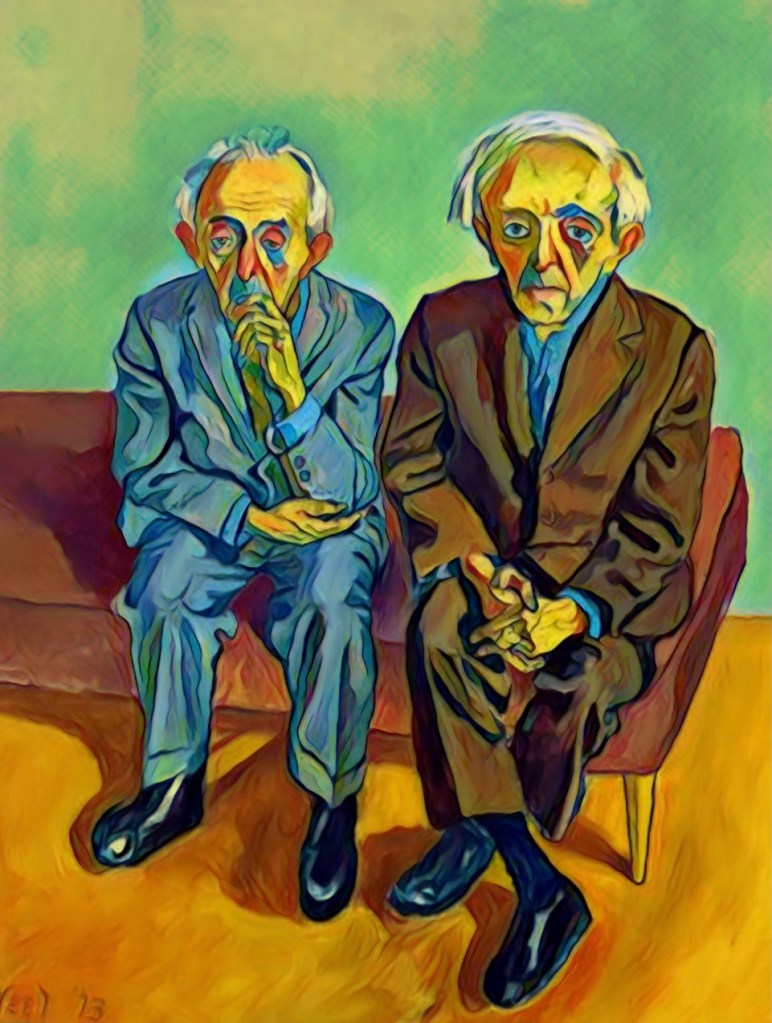
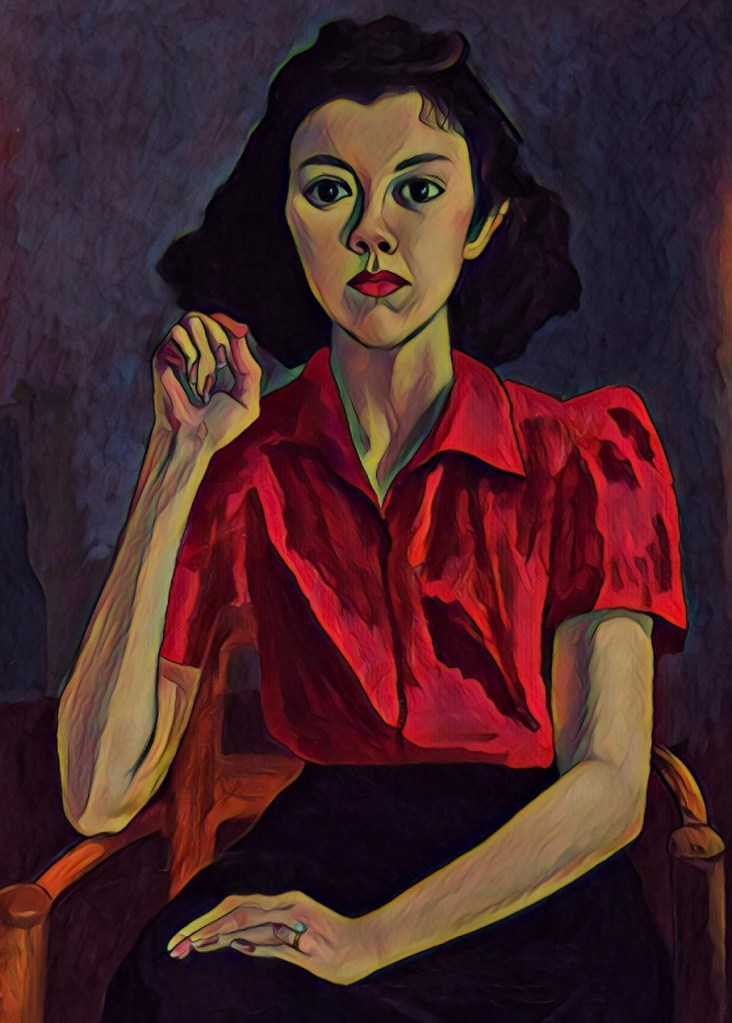
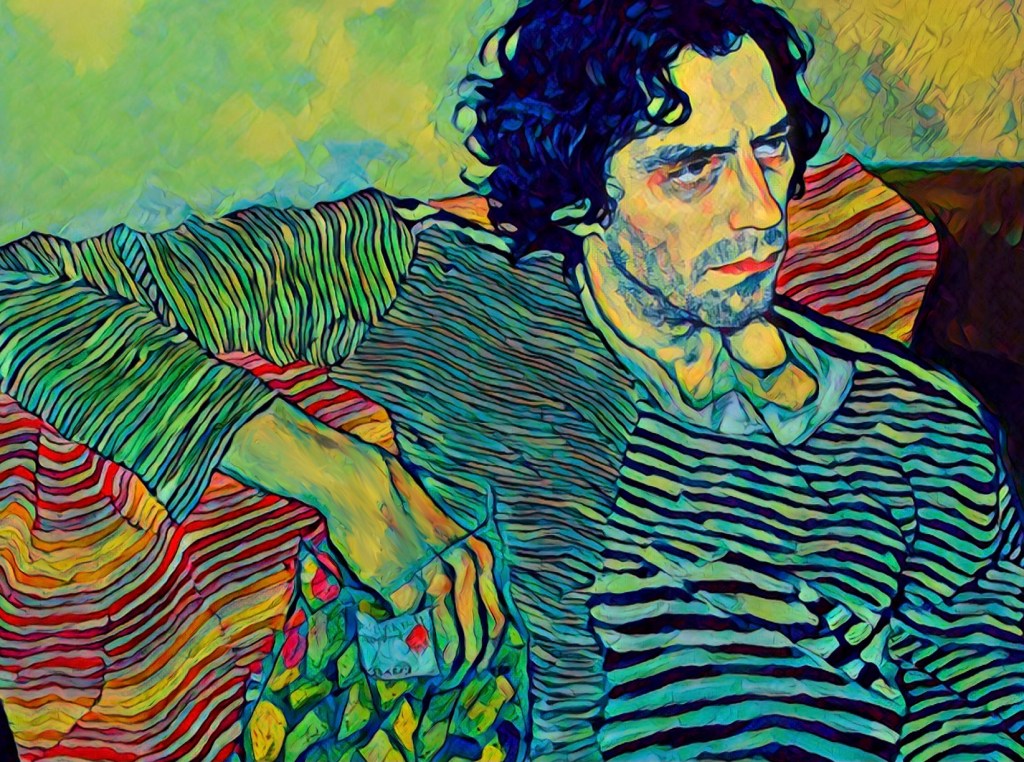
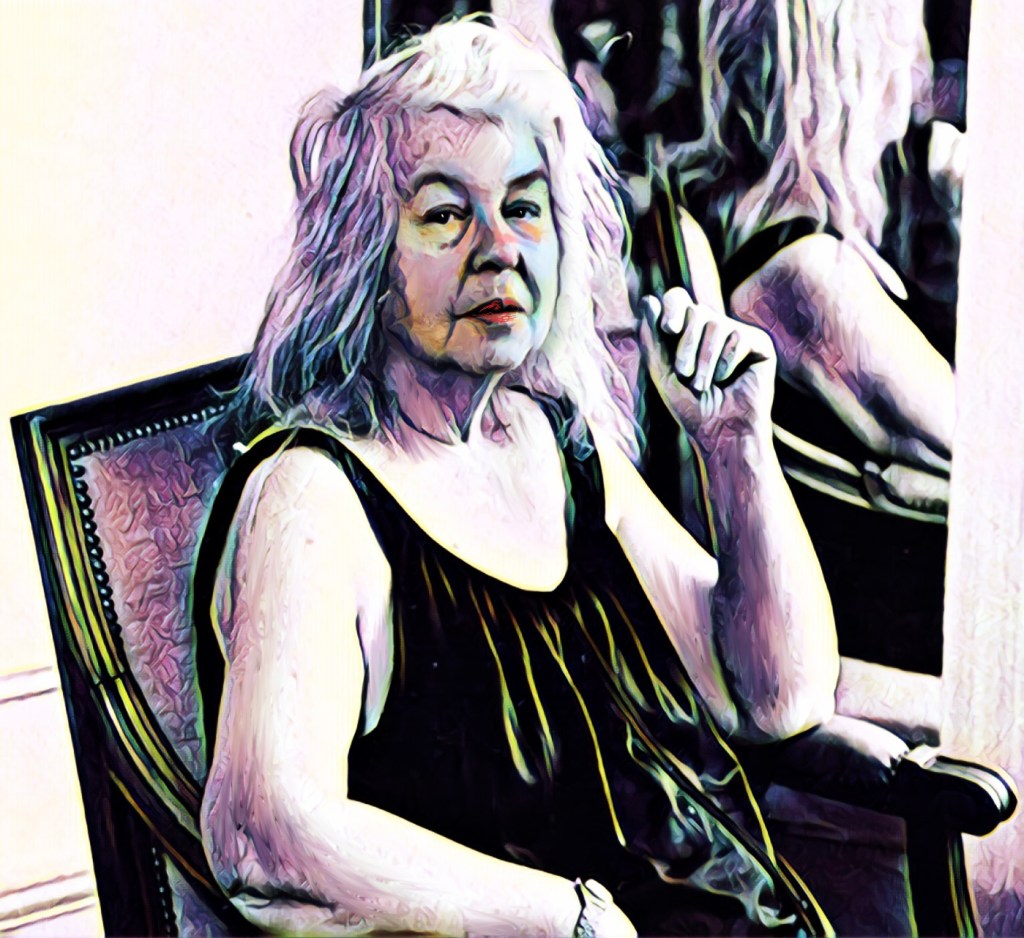
I spent the next three days finding everything she had drawn or painted, and she painted every day of her life. It was a lot of stuff. But she found her niche quite early and found that portraits was her thing. I really loved them.
So I began to redraw the ones I liked best. I wanted to experience her creation. Thank you June, for your last sentence
Tribute to Alice Neel, Helen Merrell Lynd, 1969Tribute to Alice Neel, The Soyer Brothers , 1973Tribute to Alice Neel, Roberta Johnson Roensch. 1946Tribute to Alice Neel, Abdul Rahman, 1964.Tribute to Alice Neel, Josephine Garwood, 1946Tribute to Alice Neel, UnknownAlice Neel
Gunther, King of the Burgundian, was a Frankish leader, born in approx. 385 and died in 437. He was my 31st great grandfather,
The Roman Empire was now in the first stages of decline. It is said that the armies were less Roman and more full of mercenaries, and in general the leadership was less than exemplary. For hundreds of years the Empire relied on it’s natural borders, the Mediterranean, and the Adriatic on the West, South and East, and the two great river systems in the North, the Rhine and the Danube.
On the west side of the Rhine was the conquered territory of Gaul, rich with resources, settled towns, farms, and Legionnaires. Great Britain was also well settled, with retired Legionnaires. The border was the great river system, on the other side were barbarians, dense dark forests, and terror. Even today, the sense of foreboding that comes from the edge of a forest comes from that time. Of course people lived there, but they weren’t civilized. For hundreds of years there was a status quo.
While the barbarians were happy to trade with the “civilized’ Romans on their Western border, their Eastern borders were in flux. A continuous push of Huns from the steppes made life hard, and there was a domino effect. Sometimes the Huns pushed right on through, and came up to the Rhine and Danube.
The Frankish and Germanic tribes pleaded with the Romans to be allowed to cross the rivers to safety. Mostly they refused. Then the Romans allowed one or two tribes to come across, as a political favor for military aid, but it did not go well. They were seen and treated as barbarians.
Also, about this time there was a leadership conflict, a Roman general in Britain had his men proclaim him Emperor. Several Germanic kingdoms still on the eastern side of the rivers, backed Jovinus of Britain, instead of Honorius of Rome. For a few years it looked as if Jovinus had won. King Gunther and his Burgundians were invited to the West Bank of the Rhine near Worms, but then called Borbetomagus. Worms is easier to say.
Within a few years Gunther wanted to expand Burgundy and attacked his neighbor. The Roman leadership issue changed and Jovinus was out, and the Emperor Honorius attacked and devastated the Kingdom of Burgandy. The Romans couldn’t field an army of native Legionnaires, so they hired an army of mercenaries made up of Huns.
So Gunther fled to the safety of Rome, and was killed defending his city of Borbetomagus by Huns hired by Rome. So ended my 31st great grandfather.
By the way, Jovinus and his brother Sebastianus were captured in Narbonne where they lost their heads. The heads were then sent to decorate the walls in Ravenna, where the Emperor Honorius lived. Then after a few years they were sent to Carthage, where four other heads of usurpers were already mounted. The Romans were fond of putting heads on walls.






 A Work Progressing
Granular
Further thoughts on time.
Are thoughts granular? If so, then what is the space called between thoughts? Also, if thoughts are granular, do they have hard edges, or soft, squishy edges that are sticky? Are thoughts in three dimensional clumps? Are they linear? Or they only appear linear from the thinker’s perspective? Is there any other perspective possible?
If thoughts are electrical firing of synapses, do they flow, like electricity? Electrons being “excited”, bouncing around, exciting their neighbors, not actually moving like water molecules flow, but the “excitement moves from one regional synapse to another. Cascading like billiard balls on a table.
Watching television, I see movement. An actor walks across the screen. Being interested, I get closer. It’s harder to see the actor because I’m beginning to see the dots of the actor. The actor is made of thousands and thousands of dots in a rosette of red, green, and blue, against a dark background. The actor continues to move, and I get closer.
The dots don’t move, they just change color. There is no movement. The actor moves because the dots change color. Our eyes follow the changing color and interprets this as movement. Is it movement because I see it as movement? The actor on television is an image. It is only two dimensional, but when the actor turns it appears three dimensional. If the image was a photograph, the actor would get distorted as he turned, eventual he would disappear as a two dimensional figure on edge. The actor doesn’t turn, the dots simply change color. The turn is not real, it simulates a turn. There is no movement.
Images are not the actual object. Even the projected image on the back of our retina is not the object. Objects exist, but we only see shadows of the object, full color shadows… an image, not the real thing. Things do not have resolution, they have edges. Images are dependent upon resolution, edges depend on resolution.
Finding the edges of things determines the shape. Recognizing shapes is rewarded in the Cave of Socrates. Mere shadows, but real rewards.
This is what happens when the mind wanders.