
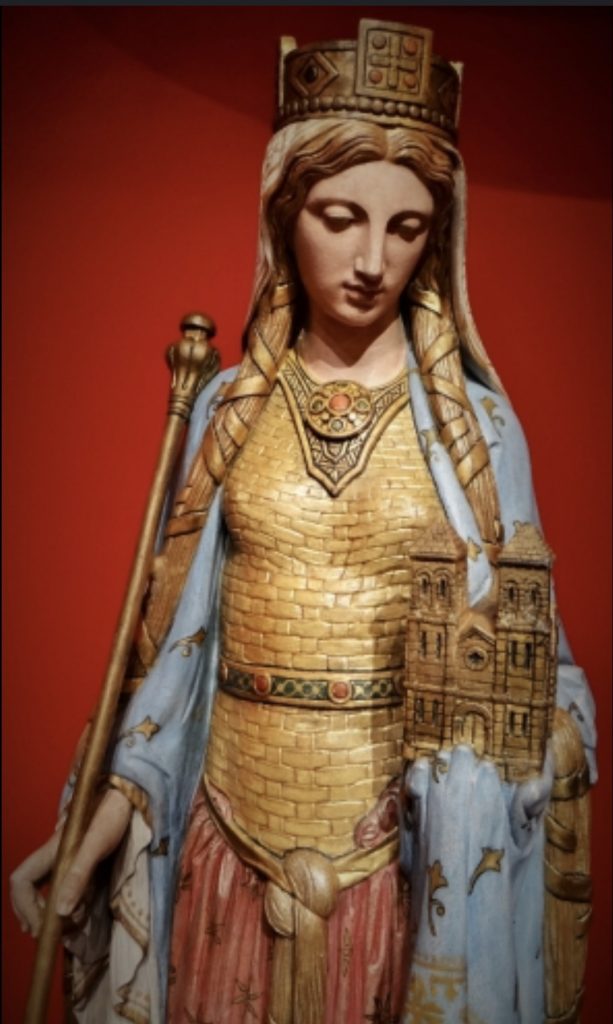
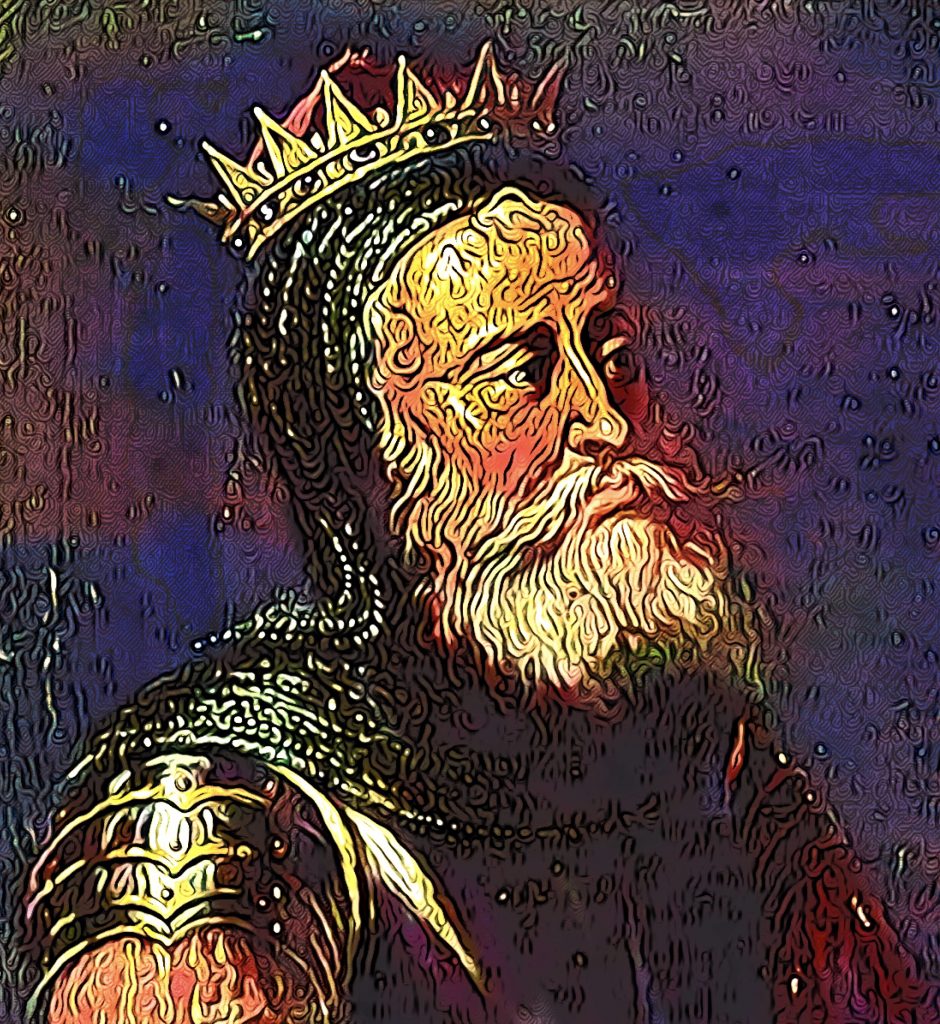
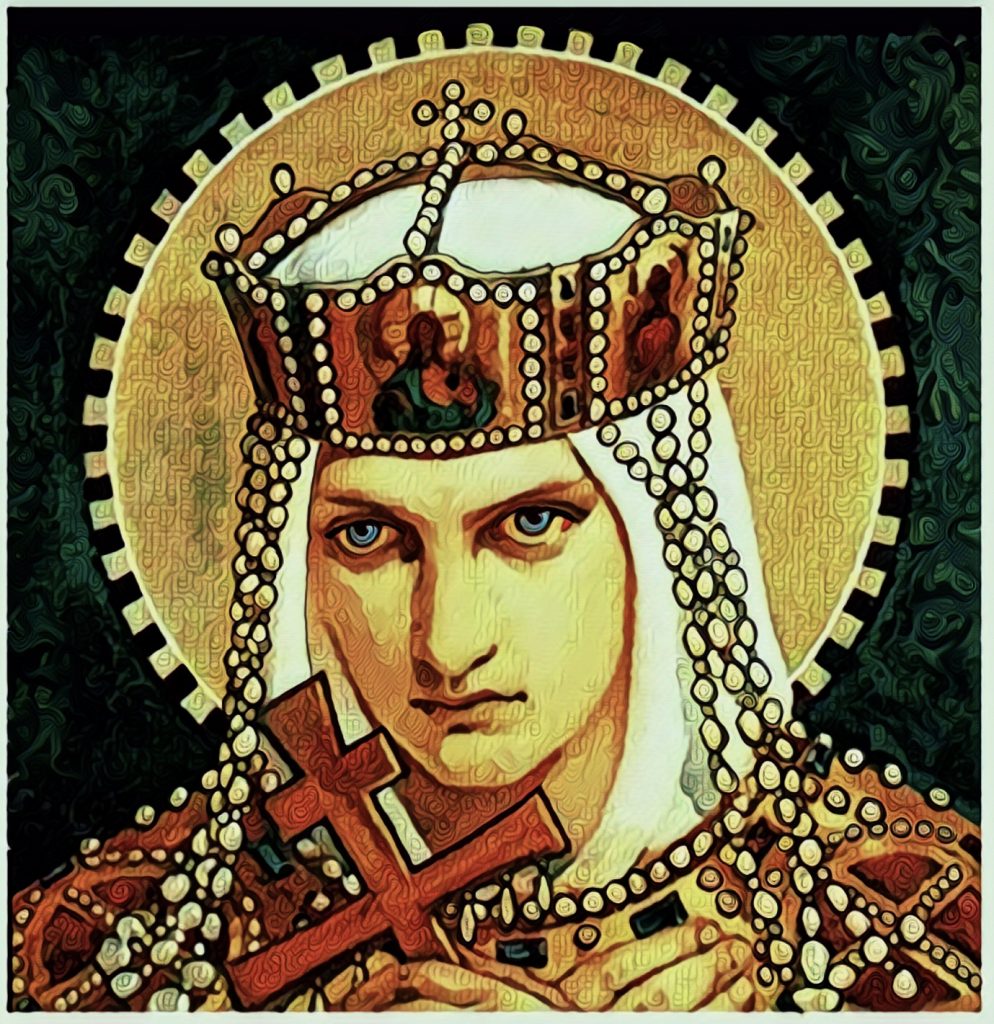
Or better known as Brunnhilda of the Visigoths. I am stepping out from my usual story telling to include this tale of the wife of my 40th great uncle, not grandfather, Sigebert I, King of Austrasia.
For some of us the name Brunnhilda brings up the cartoon of Broomhilda, certainly a clever use of the name. The green skinned witch dressed in black is a far cry from the tall, blonde, pigtailed, armor bearing shield maiden. The operatic Brunnhilda of Wagner’s Der Ring des Nibelungen, a cycle of four German language epic music dramas. Wagner appears to have used an old German fable that may have been based on an older Norse fable called, the Völsunga saga and some Eddic poems.
There are many versions of the tale, in most of them Sigebert, or Sigurd/Siegfried, is a “go between” for a suitor that wants to marry Brunnhilda. Unfortunately, the suitor does not have the strength to penetrate the shield wall (or the wall of flames) around Brunnhilda’s tower. So Sigurd/Siegbert/Siegfried changes shape into the suitor, gains entry into the tower and takes away Brunnhilda’s virginity. As a reward she gives him her belt and a ring.
Later in the tale, Brunnhilda marries the suitor thinking that he had gotten through the flames, and Sigurd had married another Queen. So the two Queens were arguing one day about whose husband was stronger or braver. Brunnhilda claims her husband crashed through the wall of flames to take her virginity. The other Queen says that it was actually her husband that did that, and produces the belt, and the ring to prove it. Brunnhilda gets angry and plots to have Sigebert/Sigurd/Siegfried murdered. Once that is done she laughs, then commits suicide. At least that is how it ends in several versions.
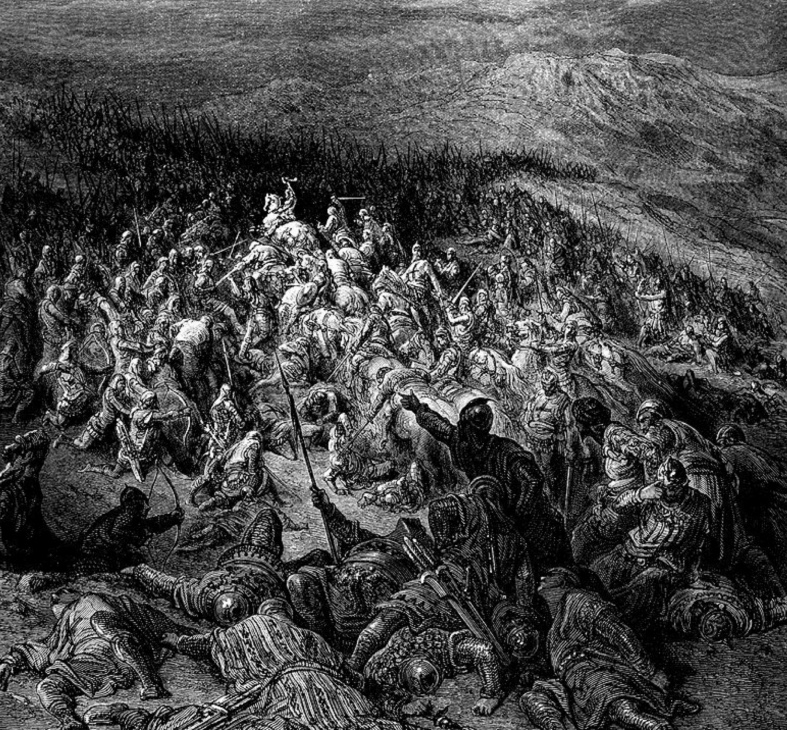
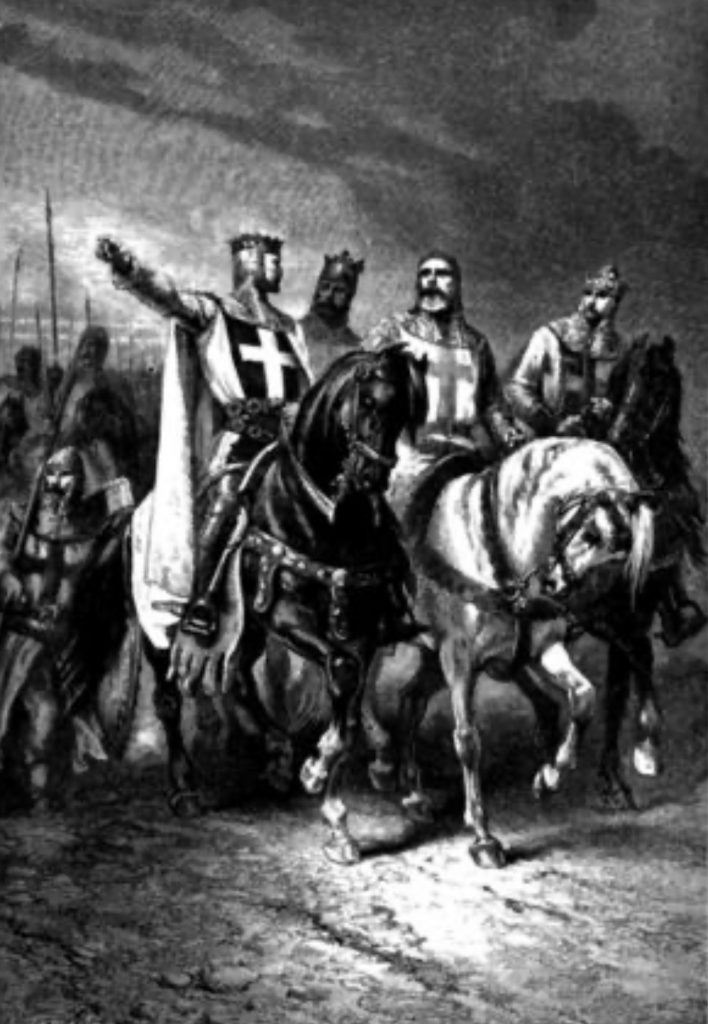
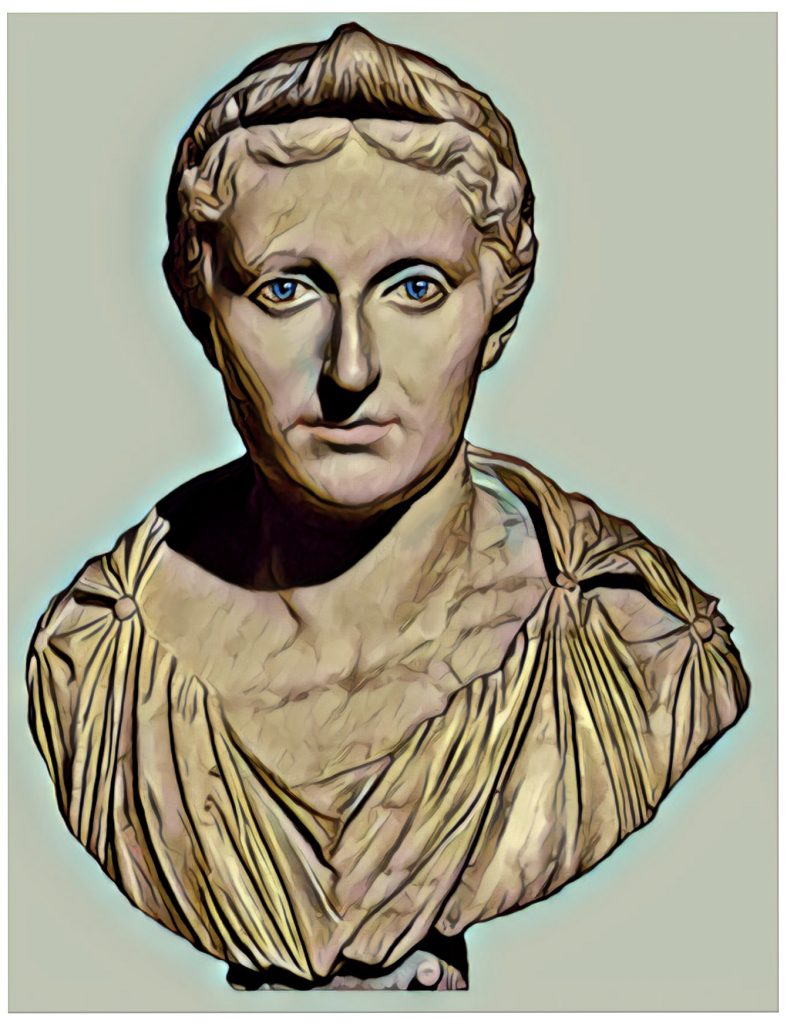
The interesting part is that it seems to be based upon real real characters in history. Sigebert I was King of Austrasia about the time of Attila the Hun’s invasion of Europe. In fact some sagas have Brunnhilda the daughter of Attila. Brunnhilda did have a sister, Queen Galswintha, but Fredegund, mistress of Chilperic I of Neustria, had her murdered so that she could become Queen. It almost sounds like another opera. Fredegund goes on to have Sigebert killed and Brunnhilda imprisoned. Eventually Brunnhilda escapes for a time.
She continued to rule the kingdom, but it was no longer the handsome couple in charge, with everybody happy. Her subjects began to resent her harsh rule, and they were happy that Fredegurd’s son, Clotaire II, captured Brunnhilda, who was now 70 years old. He tortured her for days, then had four horses rip her apart, and dragged her body parts throughout the city. Clotaire II ruined the Merovingian Dynasty and paved the way for the Carolingian Mayors of the Palace to take over.
So ends the wife of my 40th great uncle, and legendary shield maiden of the opera.











 A Work Progressing
Is it the Person? Or is it Fear?
I have the pondered the point of writing this. Do I expect that I will change minds? Sadly, no I don’t. Primarily because on the basis of WordPress analytics I have approximately 7.5 readers per week, and three of them repeat every other day. I am not an influencer, nor am I ever likely to go viral.
So I generally write history for history sake. I wouldn’t be able to sit at history’s feet and not comment on these historic times.
First thing, I do not play well with others. I am on Facebook, and periodically i get a request from a Facebook friend to make a comment, then cut and paste a certain paragraph and pass it on. An electronic version of a chain letter. I didn’t do it with stamps, and I’m not doing it with the internet.
Recently it has been suggested that I “take a knee” in support of the current protests around the country. Ha, I’m a child of the Sixties, raised near Berkeley. I protested from the time I was 14 or 15, from Free Speech, People’s Park and the San Francisco Vietnam Peace March. I have some experience. I will not take a knee.
There are reasons to protest, sometimes it helps to change things, most times it only changes the protester. That can go well, or it can south.
One of the things I learned in the Army (I was drafted, but later I re-enlisted) is to salute the uniform. You can disagree with the man, even hate the man, but you respect the uniform and the concept ot military authority.
But sometimes you protest the injustice given to an individual. JFK, RFK, or MLK being murdered. You feel like you know them, it seems personal, and they rightfully become martyrs, and icons/examples for senseless injustice. Were they perfect? Not at all, but they were not so imperfect…
The individual that has risen to heroic levels in this current crisis is anything but heroic. He was a violent man, convicted in a court of law for breaking into a home, holding a gun to the belly of a pregnant woman, while his friends looted the home. This was the primary of his offenses, which are lengthy, but the sum total paints the picture of a man that should never be a role model. Nevertheless, what happened to him was unjust.
Can we say his crimes were the result of his social condition? That’s a slippery road, some people had things much worse and lived better lives. We need to improve conditions. Having an ordered life, a strong family, with well paid jobs reduces crime.
For me, i back up and don’t go down the road I don’t know. I know about the reactions that the Police have been exhibiting for years. There are many factors, it is a stressful job, their lives are at risk, there are people who wish them harm. But the numbers do not support that it is rising. Yet their reaction seems to tell me they think otherwise. Enforce better training, reduce the fear.
I can support the protest that brings light to the injustice caused by unsupported fear. And action based upon solid facts and evidence will make a change. In this case, not the man, or the senseless greed and revenge.