I think it’s about fifteen years of password use before all the normal passwords run out. I know this is a general statement, and theoretically there are many millions of passwords possible. However…
There are a finite number of passwords that can be recalled. Depending upon how many demands on shared passwords, a normal family of four runs out of “patterns” in roughly fifteen years. A number that coincides with my experience.
I have cycled through the time limits of most of my secure accounts. That means I have changed so many times in a year that I have to create a new pattern. One interesting side fact is that I can tell how long it has been when I need to access the account by how many different passwords I’ve tried to use. I found one account that still used the first complex password that I made.
And of course, most serious sites only give you three tries before a phone call is necessary. I have used the Apple password app to help me remember odd sites, but it is inconsistent and doesn’t always update automatically.
I’ve noticed that some sites now require 9 characters, at least one capital, at least one number, at least one special character. I had a good pattern for the 8 characters and adding 1 to the end to make it secure seems pointless.
It’s almost been 7 years since I made my first post about the artists that I love. I’ve grown a bit since then and have gotten deeper into my likes. I’ve copied or made versions of most of the images I love. Very complex reasons why I have to do this. It makes me feel closer in some sort of way. So far I’ve listed 40 artists. This part three may not stop at twenty.
1. Georgia O’Keefe
So many great pieces. Impactful!
2. Giovanni Domenico Tiepolo, 1727-1824
Rebecca, 1751
3. Agnolo Bronzino, 1503-1572
Portrait of Ortensia de Bardi di Montauto, 1559
4. Alessandro Allori, 1535-1607
Maria de Medici, 1595
5. Niccolò dell’Abbate, 1510-1571
Woman with Fur, 1545
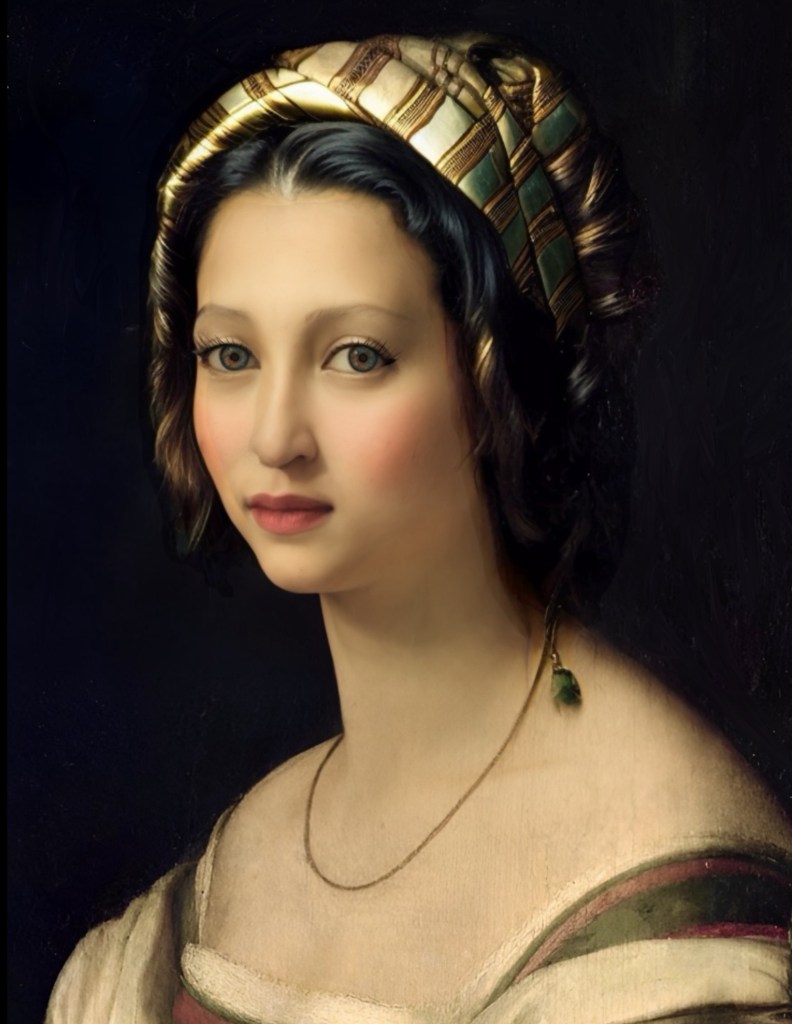
6. Boccaccio Boccaccino, 1467-1525
Gypsy Girl, 1517
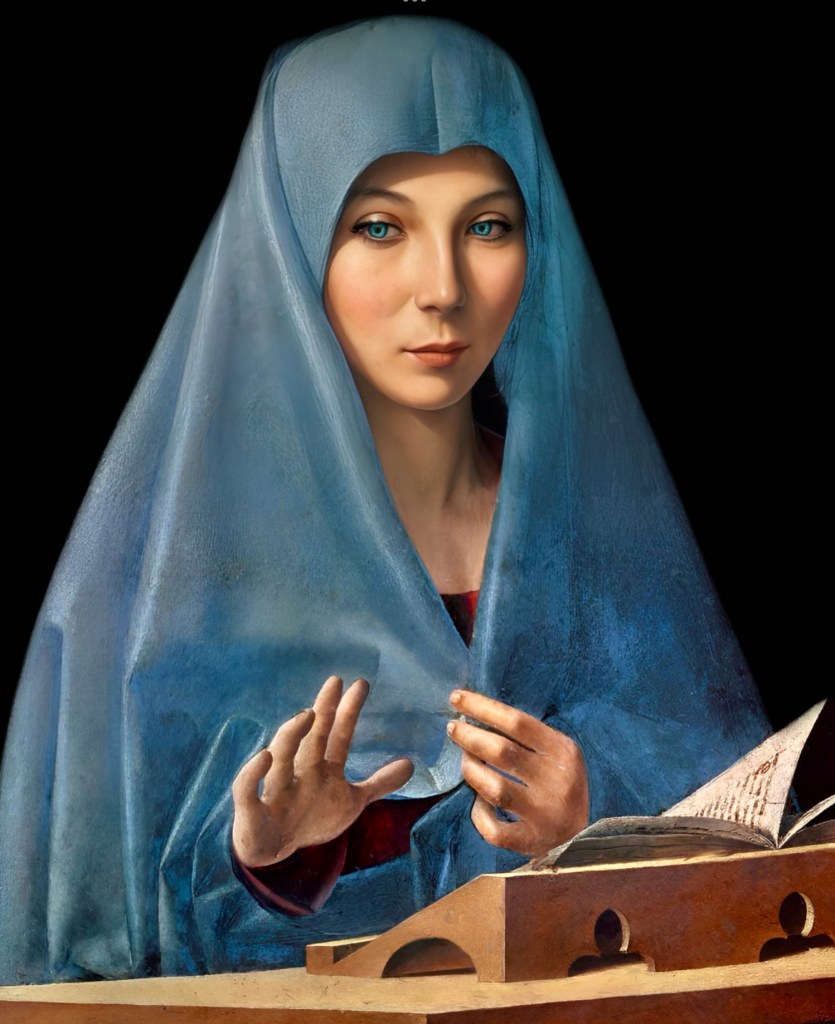
7. Antonello da Messina, 1430-1479
The Annunciation, 1474
8. Anthony van Dyck, 1599-1641
Unknown Woman, 1639
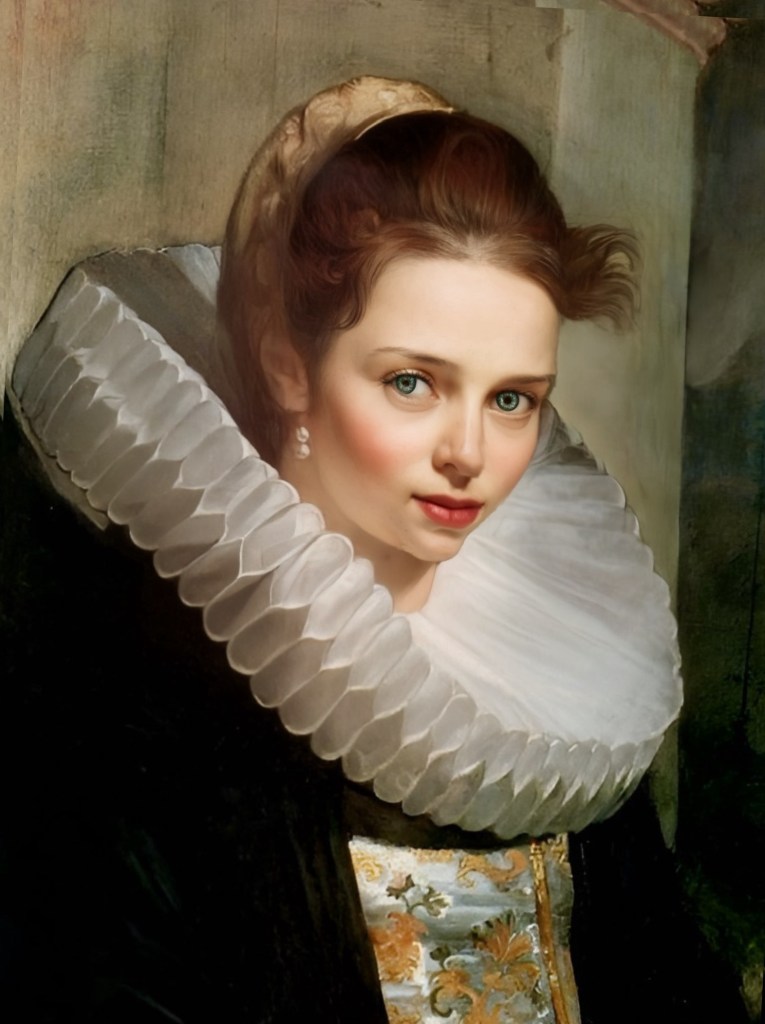
9. Peter Paul Rubens, 1567-1640
Marchesa Brigida Spinola Doris, 1606
10. Artemisia Gentileschi, 1593-1656
Clio, 1632
11. Jacopo Amigoni, 1682-1752
Maria Antonia Ferninanda of Spain, 1750
12. Helen Allingham, 1848-1926
Daydreamer, 1878
13. Cecilia Beaux, 1855-1942
Self-Portrait, 1894
14. Marie Bracquemond, 1840-1916
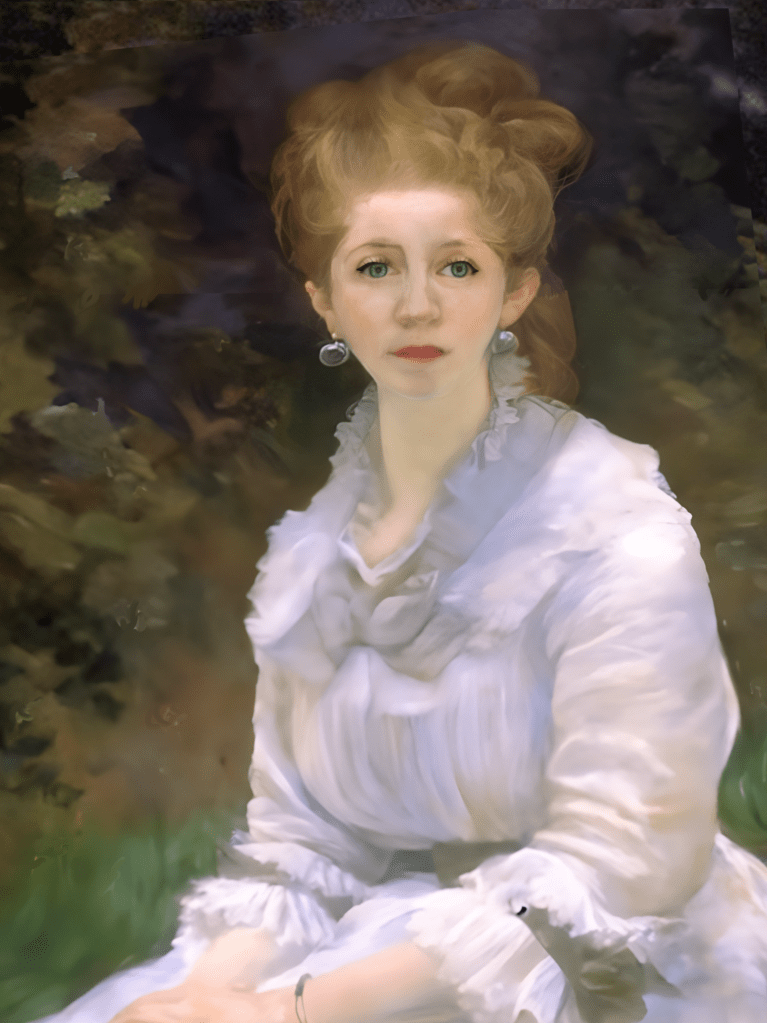
Lady in White
15. Maria Louisa Catherine Cecilia Cosway, 1760-1838
The Duchess of Devonshire as Cynthia, 1781
16. Rosalba Carriera, 1673-1757
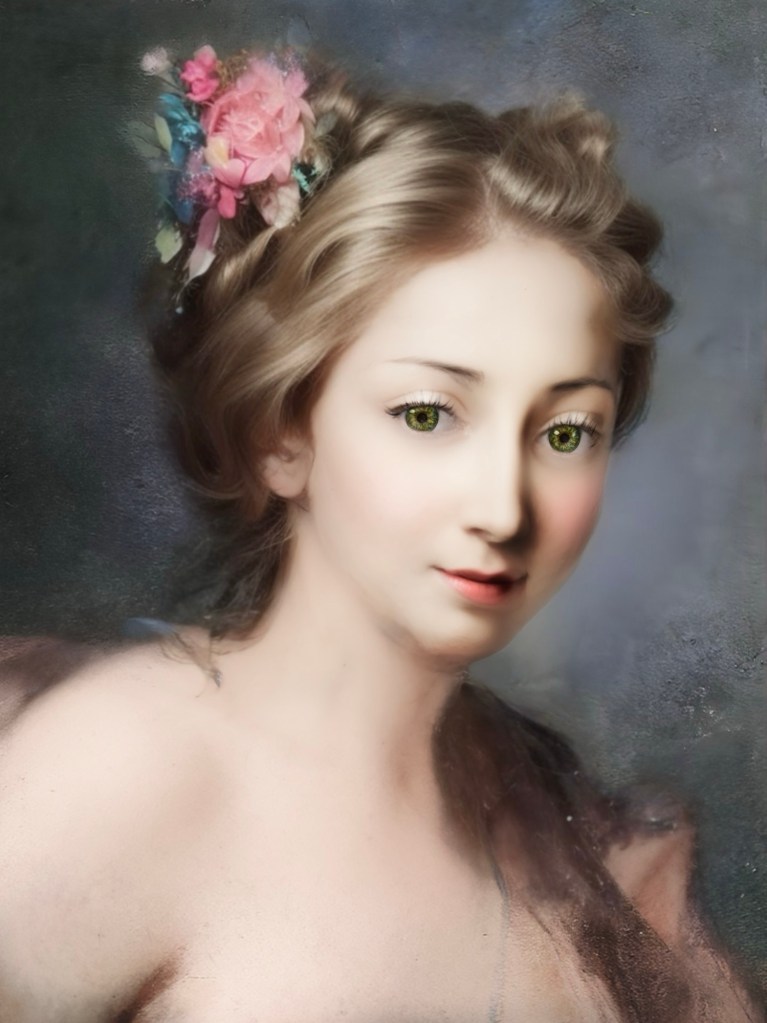
Caterina Sagredo Barbarigo as Bernice, 1741
17. Mary Cassatt, 1844-1926
The Long Gloves, 1889
18. Anne Vallayer-Coster, 1744-1818
Madame de Saint-Huberty in the role of Dido, 1785
19. Mary Beale, 1633-1699
Mary Witherspoon of Andwell, 1670
20. Hans Holbein, the Younger, 1497-1543
Anne of Cleves
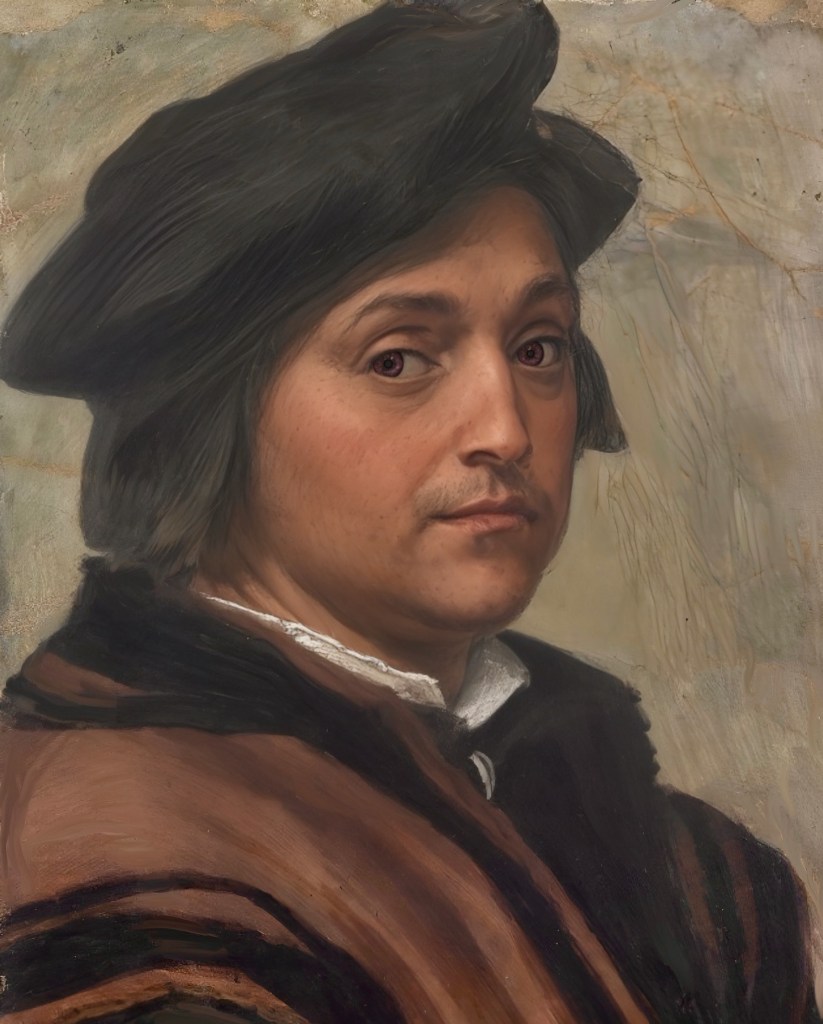
21. Andrea del Sarto, 1486-1530
Self-portrait, 1528Artist’s Wife, 1513
22. Massimo Stanzione, 1585-1686
Madonna and Child, 1639
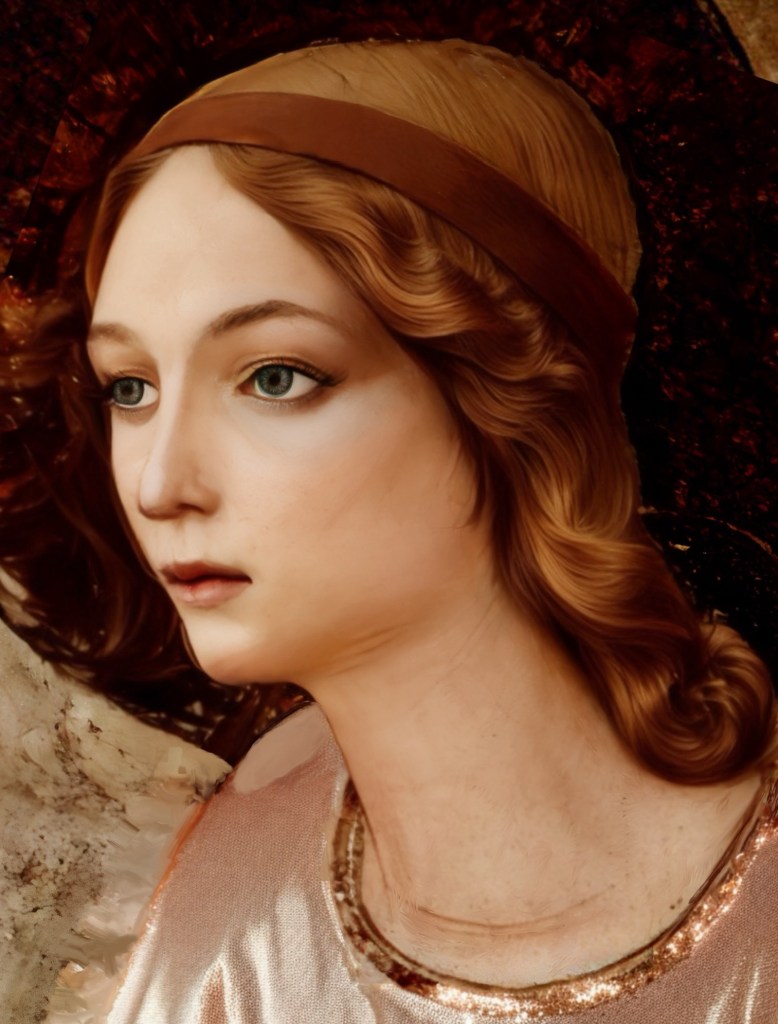
23. Fra Filippo Lippi, 1406-1469
Madonna, 1462
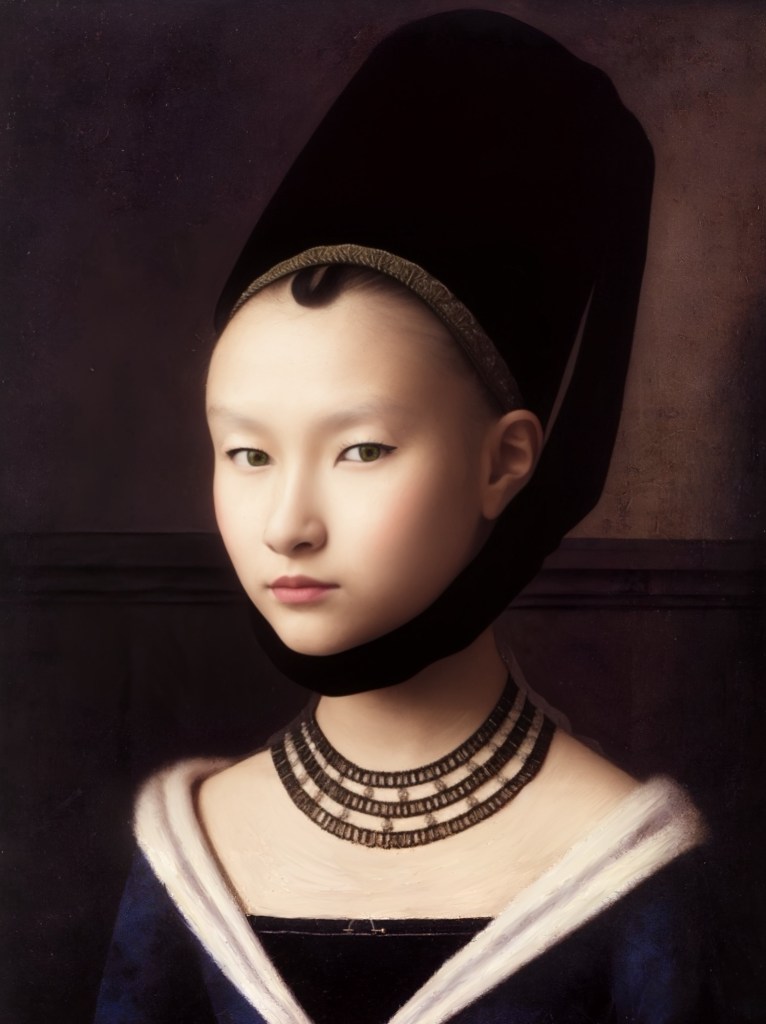
24. Petrus Christus, 1410-1475
Young Girl, 1470
25. Rogier van der Weyden, 1399-1464
portrait of a lady, 1460
26. Giovanni Battista Moroni, 1520-1578
Young Woman, 1564
27. Fra Angelico, 1395-1455
The Annunciation, 1450
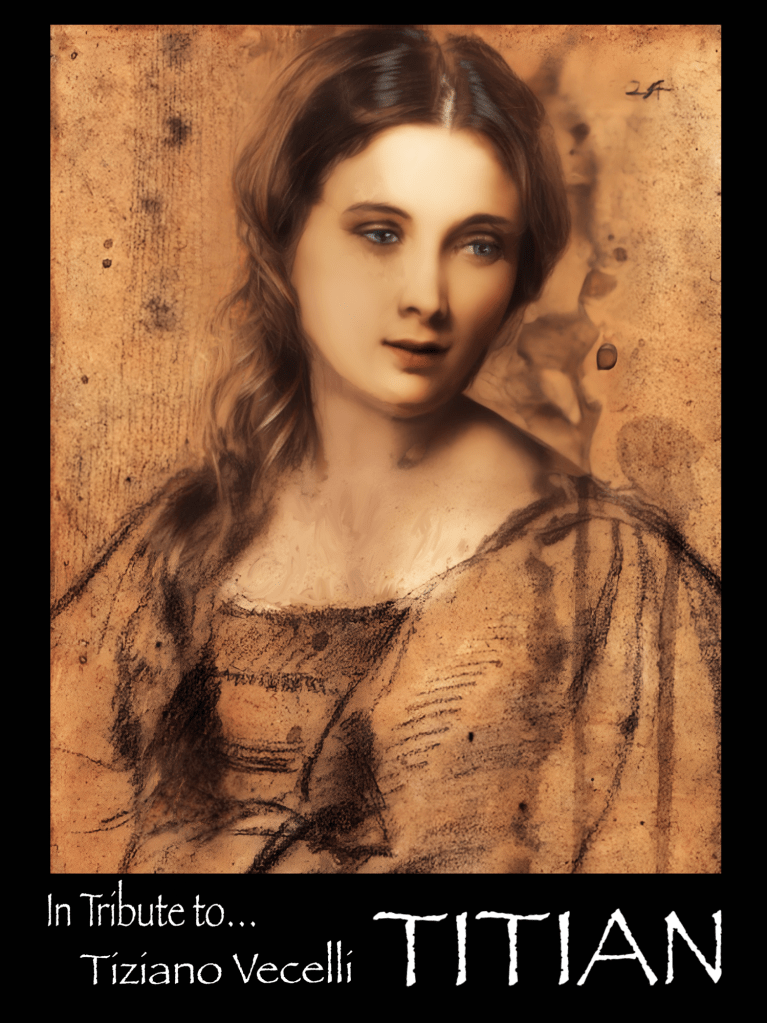
28. Tiziano Vecelli or Titian, 1490-1576
Titian, Woman holding an Apple, 1550
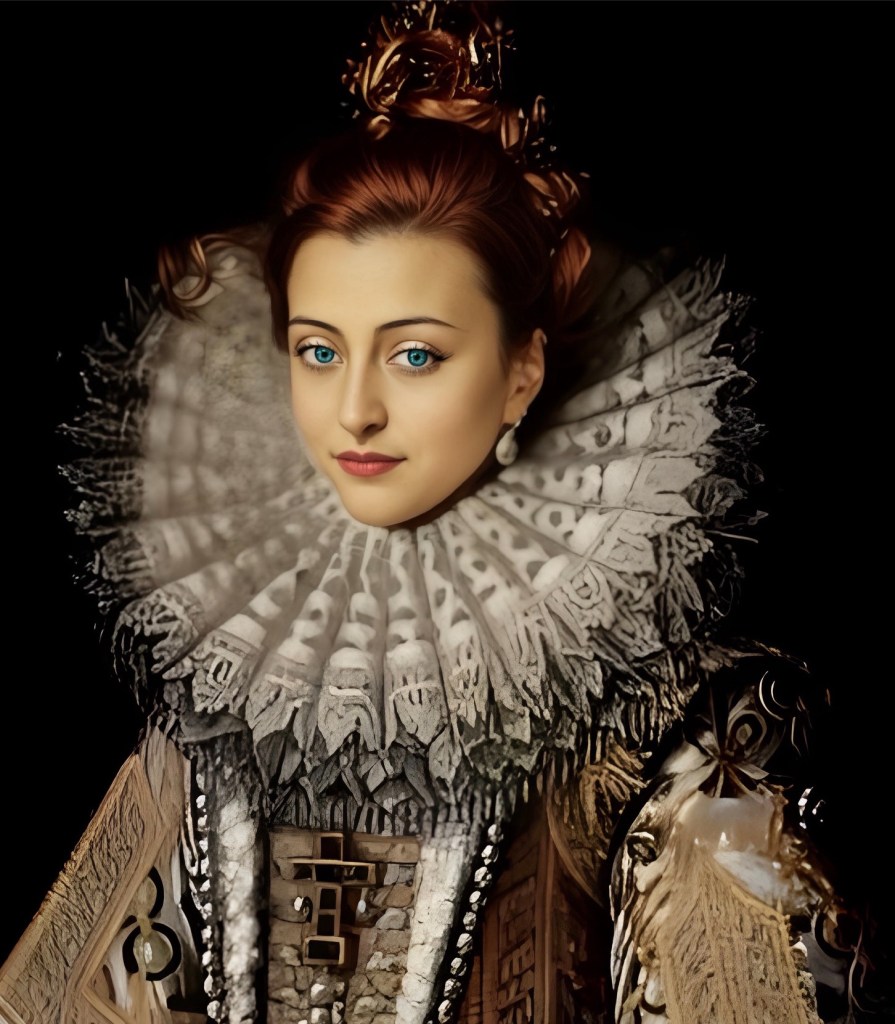
29. Frans Pourbus the younger, 1569-1622
Frans Pourbus the younger, Isabelle Clare Eugenia of Austria, 1604
Maria Louisa Catherine Cecilia Cosway, Self Portrait, 1781
Hmm, I got this comment on an image that I posted on Facebook, and it got me thinking. I have been on a journey to reimagine some classic images that I love. I’ve called them “tributes” in the past, but lately it’s been “re-image” or “reimagine”.
When I do this I have used lots of media, some digital, some not. It started after my heart attack when for a month or two I went medieval and only used brush and canvas. I had fun, I learned my skills haven’t improved much in portraits. Much better in landscapes.
Then I came to my senses and included my digital skills as part of the process. I would sketch in charcoal, scan the image, add some digital, print, then add some color pencil, then scan to add some more digital. A real mixed media approach.
Some images were very successful to my eye, some failed to meet standards, but so it goes. All is art, some is not good art.
Back to the comment, “That looks like AI”. I’ve been down this road so many times. I remember going down the lane at a street art fair, looking at the various booths displaying art. One booth had dozens of interesting photographs, landscapes, city scenes, portraits…
Above the entrance to the booth there was a sign with bold print, “None of these photos have been touched by PhotoShop!” Uhh, okay?
Soo… these were handmade?
That was a somewhat snarky response, sorry. I spent nearly thirty years teaching Photoshop to people to improve/repair photographs, to create digital art, and to separate photographs for the halftone printing process. It wasn’t a bad thing.
I know the intention of the booth owner. Some people like to adhere to a fixed process. Some like to called it the “traditional tools techniques”. I like it, I like that hard fought knowledge doesn’t disappear. I still like setting lead type, using furniture to lock it in, tighten with a quoin key, hand feed paper into a windmill press. The finished work has a different quality. I love the impression and the smell of the ink. But it isn’t better than the type I see on my iPad! Nor is the iPad better.
I remember visiting some galleries with my early “giclee printed on canvas” digital work. The owner would say, “Oh yes, that looks like computer generated art.” Hmm, was that perceptive or judgmental?
Apparently his clients preferred brush generated art for their dining rooms, providing that the colors match the carpet.
“That’s not art, it’s merely an impression of art.” “Photography takes all the skill out of making pictures”. “No Photoshop here!” “That looks like AI”
All this to say is that humans make tools. Most of the time the tools are improvements in the process. Sometimes that gives the impression that the products are better, and sometimes they are. However, if better tools make worse products then the market will correct itself. Giving a special quality to older techniques is fair, but it shouldn’t limit the progress of tools making newer products.
I loved the historical fact that for thousands of years brushes were all round. They were big and small, and everything in between, but they were all round. It was how brushes were made. Then in the middle of the 19th century, an American invented a metal ferrel for the tip of the brush that was flat. So then we had fan brushes, flat brushes, flat brushes with stiffer bristles. Just in time for the onset of the “plein air” movement, when a lot of paint had to be applied in a short amount of time, because light was changing outside.
But perhaps there were booths with signs saying, “Only round brushes used here”, or “Only fresh ground pigments stored in pig’s bladders here”.
I dunno. We have been trained to fear AI. We have certainly created a lot of media where machines have not been friendly to humans. From “Metropolis” in the 1920s, to Hal in “2001, A Space Odyssey”, and finally in all of the various “Terminator” movies… they gave all of us reasons to mistrust technology and future “artificial intelligence tools”.
And the fact is, that all tools can be abused, because humans are made that way. The fear is that our tools are abusing and using tools in the same way as humans, only better and faster. A complex thought.
Need we become Luddites? In response to automated weaving looms, do we throw our wooden shoes into the machine? Do we throw our sabots, becoming “saboteurs”?
Specifically, our understanding of cave art is changing. The purpose of these images has long been a mystery. The fact that they exist at all is due to the nature of their placement. Protected by the elements, the art is in almost pristine shape when first discovered. Some art has suffered from the breath of visitors and the technology that has been introduced to the cave system.
In some cases, elaborate models have been created to mimic an exact copy for tourists to experience. Most caves have been closed to the public, except for researchers.
While not obviously stated, the general consensus has been that the creators of the cave art were male. The sense was that the males were generally thought to be the hunters of the society, and the art seemed to be primarily about the animals that were hunted.
The most thought the reason of the images was to capture the spirit of the animal in order to have a successful hunt. Placing the images in a very dark cave system was at least two-fold. 1) proving the bravery of the hunter, and 2) capturing the spirit of the animal to be hunted. There may be other reasons, but none definitely determined the gender of the creators. Of at least no one thought about it.
I few years ago there was a study of the various handprints that were also left behind. It could be the remains of visitors it also could be a type of signature of the creators. It turns out that a new study suggested that 75% of the handprints were female.
Size alone was not the major factor. It turns out that the finger lengths of prehistoric individual are more different between male and female, and not the same as between a young boy and an adult male.
This is not as true today with modern skeletons, but the averages of the lengths of certain fingers can determine the sex as well as the pelvis.
This is how they determined that 75% of the cave art handprints were female. If so, then why were they created?
For me, it makes sense that delicate work might favor the female. Common activities may have been basket weaving. Using tools or brushes in a cave might favor women. Just getting into some of the caves would have been easier for a slighter frame.
Much could be decided if we knew for certain the reason and purpose of the cave art.
What we do known from history is the lack of women creating art for society for hundreds if not thousands of years. Only two women were well known during the Renaissance, and both had relatives that were famous and provided access to customers. Art was not a job for women.
There were a few women painters/sculptors but they were rare. It wasn’t until the mid 1800s when women began being recognized as art makers. They must be a reason for this.
We must not think that this is a problem that has been solved. Statistics have shown that twice as many women majored in art while in college, but museum show twice the number of men than women.
One of the great crimes of humanity was/is the lack of encouragement for women to make images. For thousands of years it was not even the lack of encouragement, but actual banishment.
I’ve been reading about the first images being cave paintings, only because they were somewhat protected from the elements, I’m sure there were other examples that were earlier, but they disappeared. It’s interesting how the writers never address the gender of the image makers. But I still get the opinion that in the writer’s opinion they were male.
I’m not so sure, the passage into the caves were quite small, easier for less muscled bodies. It has been assumed by some that entering the cave was some sort of
‘Rite of Passage’, or proving bravery by going in to view the images. I can see that, but it makes perfect sense that the leader of the campfire set everything up ahead of time.
In any case, until at least the 19th century there seems like one woman artist out of every hundred. I thought I would explore some of the lesser known in addition to the few famous.
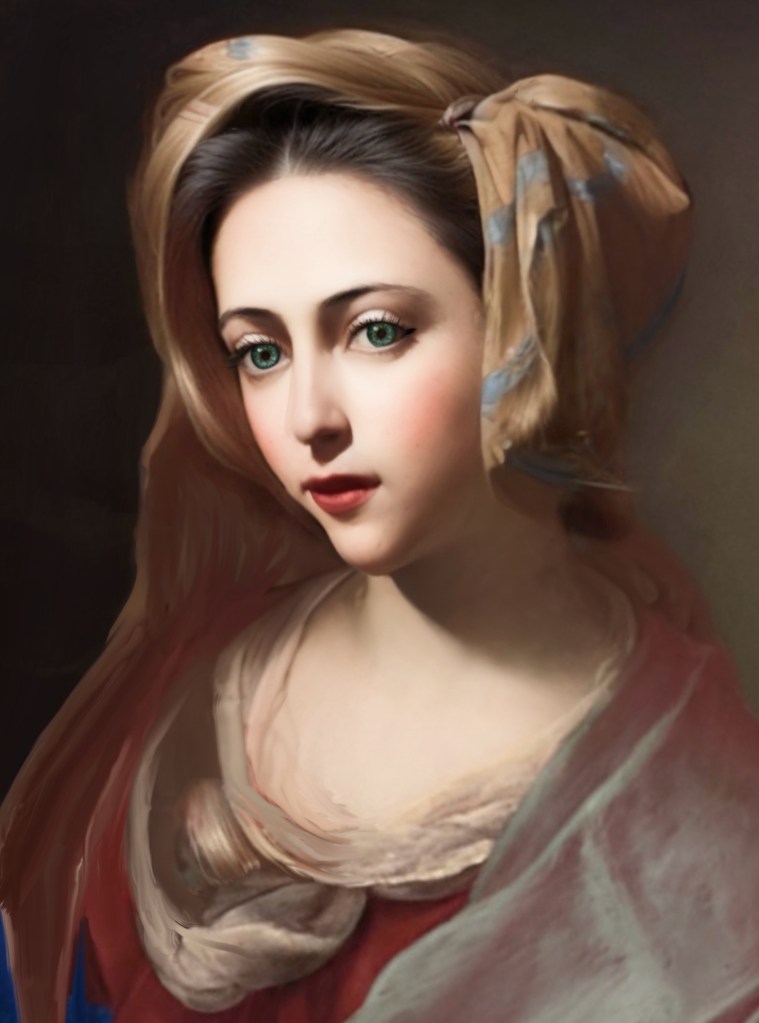
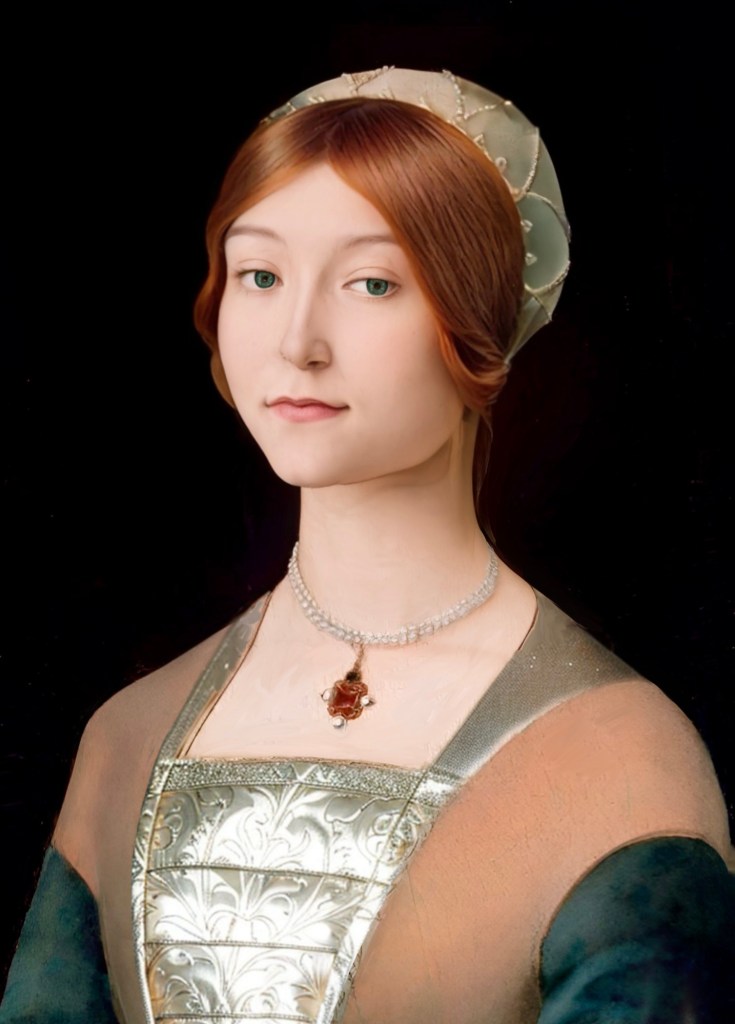
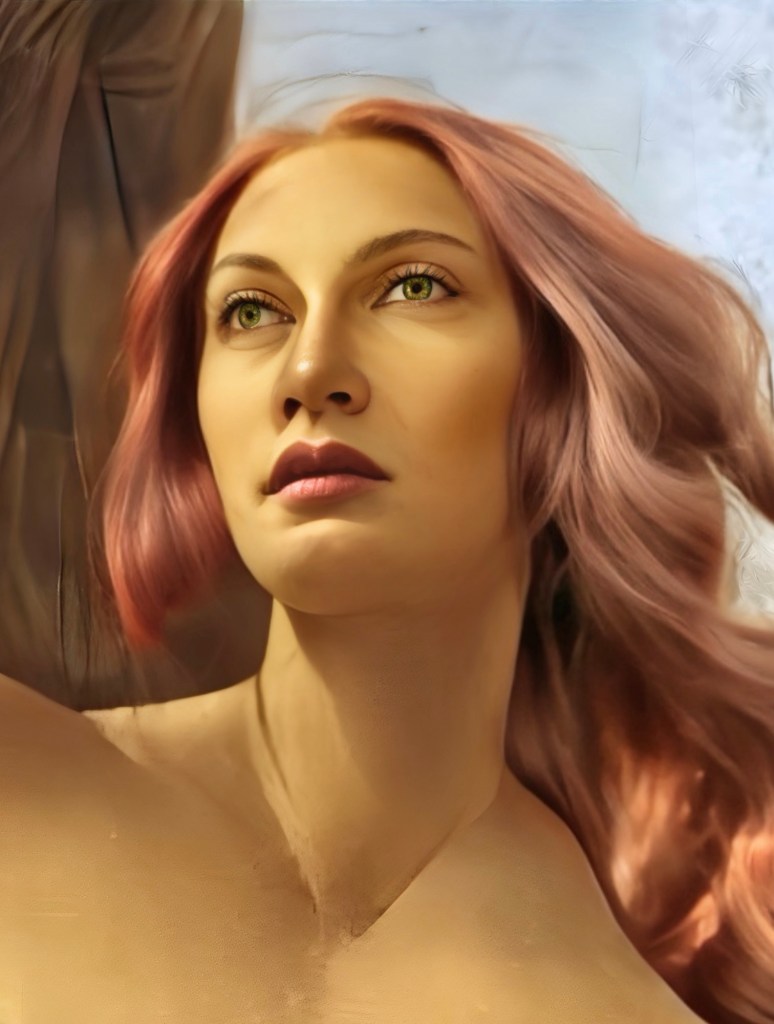
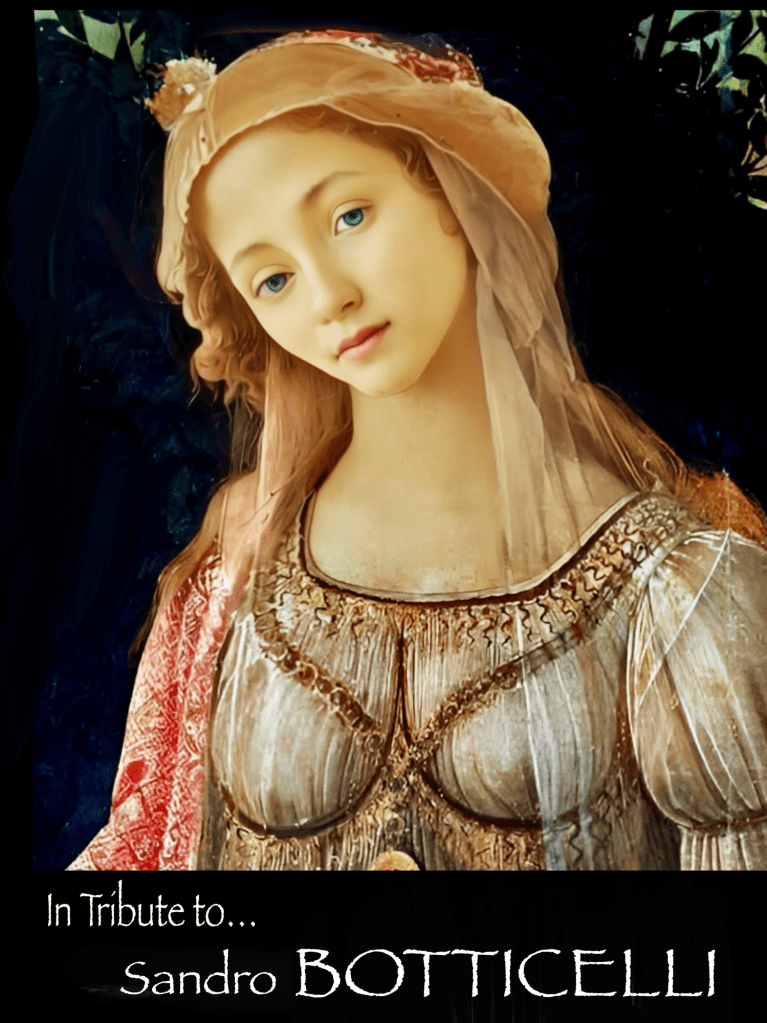
These are tribute images, as I attempt to understand their images by re-imagining, so please look up their originals
Ohhh, the Renaissance! My first serious love in images, and I have neglected you so!
It turns out that it is just a few degrees beyond my skill set. So, I’m not satisfied with my redrawing/filtering. But, since it’s only a few degrees, sometimes I make some interesting images, not better, but not worse.
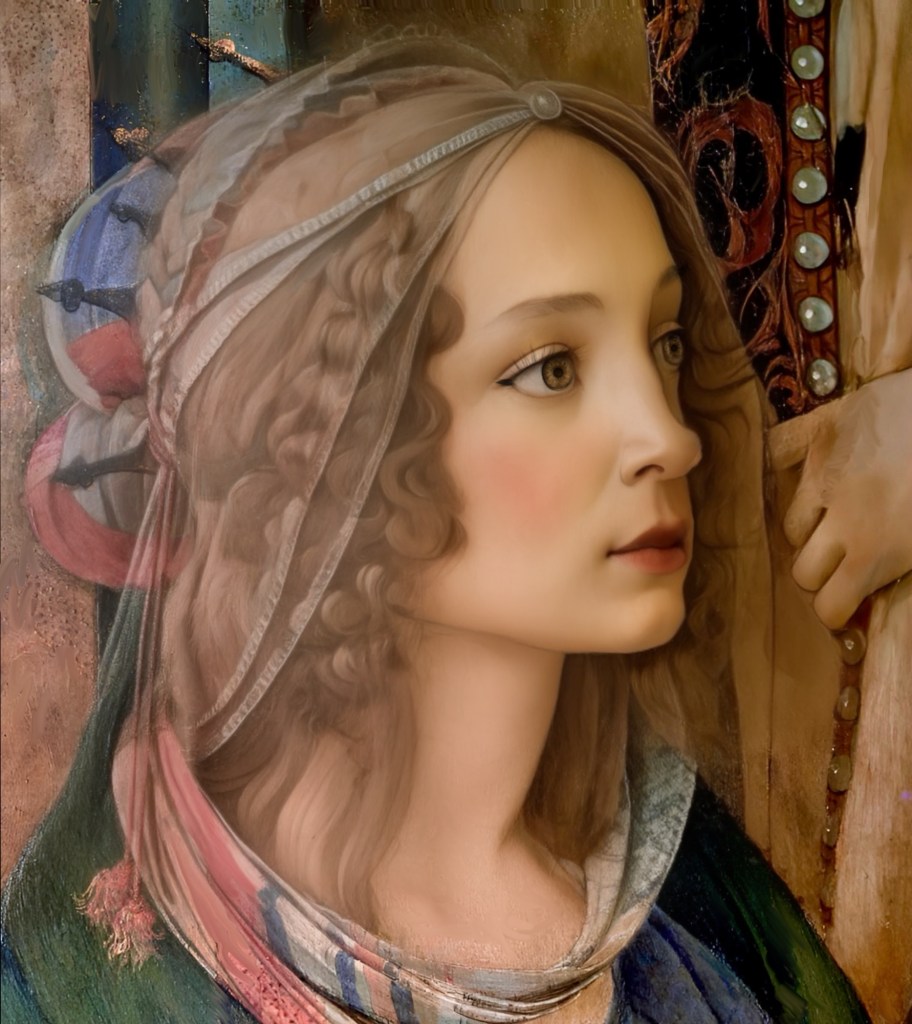
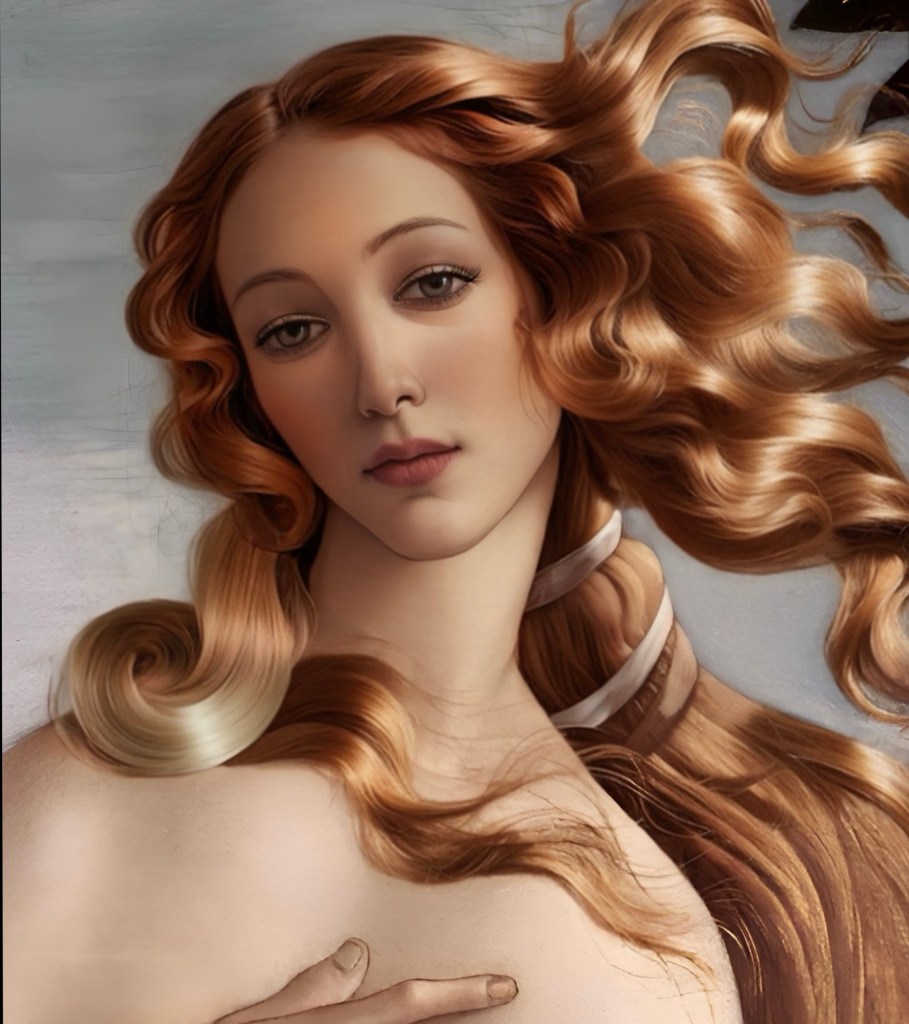
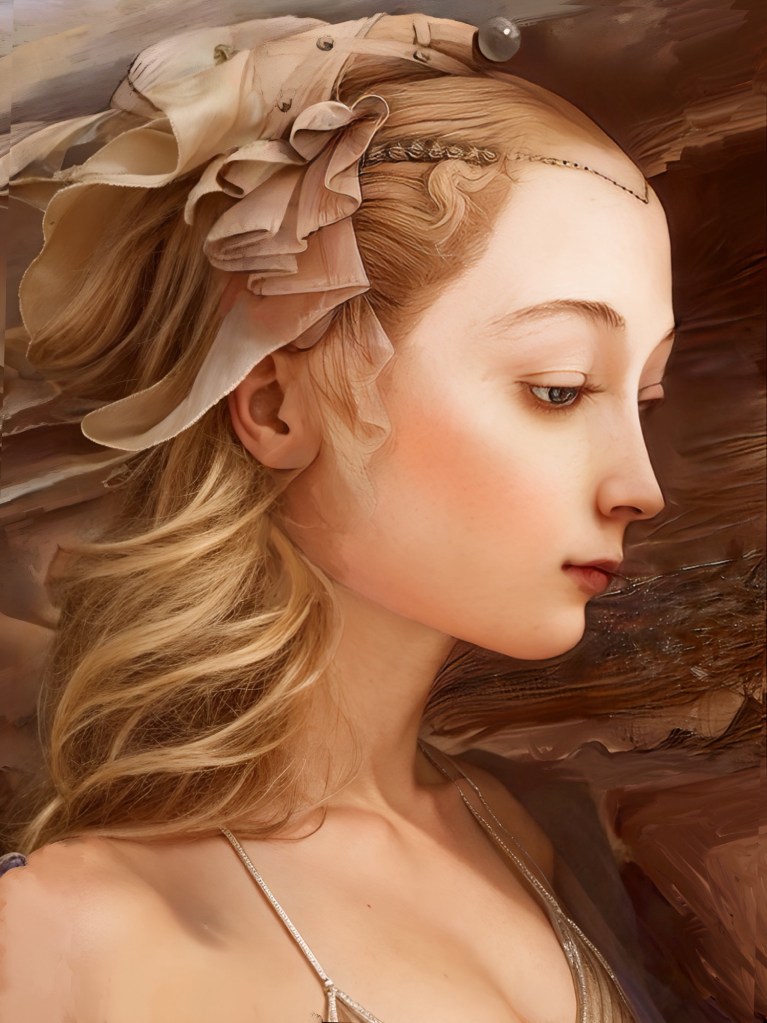
Well, I can correct a few things, the proportions are sometimes out of whack, maybe some head shapes are too traditional… And there are lots of cracked paint and dim colors, so here are some of my Renaissance re-imaging.
Jacopo Tintoretto, 1570Sandro Botticelli, 1494Jan Van Eyck, 1434Sandro Botticelli, St. Catherine, 1488Sandro Botticelli, 1485Agnolo Bronzino, 1544Leonardo da Vinci, 1485Fra Filippo Lippi, 1462
I find that redrawing some of my favorite pieces by my favorite artists gives me some additional knowledge. I’m not saying that it’s an improvement, but sometimes I correct what seems to me an oddity. Sometimes it’s just a common style. Women with arms the size of most men’s legs for example. Often during the Renaissance the women looked more like football lineman.
Now, it could be said that the models were exactly like that, who is to say? We don’t have photographs!
But we do have some photos of the models for some of the later art movements. When I come across some of the more high resolution photos, I try to render the image more or less in the style of the artist.
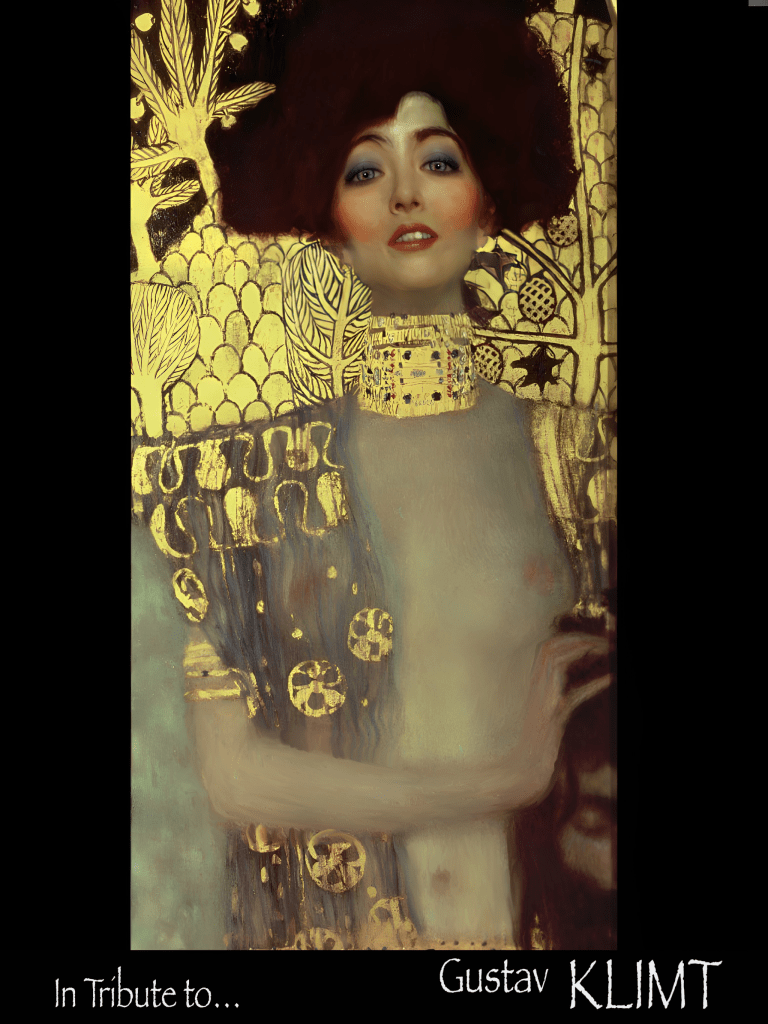
This is the favorite muse/model of Gustave Klimt. Her name is Emilie Floge. She is the source of dozens of images by Klimt. She was an important fashion designer in Vienna and a successful businesswoman. She was also a lifetime partner of Gustave Klimt and inherited half of his estate when he died in 1918. Emilie died in 1952 at the age of 77.
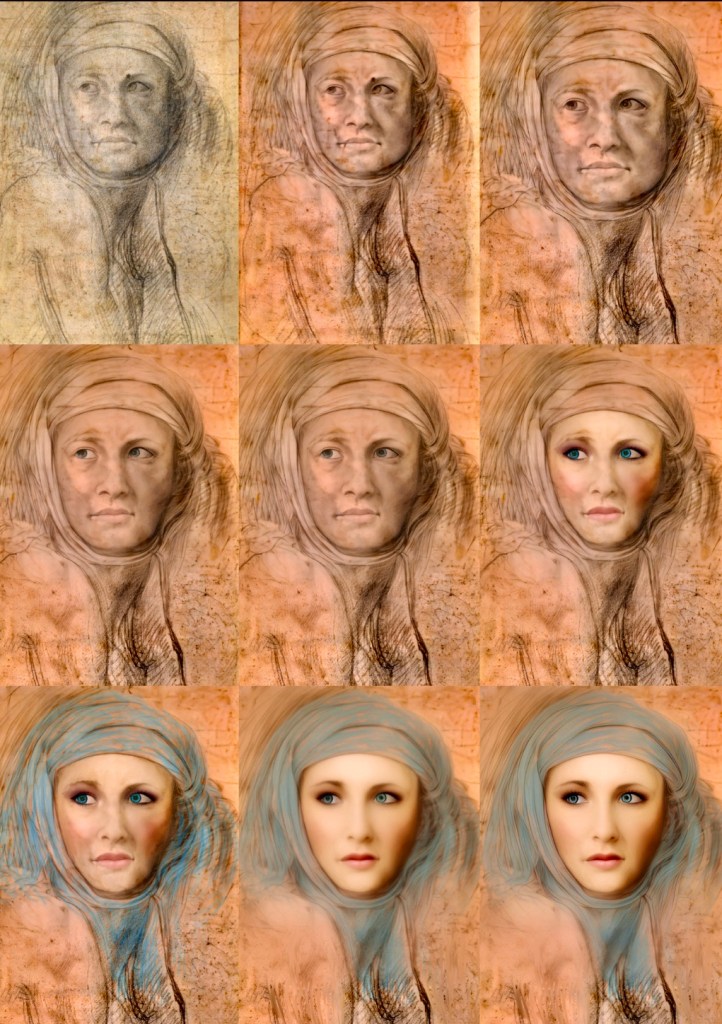
I have copied the famous “Creation of Adam” many times, the almost touching of the Divine finger is a brilliant composition.
But Adam is already fully formed, the common name for the panel of the Sistine Chapel is wrong. G-d is bringing the gift of a helpmate to Adam. Eve is under G-d’s arm in the billowing folds of His robes, surrounded by several cherubs.
And I must say that Eve’s expression doesn’t seem to approve. What is Michelangelo saying?
I’ve just read an article that the shape of G-d’s red robe resembles the human brain, with the basic parts, including the brain stem. Was this part of Michelangelo’s intent?
I spent several more hours redrawing some other panels of the chapel, then I found some unfinished sketches that I tried to finish in my tribute. I now have many more questions with no answers.
I dreamt I was a guest at the home of a powerful family, perhaps I was only the guest of a lesser member of the family.
There were the central tables in the dining room, where voices could be shared, and with just a little more volume, could be heard quite clearly.
Then there were tables on the edge of center, slightly around a pillar or two, in the same room, but not in the same location. That is where the person who invited me sat with his small family. I sat on a chair at the edge of his table. A position that was edge of the edge, with no formal place setting.
Someone from the center tables made notice of my presence, and made a remark. I’m not sure who it was addressed to, he didn’t look at me while he spoke, but I heard my name, and saw a vague gesture.
There seemed to be a “slight” attached to the remark, something along the lines of, “At least he doesn’t have to decide which fork to use.”
This pointed out that the lesser family could invite guests, but that they wouldn’t necessarily be served, or be allowed to eat. At he same time it made the suggestion that the quality of the guest of the lesser family was not up to the social standards of the table.
Then I realized in the dream, that it wasn’t about me. I was being used to abuse the lesser family in an accepted indirect manner.
At the end of his remark, several heads turned to me to see if I had anything to say. I thanked my host for inviting me, I mentioned that I have access to great food in other places, but for now, it is his company that I desire, and that doesn’t require a fork.
Why the dream? Because we often lead lives of “coulda, woulda, shoulda.” But not in a dream.
Even though I had three girls, I never learned to respect the qualities of glitter. It was always too much, too much visual scatter, too much attention getting, and too much everywhere.
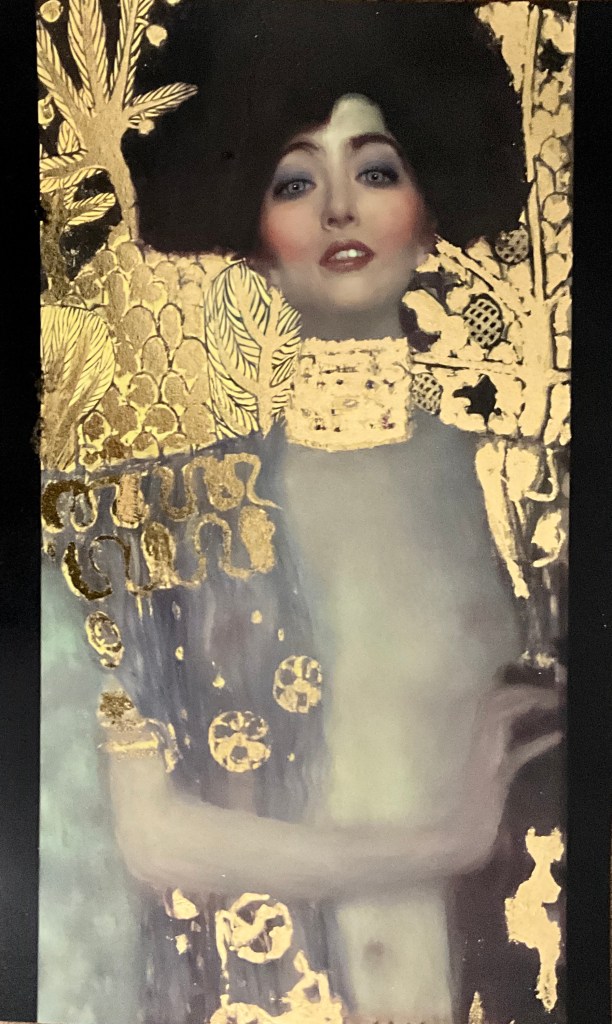
And here I am, trying to master the art of applying gold leaf to images.
I’m telling myself that it is tolerable because it is actual gold.
Finely beaten sheets of gold, 2 inches by 2 inches square. So thin that a slow exhale will send the sheet flying. If you think Saran Wrap is problematic by folding onto itself in multiple layers, wait until a sheet of gold leaf goes origami. Any attempt to right itself will tear it to pieces.
The theory is that you apply a thin water based adhesive to an area, wait until it dries a magical unknown amount of time, then lay down the sheet of gold, brushing it with a stiff flat brush. Here is where the theory comes in… the brush will scrub away the gold that does not have adhesive. Sometimes it peals off mini sheets of gold leaf. Sometimes it makes gold glitter that goes everywhere. In the air, on your clothes, in your beard, in your hair, all over your art work.
You can’t brush it away, it doesn’t disappear, it just goes to live somewhere else. You can’t scrape it up in a pile to throw it away, it sticks to anything temporarily, then unmindfully detaches, and goes on a fitful journey to stick somewhere else.
It’s been hours of attempted clean up, and flecks are still popping up everywhere.
But oh, what an effect it has on the artwork! Klimt was right to use it so much. It changes everything, enriches, gives the image panache, style, and magic.
It is worth exploring the right mixture of adhesive to water, it is worth exploring how long you wait for the mixture to dry a little before laying down the gold leaf. It is worth exploring how to work slowly, applying smaller areas of gold, making less glitter, allowing you to reapply small bits of gold sheet held with twizzers.
And definitely it is best to apply some sort of fixative afterwards.


















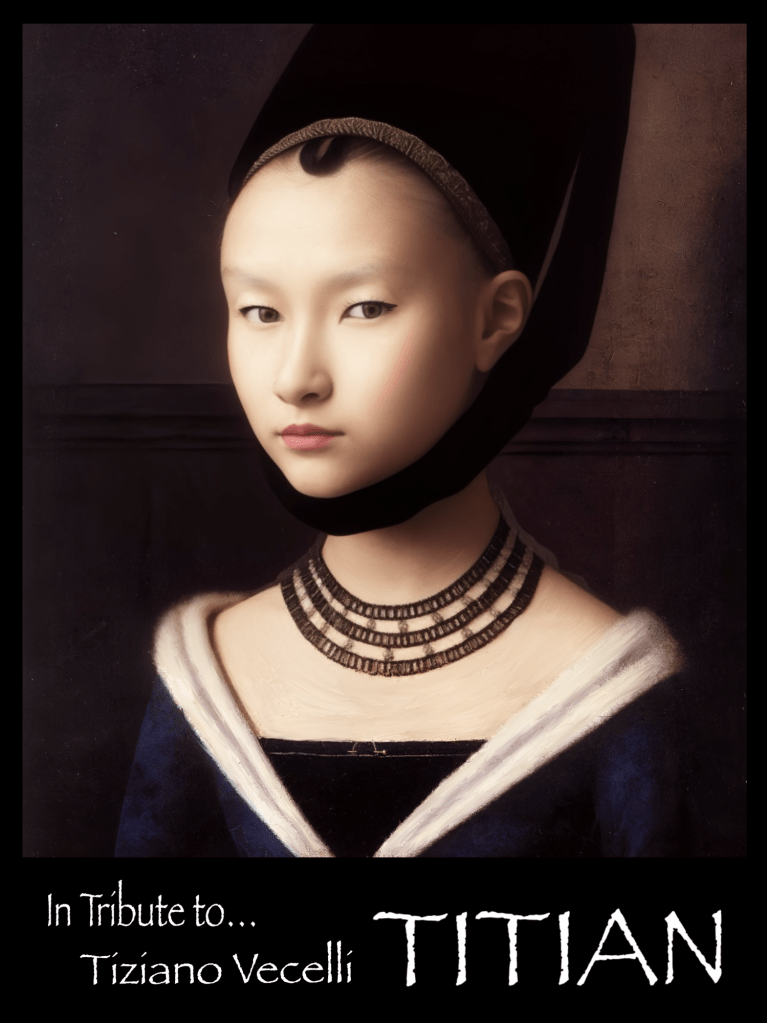
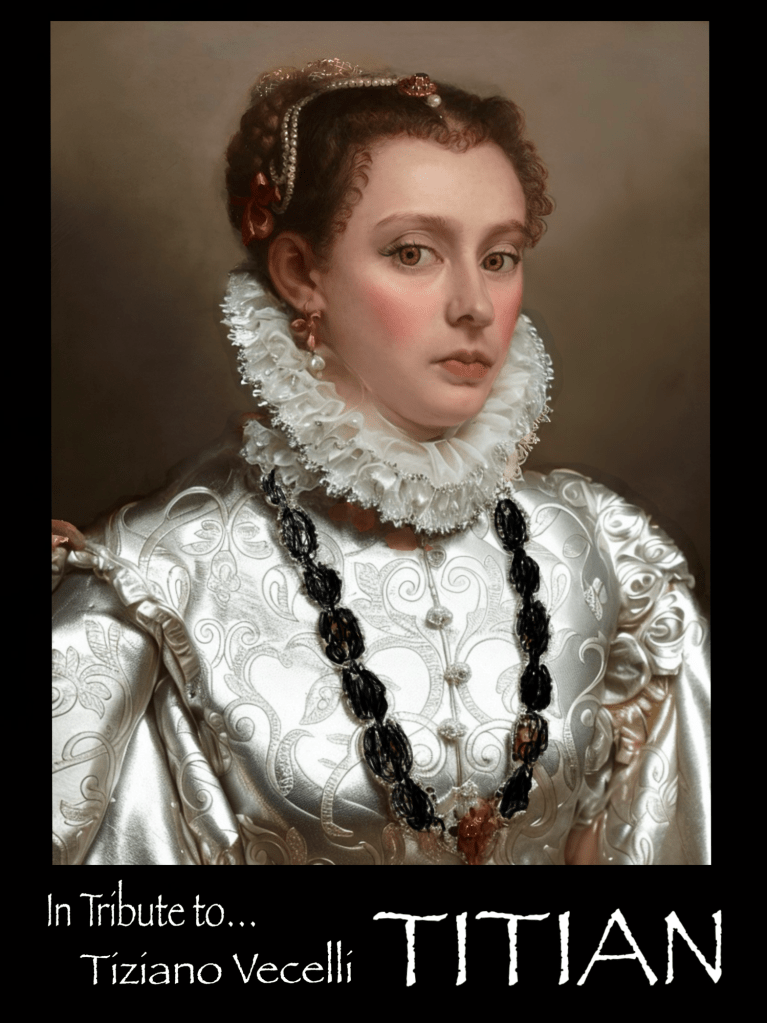
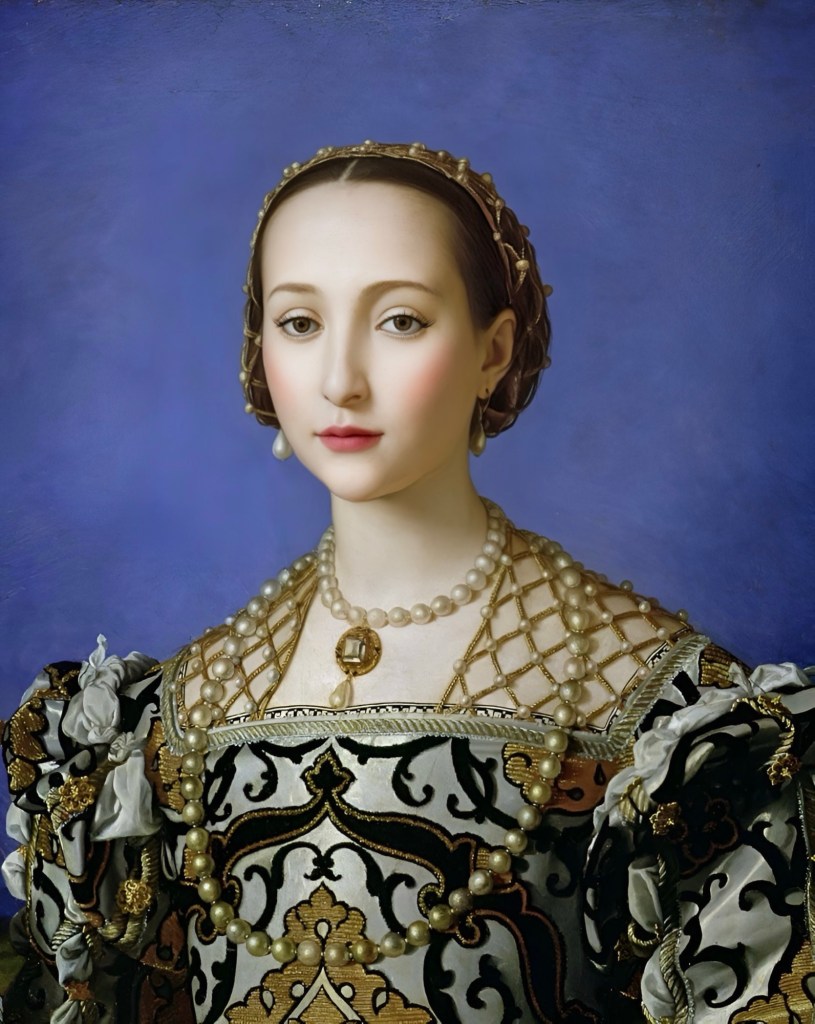
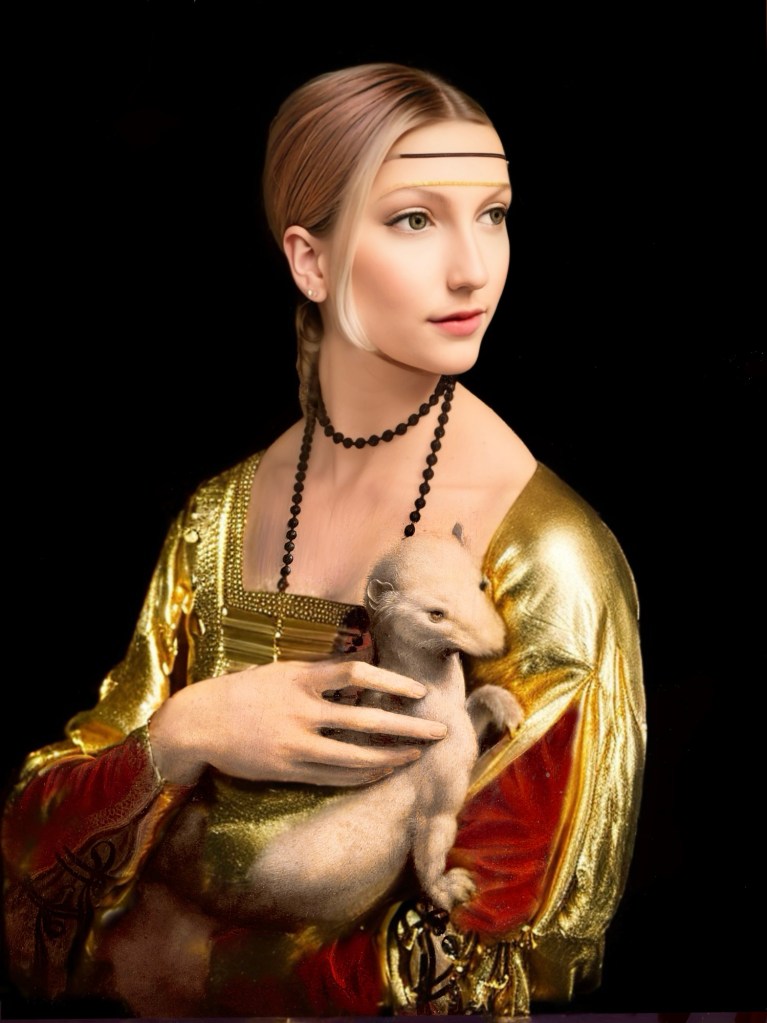






 A Work Progressing
I hit a Wall
I think it’s about fifteen years of password use before all the normal passwords run out. I know this is a general statement, and theoretically there are many millions of passwords possible. However…
There are a finite number of passwords that can be recalled. Depending upon how many demands on shared passwords, a normal family of four runs out of “patterns” in roughly fifteen years. A number that coincides with my experience.
I have cycled through the time limits of most of my secure accounts. That means I have changed so many times in a year that I have to create a new pattern. One interesting side fact is that I can tell how long it has been when I need to access the account by how many different passwords I’ve tried to use. I found one account that still used the first complex password that I made.
And of course, most serious sites only give you three tries before a phone call is necessary. I have used the Apple password app to help me remember odd sites, but it is inconsistent and doesn’t always update automatically.
I’ve noticed that some sites now require 9 characters, at least one capital, at least one number, at least one special character. I had a good pattern for the 8 characters and adding 1 to the end to make it secure seems pointless.
How secure are we really?