Father’s Day

It was a good day.

All my children remembered and wished me well.

Mostly they remembered good things.

Some, even great things.

Some… suspicious.

For a lot of years, I had a late start to my day.

That meant I made breakfast and packed their lunches.

They weren’t great breakfast eaters.

Often, I had to deliver it directly to their rooms—if they ate at all.

I always suspected their lunches ended up in lockers.

Who knows what they actually ate?

One time—for someone—I packed a baggie of uncooked brown rice.

That seemed a little light, so I added a can of stewed tomatoes.

No can opener.

Nothing else.

Later, I learned they usually ate my lunches.

Except on that day.

Sometime after that, I gave my son a can of chili.

No opener. Again.

I am, I admit, perverse.

The best proof? The chicken feet incident.

My wife had bought a kosher chicken.

While cleaning it, she screamed.

They had stuffed the cavity with sweet meats—and chicken feet.

She handed me the extras.

Later, while the kids were watching TV in the next room, I was doing dishes.

I said loudly, “This water’s too hot…”

Then I screamed in pain: “Help me!”

They came running—only to find me with chicken feet protruding from my sleeves,

grimacing, trembling, asking for assistance.

I told you—I’m perverse.

Then there was the mop-head incident.

It was a Saturday.

The game was: follow Dad everywhere and bug him.

I ducked into the garage.

Seconds later, the brood came charging in.

But instead of me, they met a tall creature

with a mop on its head and outstretched claws.

They fell backward in a tangled heap.

Ah, Father’s Day.

Good memories.

Posted in Commentary | 2 Comments

Eidolons

On the Departure of the Body

At the moment of death—physical, visible, undeniable—the ancient Greeks believed that something separated from the body. They called it the eidolon. The image. The echo. The essence.

But death, we know now, is complicated.

The heart stopping is a strong indicator that something irreversible is happening, yes—but not everything dies at once. Unless you’ve been vaporized or scattered by explosion, the body doesn’t surrender all at once. It evacuates in stages.

There’s a strange grace in that:

A few minutes of staggered departure.

Time to pack, maybe.

Some cells still believe in the plan. Hair, nails, skin—they haven’t read the memo. They’re still filing forms, renewing memberships.

And somewhere in the brain, or behind it, the electrical flickers of memory and sensation are watching the lights dim.

“Let’s get out before the bacteria get us,” they say.

“They’ve been waiting for years.”

So maybe that’s where the eidolon comes in.

The part that leaves before being consumed.

The part that remembers how to leave.

But where does it go?

And how far can it get?

My thoughts dissolve inside my body in less than a minute.

What chance do they have outside?

Do they carry a beacon?

A destination?

A reason?

What are they for—these eidola?

To wander mournful woods?

To flicker on moonlit beaches?

To whisper futures to the living?

But for what purpose?

Nothing is created.

Nothing destroyed.

Only changed.

So perhaps the eidolon isn’t a soul, or spirit, or ghost.

Perhaps it’s just change—

distilled into form.

And change is coming.

I don’t like it.

Posted in Commentary | 1 Comment

Growing Old in Berkeley

Telegraph Avenue and the Air-Conditioned Nightmare

(A Memory from the Edge of the Crowd)

I dunno. I think I was a sophomore in high school—so that would be 1964, or thereabouts. I’d spent the summer skipping my monthly haircut. It wasn’t long by today’s standards, but in Richmond, it was long. That was fine. I saved my allowance and spent it on paperbacks.

I was consuming them at a voracious rate.

Unfortunately, my selection was determined by the library at The Hole in the Wall junk store. I think the owner found most of the books in local dumpsters. I was buying books that had been thrown away. More importantly, I was reading books that had been thrown away.

Apparently, science fiction was considered disposable then—because there was a lot of it. That’s how I learned to read everything by a writer I liked. Robert Heinlein was king.

Every now and then, I’d find something different. Like The Way of Zen by Alan Watts. Powerful stuff—but I couldn’t find anything else by him. Then I found Tropic of Cancer by Henry Miller. Well now—banned in Boston and sexy as all get out. Sure enough, someone threw out Tropic of Capricorn. I was on a roll.

One day I scored Sexus, Plexus, and Nexus. I had reading material for weeks. By then, the books weren’t even sexy anymore—but they were still banned. All of them were published by Grove Press. None of the local bookstores carried Grove Press. A clerk finally told me the only store he knew that did was in Berkeley.

Berkeley was only fifteen miles south, but it might as well have been 400 for a kid without a car and no idea how to transfer from one bus to another.

The junk store kept getting repeats. I needed new books. So I studied a map, found a bus line that dropped me near University Avenue, and decided to walk the extra miles up to Telegraph. I could have gotten a transfer, but I walked.

The bookstore was there—on Telegraph Avenue. The center of the college student universe. I’d buy a couple of books, then wander over to campus to start reading.

That’s where I first saw Mario Savio, and the Free Speech Movement. They spoke to crowds gathered under the trees. I listened from the edge. I was intrigued.

For the next year or so, I kept coming. I’d buy banned books, read on campus, and linger on the edge of the protests.

Then I got older.

At sixteen, I wasn’t on the edge anymore. I was in the crowd—being shoved, clubbed, tear-gassed.

I got much older.

Somewhere in there I read The Air-Conditioned Nightmare by Henry Miller. It was first published in 1945—about his cross-country tour of America after years as an expatriate. He wasn’t impressed. He saw what others ignored. Long before On the Road, Miller was already writing from the outside.

I thought, I want to do that.

My English teacher pointed me toward the Beats. I found Kerouac. I returned to Cody’s Bookstore for more education.

I didn’t go to UC Berkeley. But I had my education on the streets of Berkeley, and in the stacks of Cody’s.

I came of age on Telegraph Avenue.

Sometimes now I think I grew older too soon.

I’m in Berkeley today. There’s not much left from those days.

The bookstores are gone.

The junk shops replaced.

The coffee shops have surrendered to Starbucks and Peet’s.

Change is everywhere.

Which just proves:

I am older.

And I remember too much.

Posted in Commentary | Leave a comment

Sparky Left

The power is off… again.

The utility company warned us: they’d cut power in case of fire danger.

There’s no fire. No fire danger.

Still, the power’s gone—in a patchwork pattern across the countryside.

Something broke.

And it keeps breaking.

What if we’re on the edge of a larger breakdown?

Not a grid failure, but a general physics collapse.

What if the mysterious quality we call electricity just stops flowing?

It can’t be all bad.

We had civilization for thousands of years, and electricity for only a couple hundred.

But still—it feels like disaster.

I blame the name we gave it:

Power.

No wonder it feels so essential.

Going without Power sounds existential.

If we’d called it Sparky, we’d probably shrug and move on.

“The Sparky’s out.”

“Oh well. Candle time.”

Today is the third day without power—at least most of the day.

I’m doing powerless things while I wait for power:

Napping.

Reading.

Cooking thawed food.

And mostly—waiting.

Waiting for Power.

I want power to freeze my frozen things.

To light my entertainment boxes.

To shine into the dark corners of my life.

Was life so different two hundred years ago?

Yes.

And no.

They waited too.

For rain.

For word.

For fire.

For something that could carry them through the night.

Posted in Commentary | Leave a comment

Please Yield!

Okay—basic Driving 101:

If you hit a pedestrian, you immediately fail the test.

Fair enough.

If you fail to yield—even without hitting anyone—you still fail.

And if you do hit someone, the first thing out of your mouth will be:

“I didn’t see them!”

Because unless you’re a psychopath, you would have yielded—if only you’d seen them.

But that’s the problem, isn’t it?

We’re not seeing.

And worse—we’re not yielding.

Out on the highways? Forget it.

If someone has a yield sign, I assume it will be ignored.

If it’s a yield situation, I treat it like a trap.

Safer that way.

But it’s not just the roads anymore.

It’s viral.

It’s crept into daily life—social spaces, conversations, sidewalk etiquette, checkout lines.

No one yields. Because yielding is seen as weakness.

As if, by letting someone else go first, you’ve lost something.

What exactly?

A few horsepower?

A prime seat at the next barbecue?

A rung on the ladder of imagined importance?

Listen—

You yield because you see somebody.

You yield because you let them go first—not forever, just this moment.

You don’t vanish.

You don’t get demoted.

You don’t get sent to the “B” list for parties.

Yielding doesn’t make you invisible.

It makes others visible.

Yielding is how we remember:

It’s not about you.

And here’s the real kicker:

Selfishness takes no practice.

Yielding does.

Yielding is living life artfully.

So yield.

Be artful.

Make art.

Posted in Commentary | 1 Comment

Next year in…

I have a headlamp.

I haven’t always had a headlamp.

But I was told I should get one—because it’s dark in Hezekiah’s Tunnel.

I’m going to walk through Hezekiah’s Tunnel.

Well—wade through it.

There’s water in that tunnel.

Carved through stone, carrying the echo of kings.

All this is happening because I’ll be in Jerusalem the first week of July.

Jerusalem.

And the Dead Sea.

And Galilee.

And Mt. Carmel.

Ten packed days. A fragment. A flood.

It’s a shame I can’t also go to Turkey, Greece, Egypt, Italy, Germany…

I mean, once you’ve paid the price of fourteen hours in a plane, shouldn’t you go everywhere?

But no.

Ten days is what I have.

And it will still be too short.

I will see the walls of Jerusalem.

I will think of the Ottoman workman laying stone where Arabs tore them down—

where Crusaders built them up—

where Byzantines replaced what the Romans tore down—

where the Romans replaced what the Jews had raised—

and where the Jews called it Zion.

I will see the evidence of history,

crafted by the hands of the historical.

It will be an exciting time.

Meanwhile, I prepare for July in Jerusalem.

And I’m reminded of the old adage:

You are what you carry.

But why is what I carry so heavy?

I must become a lighter version of myself.

Go into backpack mode.

Trim the borders of my maps.

Shave my toothbrush handle.

Maybe I can leave most of it in the hotel.

Or on the bus.

(Assuming both are air-conditioned.)

Posted in Commentary | Leave a comment

Colleagues

I’ve been thinking again.

Always a potentially dangerous activity.

A friend of mine is considering retiring from the same college I retired from. He’s putting in forty years, if you count his time as a student. I did the same. No wonder we were—and are—friends.

It would be easy to define the job by what we did. The titles. The tasks. And when someone asks me what I did at the college, I usually do just that—I pick and choose a few details. But then I remember my mother.

I had at least a dozen job titles over the years. Some were connected, some wildly different. But when I’d ask her, “Do you know what I’m doing now, Mom?”—she always said the same thing:

“You’re working at the college!”

And that was truer than any title.

If I’d had the money, I might’ve paid my own salary—just for the privilege of staying. I probably should’ve told financial services that.

So what was the college?

Sure, it was a place. A set of buildings. But buildings change. They grow old. Sometimes they get torn down. My high school is now shattered brick in a landfill somewhere. What’s left is the memory of people—classmates, teachers. The college is no different.

Here’s where it gets hard: when longtime staff forget the shoulders they first stood on. Because the college isn’t stone and glass.

It’s people.

First, it’s students. But they come and go—fast. That’s as it should be. They’re the river—always water, but never the same water. You only cross it once, even if you cross it a hundred times.

Then there are the colleagues. They last longer than the students. They’re the soul. They’re the ones in the foxholes with you. They stay for decades, and then—like everyone—they leave. They grow tired, or bitter, or quietly disappear into retirement.

When I think of the college, I don’t think of departments or renovations. I think of:

Sam Chapman, Pat Anania, Paul Pernish, Wolterbeek, Robert Pence (always in an ascot), Tarp, Orr, Horner, Oberst…

and so many others.

They’re all gone now.

The college I knew is gone.

And now, one more will be gone soon.

I miss them all.

Posted in Commentary | Leave a comment

Voetica Poetry Spoken

I’m very happy with how the songs stood on their own, without the melodies.
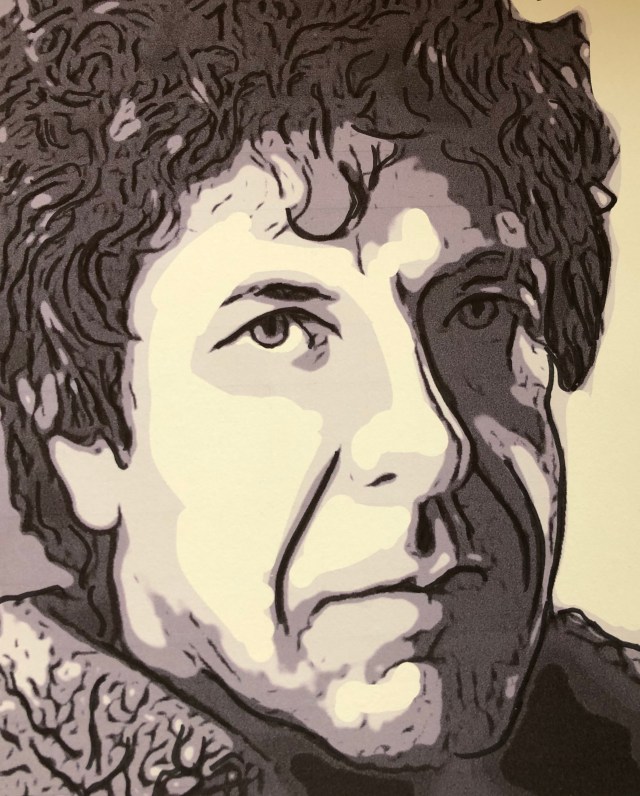
Voetica Poetry Spoken
— Read on voetica.com/voetica.php

Posted in Commentary | Leave a comment

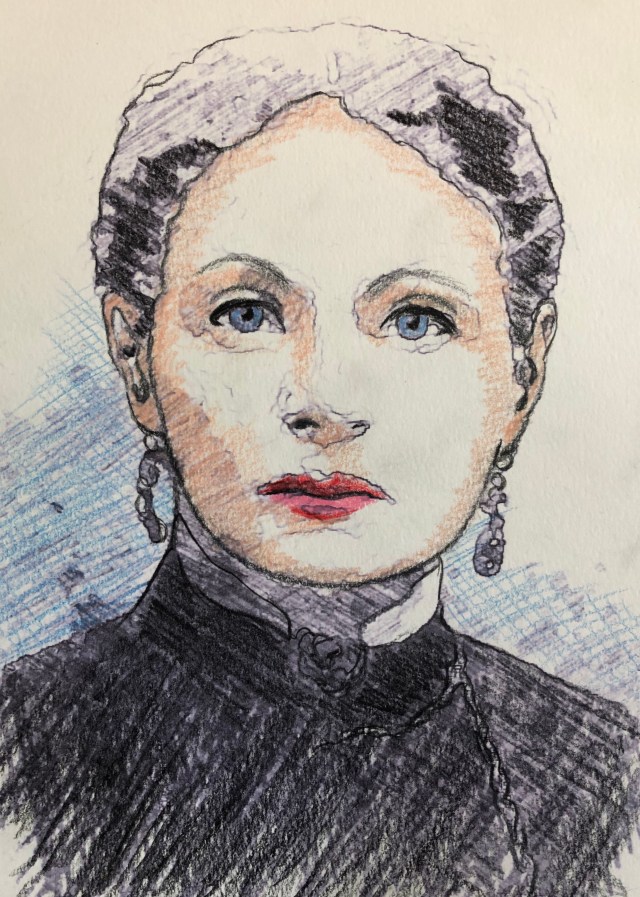
The Women…

Their great-grandmother…

Their great great grandmother…

Posted in Commentary | 1 Comment

What do I know???

(After Ferlinghetti Turned 100)

I used to know things.

Not in a boastful way, but with the certitude of youth. The kind that leans into unpopular truths just to test the echo. I was, perhaps, popular for being unpopular—a familiar arrangement for the young. And maybe I carried that longer than most. Into middle age, certainly.

But now? Well, hell—I’m long past middle age. I just didn’t notice until recently.

I read an interview with Lawrence Ferlinghetti, conducted when he turned 100. The reporter, fishing for some final wisdom from the old Beat, was met with this:

“There’s a serious error that gets passed around—something about the older you get, the wiser you are. Well, it’s just not true. When you grow older, you grow stupider.”

There’s a truth tucked inside that quip—beyond just mental decline. Knowing things takes passion. Passion burns energy. These days, I conserve energy for the important things. And knowing what’s expected—socially, morally, politically—takes a lot of energy.

It takes energy to say the right things.

It takes even more to oppose them.

I’m no longer a firebrand. Not even a burning ember.

Take capital punishment. I once knew it was barbaric. Then I knew it was just—deterrent, revenge, equilibrium. Now? I don’t know anything.

What about torture? Easy: it doesn’t work. People will say anything under pressure. I’m against torture.

And yet…

I believe in the fear of torture. I believe that the idea of impalement might coax the truth out faster than gentle suggestion. I know, I know—I’ve gone medieval. But I’m too tired to defend the nuance.

So I’m glad no one asks my opinion anymore.

Because the truth is—I don’t know what I think. Not until just before I speak.

And sometimes, not even then.

Posted in Commentary | Leave a comment