Sometimes a person reads a book and the ideas are so foreign that it takes hours of re-reading a paragraph, and in the end you still aren’t sure of the intent or direction. It is unsettling, like sand shifting beneath your feet.
The opposite can also occur: when the words are so familiar that you know exactly what the next sentence will say, or even the next chapter. In that case, you might as well stop reading. You have already written this book yourself, and it is boring, a waste of time.
The sweet spot of language, literature, and communication is when each piece of data makes sense on its own, but the gestalt of those details blooms into a new thought—or an old thought expressed freshly. That is the glory of transferred information, whether in acting, storytelling, literature, or art.
Recently I found myself in that sweet spot with Leonard Shlain’s The Alphabet Versus the Goddess (1998). By page twelve, I was hooked. Not because I fully agreed with his premise, or even fully understood its boundaries, but because the problem he raised was compelling, and his willingness to pursue it was magnetic.
As I understand it, Shlain suggests that women lost equality in the social order with the rise of written communication. He traces a line of ideas leading toward that conclusion. I can’t say yet if I accept it, but I can say: it’s worth wrestling with.
He begins with something familiar—the evolutionary marvel of the opposable thumb. Then he moves into something I had never encountered before: the evolutionary development of the heel. When tree canopies disappeared, some mammals were forced to descend. The grasping hind limb evolved into a simple, hard heel. Two hands became free for tool-making, and upright walking followed.
This shift reshaped everything. Hands refined their skills, brains expanded, pelvises widened to make birth possible, and women’s gait itself changed as a biological consequence of accommodating larger-headed children. Evolutionary brilliance, drawn out across hundreds of thousands—even millions—of years.
And then comes the leap. Once communication matured enough, survival knowledge no longer depended on slow adaptation. What once required a million years of trial and error could be transmitted in a week. Evolution gave us the capacity; communication accelerated its application.
All this makes perfect sense—even if the dots aren’t all connected. But that is why I keep turning the pages. Shlain doesn’t just tell a story about history. He reminds us that when words reach that sweet spot, when they carry both familiarity and surprise, they don’t just inform. They evolve us.
Can’t wait for Chapter Two! Thank you Clay for recommending this author.
Poking around Google Earth, I started a search for old residences of Diestler’s, at least the addresses that I could remember. This led to a general search of my photo file and the results where interesting.
This is by far the oldest Diestler home. A farmhouse that was in Prussia, now in Poland. Destroyed in WWII, it had “Diestler“ carved above the door, Built approximately late 1780s. Combination barn and home.
I tried to find where my father was born, but the 18 room farmhouse was moved from the acreage and I don’t know what direction. It was near Fingal, ND.
In the same way, all the known addresses of his home in Fargo have been torn down or flooded away. The Red River was not very controlled.
This is the “stoop” of the wartime housing. Our apartment is the door on the left.
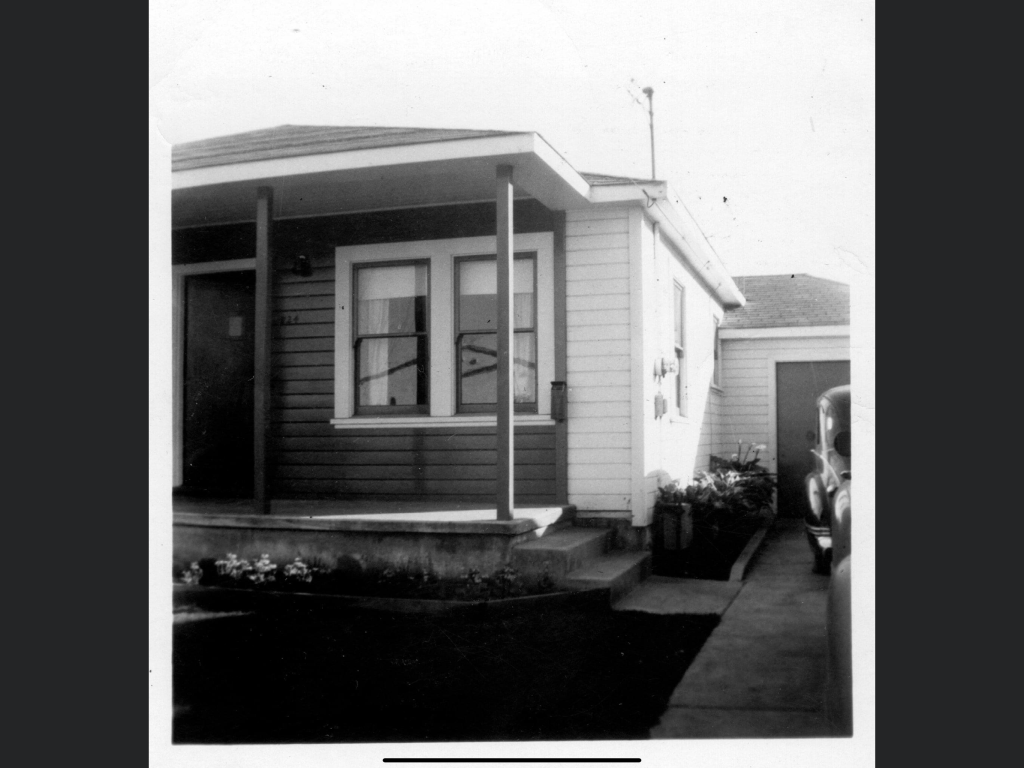
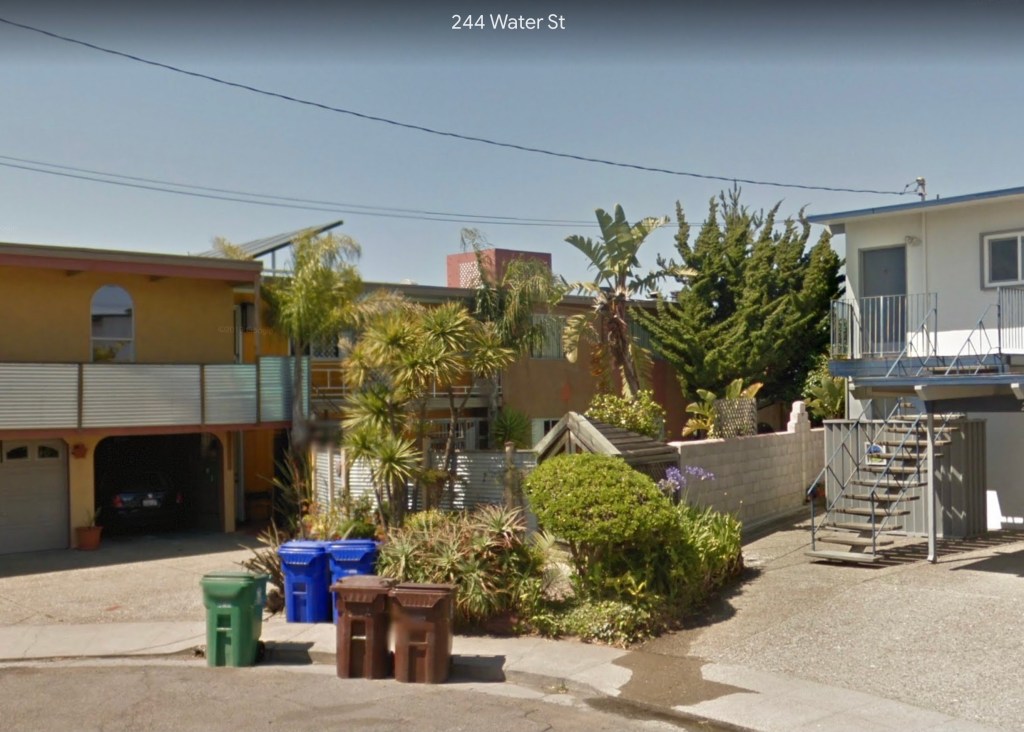
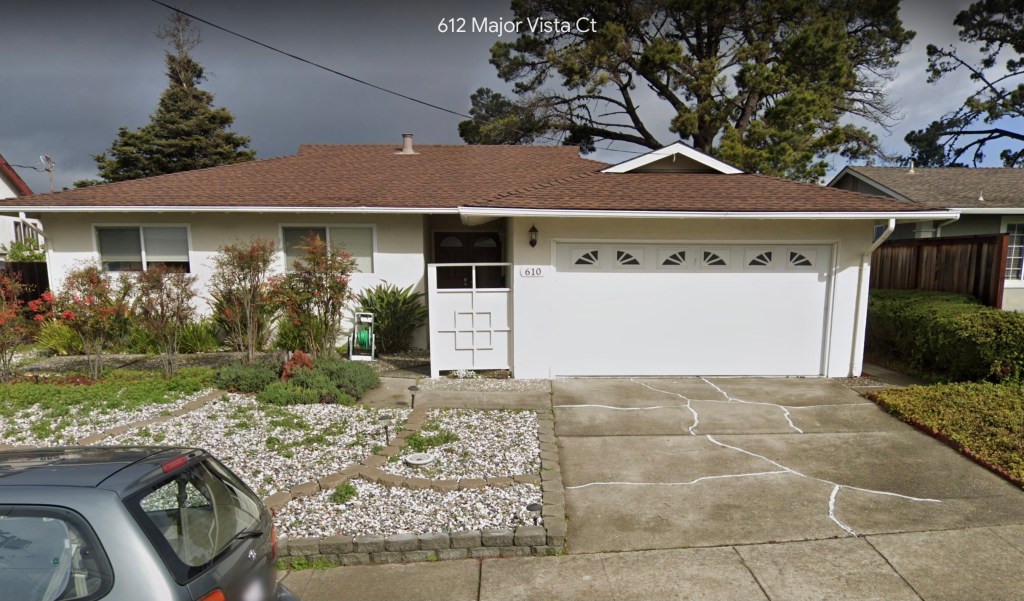
In 1953 the family final bought their first house for $12,500, unfortunately it was haunted.
This photo was from 1958? The photo above that from Google Earth. Don’t know if it’s still haunted.
The family then moved to a duplex, with my brother living in the front apartment.
My parents then retired and moved in a cottage behind my brother’s house in Tacoma, WA
My first apartment after moving out was a small two bedroom upstairs corner unit.
Just before being drafted, I shared a home with Obert.
My first apartment after the military was in Point Richmond, a very small, very narrow studio.
Behind The Hotel MacFirst floor two bedroom behind the tree
A nice but windy rental…
The first purchased homeExtremely hot in the summer…
If only we knew for certain that all choices can be undone without penalty. I can help with that statement, that all choices come with a penalty. The problem is the size of the penalty. For example, you are walking down a path, and you reach a fork in the road. You ponder which fork to take. From your vantage point you are aware that you have little information on which path will lead you in the right direction.
You observe the classic piece of data that one path is lightly used, the other path shows more wear. Briefly, you consider the old poem of choosing the lesser worn path. But this poem is not life, that was just literature. But then you measure the cost. You can easily retrace your steps should the path be not to your liking, so you enter the path least taken.
All is well until you look backward and you have lost sight of the fork in the road. You continue onward because you can still turn around. Many more paths converge from either side. This makes it harder to go backwards, but you can see the right path to take should you turn around, by following your footsteps. The tracking class you took really helps in this regard.
Eventually the path leads to a steep, long decline. The impact is that if you decide to turn backwards then it will take much more energy, and time, to get back to the fork in the road. The penalty of your choice is increasing. On top of everything else, it is beginning to rain, and the rain will erase all traces of your footsteps. Continuing now is a commitment to walking through the door, with no turning back.
This was not the thought when You first chose the lesser path. This is the important maxim to remember when facing a choice. You may try something without a full commitment, just to see if it is worthy, but if it begins to only make promises, and the path turns into a one-way choice, then back up!
I will hold to my maxim by following my choice. By choosing the road most followed, or by choosing the road least followed. What I will not do is let the road chose for me.
This is especially true in the coming elections. Some choices are one-way.
Today is Yom Kippur, the day of atonement that comes after the ten Days of Awe, starting with Rosh Hashanah, the head of the year. Obviously if you are Jewish you would already know this. For the first thirty years of my life I was only vaguely of the terms, and mostly ignorant of the true meanings.
For the last forty years of my life I have learned and applied much of what I have learned. That doesn’t make me Jewish, but I believe it brings me closer to G-d, with a better relationship.
I recently had a conversation with a friend about the concept of reverence, and how that it is expressed in the world. We can see examples of reverence by people bowing, or by people not turning their backs to the object of reverence. It is important to note that if you see an example of reverence, it doesn’t not mean that you are being reverent. Reverence is a personal choice that manifests itself in an action. Witnessing the action doesn’t somehow transfer reverence to you.
In fact, simply coping the act of others being reverent doesn’t not mean that you are actually reverent. It must be your choice, your action.
The discussion then centered on G-D’s name. In scripture it is written that G-d shared his name as “I AM”, and in Hebrew this was written using four consonants, “YHWH”. It is also described as the Tetragrammaton. How this word is pronounced has filled volumes of books. From early on it became a tradition to never say the name, out of reverence. The name was written, but if someone would read aloud, that reader would replace the name with Adonai, LORD, or HaShem (the name). This was an act of personal reverence.
When Scripture was translated into Latin, the Y was changed to the letter “I” or later, “J”. This is why we see the Hebrew word “Yeshua” written first in Greek as “Iesous” and then in Latin as “Iesus”, and finally in English as Jesus. Even though the “I” was pronounced with a “J” sound, so it still sounded like Jesus.
As far as the Tetragrammaton, this was not quite as simple. Without the necessary vowel sounds, the word could sound vastly different. There is much evidence that the word YHWH was pronounced “Yahweh”, an in some translations this is how it is rendered. It is still not pronounced aloud, but often replaced with Adoni, by the speaker. Again, this was a personal act of reverence by the speaker.
Later translations used the “J” instead of “Y”, and choose slightly different vowel sounds, so “Yahweh” became “JoHoVaH”, or Jehovah. And for some reason this was okay to vocalize, but hopeful said with reverence.
At some point the Hebrew scribes decide that “YHWH” sound not be written, o out of reverence it was replaced with the words that were used vocally when the scrolls were read. YHWH became Adonai, or LORD, or even many of the other names that were used in the oral tradition. This was done out of reverence, but logically it was only the reverence of the scribe. This replacement took the action of reverence out of my hands. I could still have a general feeling of reverence, but it is much less personal.
In the same way, I can write God, and the capital “G” implies the name with accompanying reverence. But when I type “G-d” that gives the same message, but adds the active act of reverence by the author. The reader of “G-d” is not expressing the act of reverence by simply reading “G-d”.
As you can see, this discussion with my friend covered some fine nuances. But it did help me to focus my acts of reverence as an active choice. That I can “coast” on the acts of reverence of others. That I can become more knowledgeable of Scripture, but I must also make it an action of faith.
All this sequestering has upped my cinematic experiences. I have a tendency to select action films. Action plus historical fact is a guaranteed winner for me. As far as genres, it is only a very narrow slice of what is possible, and I recently took the time to ponder that fact. What is possible in films?
The first thing that comes to mind is Warhol’s film of the Empire State Building. I haven’t seen it, and I’m told that individuals who have seen it, wear a badge of honor. It reflects their hipness to sit through eight hours and five minutes of a silent, black & white shot of the Empire State Building, from 5:00 pm until 3:00 am. Okay, the badge doesn’t really exist, but the mindset is real.
It is a movie with time as the focus. Years later Boyhood was filmed, taking twelve years to film, the same cast ages without makeup. Again, in simple terms it was a film about time, with people passing through instead of a building.
For most of history of cinema, the content of films mimics literature, the media it basically replaced. There is a storyline, filled with characters, locations, and some dialogue. The linear development stretches all the back to stories around the campfire. It is well known, scripted, choreographed, and performed from generation to generation in some dimly lit cavern.
Then it is written down, and read aloud. Then literacy increases, and more words are added, the story is embellished because it can be. Eventually it goes back to theater, and sets are created, standards are met, music is added. In the final expression it is recorded in film. And for the most part it is almost like the story, almost like the book, almost like the play. And yet film can be so much more.
In the same way, I often realize that websites are almost like books or magazines, click and the page turns. I suppose that makes it familiar and comfortable, but the internet can be so much more.
So, what examples do we have of movies stretching the limits of what is possible? At first thought one might say the use of special effects. This is naturally tied to the development of technology. Hanging small models of flying saucers from fishing poles might pass in the early 1950s, but today it is comical, and it really doesn’t change the story, it just makes it more believable. Except for the noisy explosion of rockets in deep space. It’s flashy in space, but it’s actually deadly silent. At some point filmmakers tested audiences, and noisy lasers built the necessary drama.
I suppose that the examples of avant garde genre is the current standard of “pushing the envelope”. I’m thinking of “My Dinner with Andre”, or the 2001 film version of “Waiting for Godot”. Hmm, the play was better.
Some of my favorite movies in this genre are:
1. Un Chien Andalou, 1929, with Salvatore Dali and Luis Brunel, famous for the razored eyeball scene
2. Anemic Cinema, 1926 by Marcel DuChamp
3. Destino, 1946 by Salvatore Dali and Walt Disney
4. Spellbound, 1945 by Alfred Hitchcock
5. El Topo 1970, & The Holy Mountain 1973, by Alejandro Jadorowsky (very weird)
6. Eraserhead 1977, by David Lynch
7. Koyaanisqatsi 1984, by Godfrey Reggio
8. Being John Malkovich, 1999, by Spike Jonze
9. A Field in England 2013 by Ben Wheatley
10. You, the Living 2007 by Roy Andersson
And several more that slip my name memory. And today I’m adding…
11. I’m Thinking of Ending Things 2020, by Charlie Kaufman
Truly, very few directors push the boundaries of what films can do.
There are few direct questions that gives me more grief. Immediately my brain goes to “Why?” And my mental answer is always the same. It goes through the filter, “Is this person so confused that they are seeking clarity from me?” Hmm, the tone of the question isn’t right. That isn’t it. “Is this person trying to engage me in a political discussion in order to convince me to vote for their candidate?” Hmm, have I signaled that I’m confused and need education. Nope!
Okay, maybe this person is just looking for minds that think alike. Possible, so I might respond. “I believe completely in the principle of the secret ballot in order to preserve our rights!” A better question is to ask what principles I support.”
At that point they generally walk away.
I elect representatives, in order to make the decisions that I would make if I was in attendance. The representatives have made statements to me about platforms that I have strong opinions about. I don’t elect personalities. It’s not about the individual. I re-elect a representative based upon the “actions”, or the ability to govern. Sometimes they are successful, sometimes they represented me, but lost. Generally, so long as they haven’t given up, I give them another chance. It is still based upon the platform.
No one has asked the more accurate question. Not “Who did you vote for?”, but “What did you vote for?”
I am old enough to remember the Free Speech Movement, not from the newscasts of NBC, CBS, and ABC (the only main sources), I know it because I caught a bus and walked up University Avenue. I didn’t have a driver’s license.
Over the next few years I went from a back row observer in demonstrations, to an active, front line member. I placed my body on the train tracks, I surrounded buses filled with drafted young men, pleading for them to get off the bus. They were heading to be cannon fodder in Vietnam Nam.
I was tear gassed dozens of times,I was trapped in the entryway of a store, then pressed by bodies who were being beaten by baton wielding police. Eventually I was pushed through a plate glass window. I was there during People’s Park riots.
I was a monitor on the San Francisco Peace March, I rode backwards on a scooter, shouting through a megaphone, “Keep to the curb!” I know about peaceful demonstrations, I know about violent demonstrations where lives were lost.
These were the formative years of my life.
The Vietnam War was still on, I was finally drafted. I was in the bus this time. Some of my acquaintances were outside the bus in Oakland, pleading for us to get out of the bus, “Do not let yourself to be cannon fodder!”, they shouted.
I was flown up to Ft.Lewis, Washington for basic training. I lasted two weeks before I got an honorable discharge. Then I enlisted for three years in the regular army. This counted as a re-enlistment, so I got additional “professional” pay.
I spent almost 15 months in training. I had secret, top secret, and top secret crypto clearances. I was stationed for a year in the underground Pentagon in the Blue Ridge Mountains. I was also stationed on the DMZ in South Korea. This was during a mini shooting war. I heard bullets come my way, I sent bullets their way. One early morning, around 3am, I got a classified message that the Vietnam War was over. The peace accord was signed in Paris. Six months later I left the army.
Both events were shaping in very positive ways. Both events left their scars.
I used to know stuff, the older I get, the less I know. Some things still seem to ring true. There are honorable people in the world, and they are diverse. There are misled people in the world, and they are equally diverse. They are evil people in the world, not in huge numbers, but at times they have great influence. This is the way of the world.
Another truth, power corrupts, absolute power corrupts absolutely.
To the extent that it is possible, I choose to be under a corrupt system that still gives me the freedom to protest. In this way I can still influence change. The Vietnam War ended!
And I gave my oath to defend that system against those who would attack by violence. That oath is still active.
Mentioned in a birthday gift from a good friend. Thank you Peter.
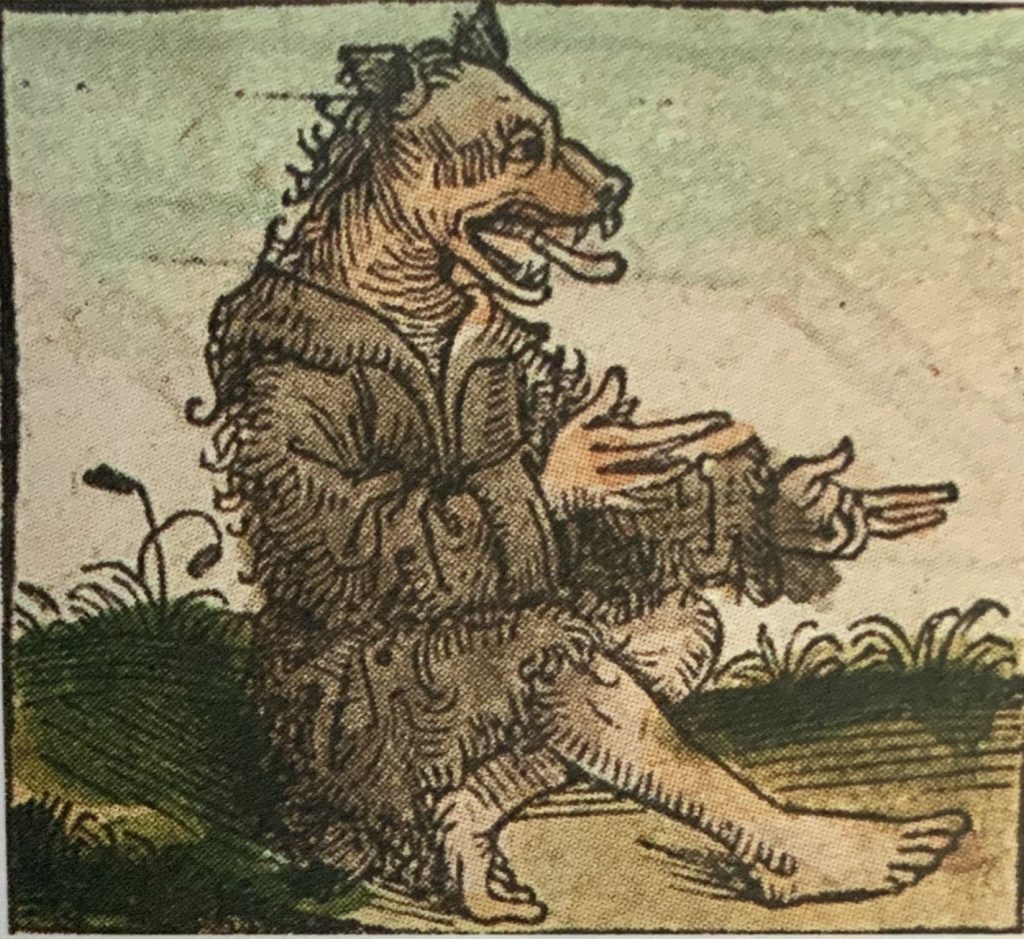
Also known as The Liber Chronicarum, of Hartmann Schedel, printed in Nuremberg by Anton Koberger in 1493. A complete history of the world from creation to the publication date. Famous as one of the most illustrated of all German books (printed before Gutenberg). Interesting, because many of the illustrated cities were adapted the same woodcut. Nuremberg was the largest city in the Holy Roman Empire, and the only city that had a two page illustrated spread in the book. The book also had a detailed map that illustrated “a parliament of monsters”, a collection of creatures believed to inhabit distant lands of the known world.
The book had well over a thousand woodcuts that were produced by the Michael Wolgemut Workshop of artists, which included Albrecht Durer. None of the artists signed their name, but Durer is suspected of helping to create many of the woodcuts. Albrecht Durer lived on the same street as Anton Koberger, the printer of the book, who was also Durer’s godfather.
The Sciapodes (Shadow Feet)
They were each owners of one very large foot and leg, while also being very nimble. In the summertime, while lying on their backs, they protected themselves against the sun by the shade of their single foot.
Six Handed Man
Said to have lived in India. Mentioned in the Histories of Alexander the Great, with some stories that were later deemed written by an author named Pseudo-Calliisthenes.
The Cynocephali
Dog-headed men of the mountains, possibly Ethiopia, perhaps based upon baboons. Solinus writes of the dog-headed Semeans who were ruled by a canine king. They communicated by barking, and used their claws skillfully to hunt birds. according to the Greek historian Ctesias, they numbered 120,000.
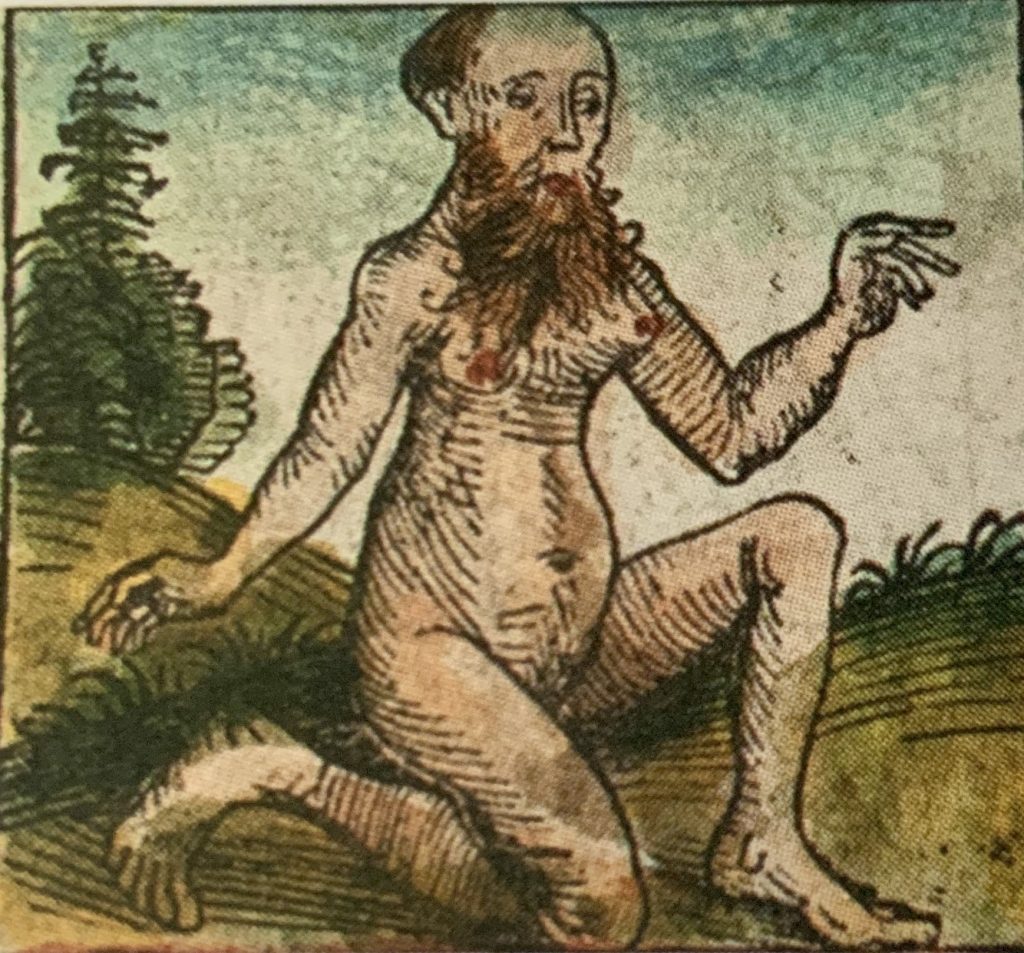
Alexander’s Bearded Women
A species of women with beards extending to their breasts, but whose heads are bald. Again this was part of the legends of Alexander’s travels. ‘
“Shun a woman with a beard as you would a pestilence.” -Pliny
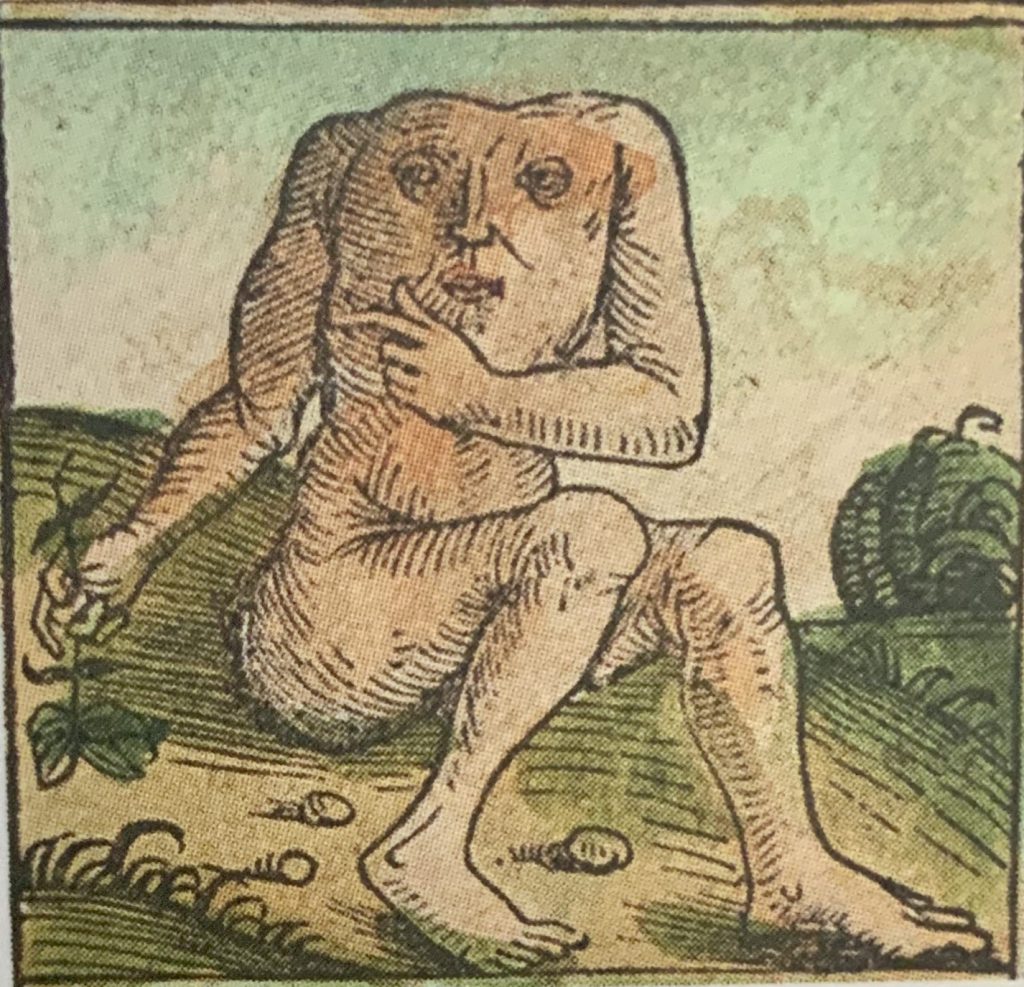
The Blemmyes
In Lybia, there lived creatures “born headless and have mouths, and eyes”, writes Schedel. The Blemmyes were a real nomadic Nubian tribal kingdom described by Strabo as a peaceful race.in 700 bc. Later, they became factionalized as headless cannibals. Shakespeare mentions them in Othello.
The Panotii
In Sicily lived people whose ears were so large that they cover their whole body. The ears reach to their feet and they use them as blankets to keep warm. When frightened, they use them to fly away.
(Adapted from “The Phantom Atlas”, by Edward Brooke Hitching, Chronicle Books, San Francisco, 2018)
This could be a very long blog post. I will limit it to a very short subject.
There was a time, when I was first introduced to Medieval Art, probably in high school. I was impressed by most, and some seemed almost stencil-like. As if there was a formula of neck length, head shape, and lip formation. A lot of the portraits looked like they were all family members. And most of the royals did intermarry. Very few actually painted the truth. And when they did, I remembered them.
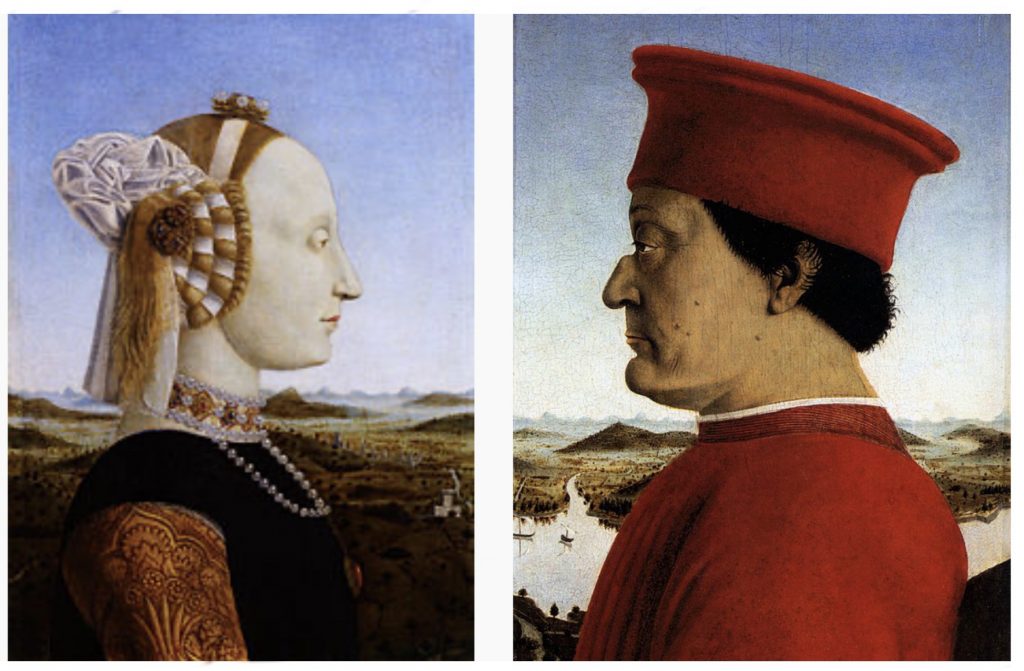
Federico Montefeltro was one that I remember. Not his name, nor the name of the artist, I remember how odd he looked in that hat. And when I saw his wife, I just had to laugh. Two very homely people had found each other.
Battista Sforza and Federico Montefeltro
Time passed, I was now teaching art appreciation at the college level. I still made sure to present the two images, but this time I mentioned the artists name, Piero della Francesca, 1415-1492. The students looked at the images that were in the textbook, but there was no back story about the people, just their names. Wanting to be better informed, since I was making fun of their image, I finally did some research.
Federico was Duke of Urbino from 1474-1482 (Lord of Urbino from 1444). Urbino was a small duchy that was given to the Papal States by Pepin the Short, Charlemagne’s father. By the 1200s it had become connected to the House of Montefeltro, becoming famous under Federico’s reign. Later, it was also ruled by Caesar Borgia, and even the Medici’s. In general, Urbino fell into the camp that favored the Holy Roman Emperor over the Pope, after the Montefeltros left, it swung over to the Papacy.
During Federicos reign his court was the model of what a court should be. It attracted the thinkers, the artists, and the writers of the time. The only product that Urbino exported was their military. When Federico committed his troops to a side, the opponent sued for peace. For years Urbino never lost, so in the end, they no longer had to fight. Several times the opponents had tried to offer more money for Federico to switch sides. He never did, and his reputation increased. Eventually, the sons and daughters of European royalty came to study at his court.
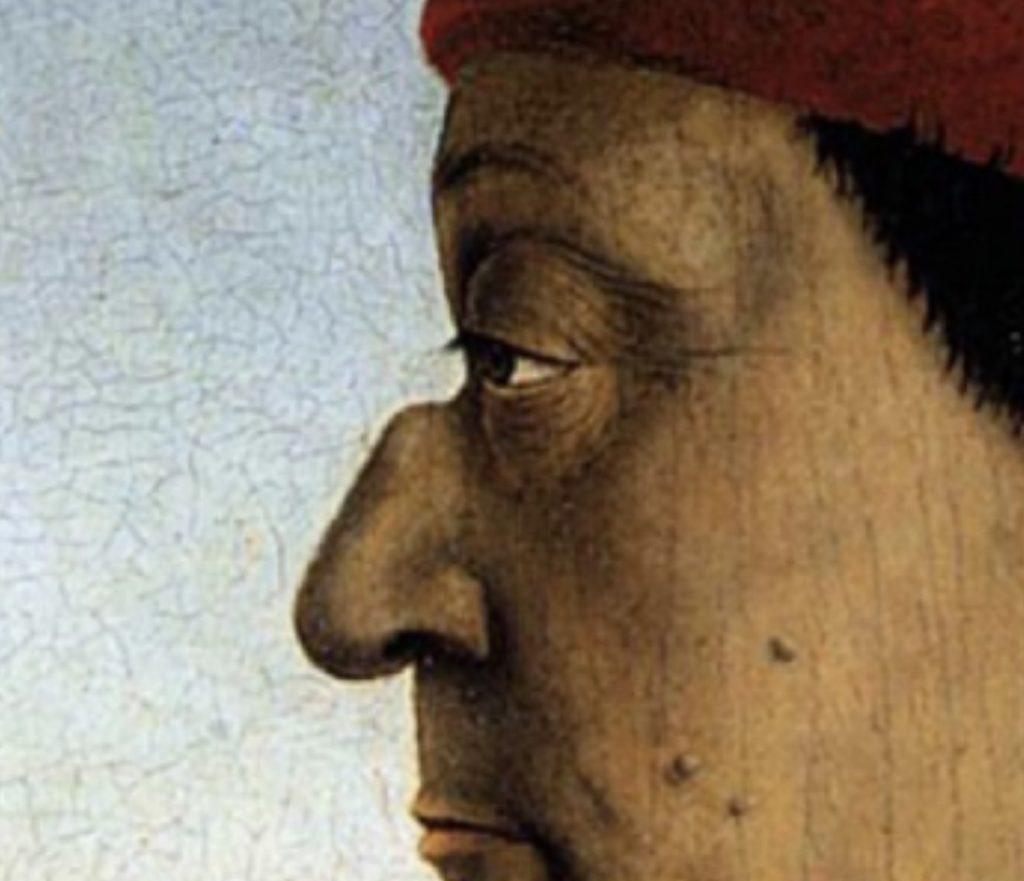
I came to respect Federico, even if he looked a little odd. Then, I learned that he had lost his right eye in a jousting match. He not only lost his eye, but much of the right side of his face. When Francesca painted his portrait, that was the reason for the stark profile.
I felt a little ashamed of my ignorance.
Then I read about the bridge of Federico’s nose. I had made fun of that as well. It seems that he had a typical Classic Roman nose, even after his jousting accident. But with only one eye, during battle he had difficulty responding quickly to attacks coming from the right. Federico had his surgeons remove the bone and flesh bridge, so that his left eye could see better to the right.
I felt even more shame.
The likelihood is that there are hundreds, or thousands, of half-truths about individuals in the present, or in the past, that falsely justifies our “judgement”. I know this now, because I’m old.
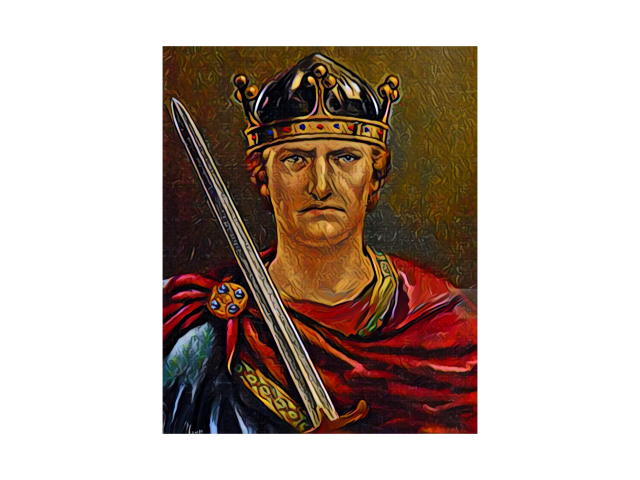
My 25th great grandfather is William the Bastard, or William the Conqueror, as he was known later. That month of October in 1066, I had four great grandfathers fighting for the right to be king of England. Three that were ancestors from my mother’s side, and one from my father’s side. Dad’s side won.
I have always been attracted to “turning points” or “history hinges”. Sometimes the world is changed by one individual. Certainly everyone makes a difference, but in some cases it is radically modified, and cascades throughout the following years.
England was always a target for invasion. It has been referred to as the “anglo-saxon” nation, but that was only after the two different Germanic tribes, the Angles, and the Saxons, took to their boats and invaded the lands.
The land already had Britons, Picts, Celts, and Romans with developed roads, villages and towns. The Anglo-Saxons intermarried with most, and established various kingdoms that slowly became England. The Vikings also came to raid, and to settle. So, being invaded by the Normans under William was perfectly normal, but the change was dramatic.
William was a descendant of Rollo, a Viking who had raided the French coast of Normandy. He asked permission from the French king to settle the land if he agreed to defend against further Viking raids. In time, William Longsword, was made Duke of Normandy and the title was passed down to Robert I and even to William, although his legitimacy was an issue. Perhaps invading England was the motivation to remove “the Bastard” from his name.
William spoke French, not German or English. For centuries afterwards all the English kings spoke French, some never even learned English. The Normans immediately placed Norman lords over the lands that were conquered. They even sent for Norman royals back home in order to fill positions in the new country. Customs were changed forever. The world changed.
History will always have the debate of whether change is for the better. Harold Godwinsson was the last English king, but even he was the descendant of foreign invaders. Harold was also my 25th great grandfather. His kingship ended at Hastings in October of 1066, with an arrow in his throat.









 A Work Progressing
Language is Compressed Evolution
Dancing With Ideas
Sometimes a person reads a book and the ideas are so foreign that it takes hours of re-reading a paragraph, and in the end you still aren’t sure of the intent or direction. It is unsettling, like sand shifting beneath your feet.
The opposite can also occur: when the words are so familiar that you know exactly what the next sentence will say, or even the next chapter. In that case, you might as well stop reading. You have already written this book yourself, and it is boring, a waste of time.
The sweet spot of language, literature, and communication is when each piece of data makes sense on its own, but the gestalt of those details blooms into a new thought—or an old thought expressed freshly. That is the glory of transferred information, whether in acting, storytelling, literature, or art.
Recently I found myself in that sweet spot with Leonard Shlain’s The Alphabet Versus the Goddess (1998). By page twelve, I was hooked. Not because I fully agreed with his premise, or even fully understood its boundaries, but because the problem he raised was compelling, and his willingness to pursue it was magnetic.
As I understand it, Shlain suggests that women lost equality in the social order with the rise of written communication. He traces a line of ideas leading toward that conclusion. I can’t say yet if I accept it, but I can say: it’s worth wrestling with.
He begins with something familiar—the evolutionary marvel of the opposable thumb. Then he moves into something I had never encountered before: the evolutionary development of the heel. When tree canopies disappeared, some mammals were forced to descend. The grasping hind limb evolved into a simple, hard heel. Two hands became free for tool-making, and upright walking followed.
This shift reshaped everything. Hands refined their skills, brains expanded, pelvises widened to make birth possible, and women’s gait itself changed as a biological consequence of accommodating larger-headed children. Evolutionary brilliance, drawn out across hundreds of thousands—even millions—of years.
And then comes the leap. Once communication matured enough, survival knowledge no longer depended on slow adaptation. What once required a million years of trial and error could be transmitted in a week. Evolution gave us the capacity; communication accelerated its application.
All this makes perfect sense—even if the dots aren’t all connected. But that is why I keep turning the pages. Shlain doesn’t just tell a story about history. He reminds us that when words reach that sweet spot, when they carry both familiarity and surprise, they don’t just inform. They evolve us.
Can’t wait for Chapter Two! Thank you Clay for recommending this author.