Frederick Wilhelm Diestler was born on May 6, 1860 in Lansing, Allamakee Countyt, Iowa. The new Republican Party had nominated Abraham Lincoln for the November election in 1860, and he won!
In the months before the election the country was defining issues issues with sharp edges, and the election of Lincoln was felt by some people in the South as the last straw. In Iowa they celebrated!
Frederick’s father, John Frederick, was an immigrant from Prussia. He was born in Gross Fahlenwerder, Soldin county. Over one hundred colonists had moved there from the Pfalz area near France, because of the threat of war, and constant French raids.
The colonists at first wanted to go to the United States, like their Hessian neighbors. But the Emperor had at first refused to let them go, asking them to consider going to some new lands east of Berlin. They spoke German there, and he promised not to draft their sons for war.
John Frederick was born in Gross Fahlenwerder, but as a teenager, he was one of the first that independently decided to move to America.
I’m not certain in what year he first came to the US. I found a record of him coming over when he was in his early twenties, but the oral history was that he was a teenager. I have found several instances where individuals came over to check things out, then went back to escort family and friends to the new world. In 1857 John zfrederick came by ship with a neighbor, Karl Berkeley.
John Frederick came to Iowa via the Great Lakes to Green Bay. From there he followed the portage trail through Wisconsin to the Mississippi River. I believe he stopped briefly to marry a distant cousin, Julia, at his father-in-law’s farm in Lansing , Minn. They stayed there for almost two years, and their first child died there in childbirth.
In a pattern that has repeated several times, after the death, they decide to move back to Wisconsin. This time there went to a sunburn of Milwaukee and lived on a small farm near Pewaukee. Julia was pregnant with Anna, and after the birth they went back to Langsing, Iowa. It’s possible that Julia’s father had helped, or knew, that a farm was for sale nearby, or perhaps they rented.
John Frederick had remember the area and decided to go to the neighboring farm, and Frederick William was born there as the oldest son.
It seems possible that Lansing was the place to go for births until 1873, when John Frederick purchased the Quincy Township farm. It was very isolated, no commercial buildings. The nearest hospital was in Dover, so perhaps that’s why several children had Dover listed as place of birth.
It looks like Anna and William had left the Quincy farm by the 1880 census. The unresolved mystery is where was Frederick William during the 1870 census. He was only ten years old, but he not listed in the family.
Perhaps this is part of the family lore… that Frederick William was often called “Wild Bill”. He was John Fredericks oldest son, but it appears that he and several of his brothers were not expected to take over the family farm when John Frederick lost his leg. Herman was given the responsibility, but even he gave up pretty quickly. John Frederick sold the farm in the Quincy Township, and brought a small house in the city of Nora Springs, Iowa.
As far as I can tell, Frederick William moved around Iowa, perhaps learning the trade of making rope for the farmers. Most farms had a patch of hemp growing, to use in the seasonal rope making.
Frederick did not get married early, he was 34 when he married Amelia Mary Louise Markmann Korth, on March 14, 1894. The oral story was that Amelia was a mail order bride, arranged through a German language newspaper. The surprise was that when Amelia arrived she was already pregnant with William Diestler, born September 21, 1893, in Fingal, ND.
The records show that she arrived in 1891, when she was 15 years old, she married Frederick William in 1894, when she was 18. Apparently she had been in the country for three years. Perhaps there was a previous mail order situation that didn’t work out, but she was already pregnant when Frederick decided it was time to get married.
His father, John Frederick was miles away in Iowa. His uncles and aunt were in Wisconsin, even further away. For some reason Frederick decided to raise horses in the plains near Fingal, ND, a town founded in 1891, by some Canadians, The nearest city was Fargo, ND and that was pretty small at the time. He purchased a ranch in 1893.
In 1876 the population of Fargo was only 600. By 1893 it had grown to nearly 8,000 people, then disaster struck on June 7, 1893. A fire swept through 33 blocks of the city, destroying nearly 300 buildings. The city responded by rebuilding within a year, and by 1894 most of the buildings were brand new, still standing today.
Frederick William was still living in Fingal, ND. From 1893-1912, he raised horses and slowly gained a measure of wealth. In 1912 he built an 18 room ranch house that was the largest in the local area. Then the winter of 1920 hit.
Frederick William had 160 acres about 2 miles east of Fingal. The blizzard killed over 200,000 head of cattle in ND. It wiped out 90% of the horses on the ranch. Only Ben and a couple of his sisters could help Frederick William. They had a half dozen horses left, which they quickly sold.
They have to sell the ranch at a great loss. The ranch house was moved by the new owner a few miles away. There was nothing left of the ranch.
The family spent the rest of the winter/spring in a stone silo that a neighbor rented to them. They picked the grains of wheat from the cracks in the walls, and parched them on the stove to make a decaf coffee. It was hard times. Most of the girls found jobs cleaning, washing clothes, doing house chores. The boys did the best they could but there was no steady work.
The economic pressure took a toll on the relation between Frederick and Amelia and they divorced in 1926. At the time Fargo was known as the divorce capital of the Midwest.
Amelia moved to the town of Fargo, and the older children found relationships and some work. For the next twenty years Amelia relied on support from the children in some fashion.
Frederick William was traveling throughout the Midwest with his rope making business. Frederick died in 1926, pretty much a broken man.
It was said that he mistrusted banks, but he didn’t put his money in his mattress. Since he traveled a lot, he sewed his money in the seams of his clothes.
He also was very talented with a pocket knife. He would often whittle a chain out of a two by four, complete with a box at the end that contained a small ball. He would do this often in one day.
‘Wild Bill” had many disappointments, and his life was hard. His true wealth was in the amount of his children.
I’m not saying that I’m completely knowledgeable on image making AI, but I have tested most of the commonly popular software, and some of the not so common. The trouble with reviews is that the software generally doesn’t get worse, it tends to correct itself and gets better.
For now, the best part of portrait AI is the backgrounds, the clothes, the hair, the skin tones, and the general placement of the facial features. Artistic styles can be fun to look at, but twenty anime portraits seems a bit much.
The spookiest feature is the ability to turn the head to a 3/4 shot from a full on frontal, or the ability to automatically animate the image.
Right now the easiest “tell” for an AI generated image is the pupil of the eye. The correct size, the correct highlight from eye to eye, and the general construction of the iris. The very last trial I made had nearly corrected this flaw, so it probably will disappear in the next few versions.
The text based AI is already scary, the image based AI will change forever our ability to trust photographic images.
I recently wrote about him on occasion of his birthday in January. He was 91, and I wished for him that 2023 would be a great year. He was still mobile a week before he died. Not mobile enough to go for a stroll, but he could get a snack from the refrigerator.
I don’t think he found much relief from the dementia caused by the mini-strokes from a few years ago. It’s been bad for his loved ones.
My middle brother would call him every month or so, and talk for hours. He hasn’t been able to handle phone calls for about a year. I would write him an e-mail periodically, and his daughter would read it to him. Later, he would tell her that I had called, and he would share the news. It’s been over a year since I last wrote. I just finished my 20th letter to him.
Bob,
So, I’ve been told that you died. I saw on my phone that your daughter Sheila was calling me in the afternoon on Wednesday. It’s funny how fast the brain takes in information, and projects the possible outcomes. I knew that you had gone before answering. It didn’t help.
It’s been a few days now. A roller coaster of emotions, a Ferris wheel of departures. My car is now closer to the exit.
“Bob Stories” are on my mind. You certainly generated tons of memories. And naturally, that generates many questions that I never asked, and I couldn’t expect an answer from you for the last few years.
You were my connection to Gayle, though you never said much about her. Even when you were lucid, I never remembered to ask about her. I was always waiting for the right time. The same waiting time I had with our parents.
You were so much older than I, and you became somewhat mythical. You would visit on leave from the army, and there was always gear left behind. Web belts, canteens, pouches, even a training dummy M1 rifle. I always had the best stuff in the neighborhood to play army.
Weirdly, the one thing that stands out were the “white” Mickey Mouse boots. They were issued to you when you received advanced training for crashing helicopters in the snow. I think it was Mt. Rainier where you built snow caves, and wore insulated white rubber boots. They actually had a built in release valve to deflate the pressure built up when flying at height in the helicopter.
Obviously I had to wear a dozen socks to put on the boots, but I clumped around feeling pretty important for years. Then on another visit, you reclaimed them.
One year you left scuba diving equipment. I immediately drained the tank while sitting in the bottom of my friend’s pool. I didn’t swim, I just sat there, breathing underwater. Then I felt bad that I had used all the air. I did use the fins to learn to swim while camping. They were so much netter than the crummy cheap kids fins.
For years I spent more time with the objects that you left, and very little time talking with you. Later, when I was older we didn’t have much in common.
Then I was in the army and we shared ideas about weapons and things that were sharp. I think you were impressed when I brought up the black powder rifle that I had built. At least you enjoyed shooting it in the woods.
When visiting your house, I always asked, “How many weapons do you have within reach, as you sit in your Lazy-Boy?” If your answer was less than a dozen I would wonder what was wrong.
I am now sitting in my own Lazy Boy. I count ten, three of them Norwegian bearded axes. I’m a work in progress.
I’ll end this last letter knowing that I’ll still be talking to you, and remembering. You lead the way, my brother. I loved, and love you always.
A medieval Greek word meaning “made without hand”. I suppose that would be all objects of nature. In the art world it would be all “found art” that didn’t include manmade objects. But this Greek word was primarily used in the world of iconology. It was used for Christian relics with images. The most famous being the “Shroud of Turin”.
What I have found recently is that many scholars are now calling it the “Man in the Shroud”. This is the result of trying to describe what it “is”, instead of what it might be. It is the most tested relic in the world, but it is easier to say what it isn’t, rather than what it is.
Compiling the most conservative descriptions I’ve found…
1. The shroud is made of flax linen, in a herringbone weave, measuring approx 14.5 ft by 3.7 ft.
2. There is a frontal image of a man on the left side of the rectangle, with the head near the center, then a dorsal image of the same man on the right side of the rectangle. The suggestion is that the shroud was laid flat, the man was placed on the right half with the feet near the right edge. Then the rest of the shroud was drawn over the body, with the left side pulled to match the right edge. Essentially the shroud was folded in half, with the body inside, and the head near the fold.
3. The image is only on one side of the linen material, and is only barely on the surface, less than a quarter of a hair’s thickness. It doesn’t penetrate through, it doesn’t have directional brush stokes, it doesn’t appear to be pigment or dye.
4. There are many areas of blood stains, which do penetrate through the linen. The blood stains are constant with wounds created by the result of being crucified.
5. In addition there are blood stains on the head and face, and from “scurging” of the body.
6. Finally, there are blood stains on the feet, wrists, and the left side of the chest.
There is agreement that the shroud has been positively known from at least 1354. During a public viewing in 1898 it was finally photographed by Secondo Pia.
It wasn’t until then that the original image was discovered to be a negative. When the photographic negative was developed it showed that the man’s image was a positive with many details now being visible.
The fine details in a normal photograph were still unresolved because of the fibers of the flax linen.
During the 1500s there was a fire in the cathedral where the shroud was stored. It was folded several times and just the edges of the folded material were burned. It was fortunate that one of the image was damaged, but several holes were charred and burned through. Local nuns sewed patches on the holes, and sewed a linen backing cloth, completely covering the backside of the shroud.
In 1988 there was an agreement with the owner of the shroud that carbon 14 testing may be done on some samples that didn’t disturb the image. Unfortunately, carbon 14 testing requires the sample to be completely destroyed in the test. The sample was taken from an 8 centimeter strip of the edge of the shroud. Samples were given off to three different labs around the world. All of them came to the same conclusion. The flax was harvested in the range between 1290 – 1350. The shroud was made in medieval times. The findings were combined and published by an independent scientific organization.
Later, scholars discovered that sometime in the 1600s, some of the edges of the shroud were patched with 1600s linen material with a “French invisible weave”. The 8 centimeter strip sample was part of that weave. So, the sample had original linen material and 16th century linen material mixed in the carbon 14 results. This meant that the average of the two resulted in the dates provided in the report. The same organization gave a second report that they could not very the dates of the contaminated samples. It was back to square one, nothing proved, nothing disproved.
In 2002, a restoration was made on the shroud. The patches were removed, the charred material was cut away and stored, and a new backing cloth was sewn in place of the old. This was done in secret without consulting dozens of shroud scholars. Some have said that important data is now lost forever.
Some say the the removed material could have been used for a new carbon 14 test, but now it’s been removed and can’t be validated. Other material has been micro-vacuumed from the shroud with consulting experts. ‘Sticky tape’ has been pressed on the exposed backside with some force to collect dust and pollen samples. Wrinkles may have been “steamed” in order for the shroud to lay flat, with lead weights attach to stretch the material.
Lots of opinions written by many people, but what has been done, is done. And nothing has been proven.
The shroud exists, the image exists. The age is unknown, the method making the image is unknown.
In the late 1300s it was declared a forgery. An artist made the image, intending it to represent Jesus in his burial cloth, showing signs of the crucified body.
Hundreds of facts and details have since made that very hard to believe. The idea that the image was made by the body being reincarnated is also very difficult to believe.
It wasn’t until 1988 that the ownership went to the Catholic Church.
It is still the most researched relic in the world.
This word has been bouncing around in my grey matter for a few weeks. Not because I self identify, but more that I’ve read the word in several different sources.
Most recently in an article in “The Atlantic Monthly”, by Agnes Callard. She is probably someone that I should know, or at least heard of, but I’m clueless. Agnes’s article was titled, “A Philosopher Gets Fed Up With Profundity, There are better ways to communicate.” The graphic was three repeating words, chiseled in stone…”Yada, Yada, Yada”
I think for most people it was a quick way of dismissing something that was said or written. A sarcastic response to wordy communication perhaps. I don’t know if many people would know that “Yada” is Hebrew, meaning “to know.”
So that “Yada, Yada, Yada” might still be sarcastic, but more pointedly, suggesting that you might “know too much”. Interestingly, the Hebrew could also imply that Yada is to know carnally.
The article begins with a warning from her Phd. advisor to not call herself a philosopher once she receives her doctorate. Better that she identifies herself as someone who reads philosophy. The reasoning is that she might be expected to be profound!
Apparently there had been a profile of Agnes that was based upon an interview, and not upon her written perceptions of philosophy. The reviewers of the profile responded that she was boring, banal, and unremarkable. And certainly not profound!
The expectation of profundity from a philosopher was not met.
I am not a philosopher, although I have been philosophical at times. For many years I was paid to profess. The teachers Union actually pushed a policy allowing the college district to call us “professors” without the usual requirement of the rigorous academic structure.
The problem with titles is that sometimes it is just a title, without the reenforcing background.
Most of the reenforcing background is actual work, and work that is decades long. Being “philosophical” on a lost summer day in 1969, does not qualify a person as a philosopher. It takes time and effort. Calling oneself a professor because of a labor policy is problematic.
How to be profound. It does not come with a title. It comes from the opinion of others, and not self identification. Multiple opinions of others, over a period of time. In addition, the opinions are from individuals that have a solid understanding of what “profound” means. A steep requirement.
Should one even desire to be profound? In one sense it is a label that establishes a “distance”. You can’t be close to a profound person. You might ask them for an opinion, you might sit quietly in a garden with them. It might be dangerous to be close to a profound person, they might parse your soul, judge you, and find you wanting.
I like the idea of “occasional profundity”. It would be every now and then, and definitely not on call. There’s a dramatic quality of not being able to be profound consistently.
Funny thing about choices and decisions. On the surface it would seem that the big choices are issues of light or dark. And yet, as humans we screw that up so often it’s ridiculous. A selfish, or mean spirited decision can never be a good choice.
The real difficulty in choice, is one between a great path, and a wonderful path. Neither path is perfect, both will have hardships. The problem is that the choice will give tremendous joy and direction, but will also remove other specific joys and directions because that path wasn’t chosen.
I used to sail, there were four cardinal points of direction, north, east, south, and west. I picked north and all of my future experiences were based upon my northern route. They were good, I was challenged, I met the challenge, I basked in the sun, and I made safe harbor. But I could have sailed West.
For a time I traveled by thumb, meaning I caught a ride with a car or truck that was already heading for a destination. I was willing to go along with the ride. Often I would be let off when the driver left the more traveled road, with the understanding that I had a direction but not a destination.
I was once let off in the desert on Highway 80. My ride was taking a sharp left turn into a dusty ranch house. I was grateful for the miles. As I put out my thumb again I noticed that I was almost a quarter mile past a fork in the road. Maybe a hundred cars were going east on 80, but maybe 25 cars were taking the right fork to go east on Highway 50.
My decision to stay where I was meant that I would never have the choice to take Highway 50. I was already past that exit. My entire future was going down Highway 80. As the morning sun became the afternoon sun, I was aware of dozens of cars that could never pick me up because they had turned off to go on Highway 50.
Then I thought that I didn’t make the choice of where I was, I was just left off because my driver had reached his destination. I could choose to walk back, past the fork in the road. I could then put out my thumb that would include all those cars that would end up going on Highway 50.
I was still true to my general direction, but now I could allow my destiny to make the choice. Perhaps Highway 50, or maybe Highway 80. A car going on to Highway 50 could stop, but there might be dozens of empty beer bottles rattling on the floor. I could refuse the ride. I still had choices of light or dark.
After I walked back, it turned out the next ride was continuing on Highway 80, but it was in a sportscar with two people in the front, and I had to crawl up on the uncomfortable back shelf. But there were no rattling beer bottles.
And eventually, almost fifty years later I am here in my recliner, having lived everything in between.
Yep, that fluid stuff under your skin. Tricky stuff, half of it is blue, until it hits the air, then it turns red, the other half is red already.
Apparently its like oil in an engine. If it gets low things go bad. If oil shows up where it is not supposed to, then something should be done. The driveway is generally a good place to check for your engine maintenance.
If it’s your body, then perhaps the bathroom. Color is important in the bathroom. Unusual color is often from blood, unless asparagus/beets are involved. Although I have had several incidents when instead of urine, it was a stream of bright thick red blood.
That is so unusual that alarms go off. The first time it happened I thought I only had minutes left on this earth. It seemed like a pint each time I went to the bathroom. Not good for an engine to lose that much oil, really not good for a body either.
After much worry, my urologist cleared the issue up. Five years earlier I had successful radiation treatment on my prostrate. There was some scar tissue and now that had caused the bleeding. It would clear up in a few days.
It was still not pleasant to see a specific kind of fluid appear where it wasn’t supposed to, but it did clear up. Why wasn’t I told that this could happen five years ago? I could have had a heart attack! It happened again two years later, it was still shocking, but not a big deal.
So this week was another “fluid event”. This was concerning “sputum”, “phlegm”, or “mucus”. All disgusting words to describe a disgusting but normal object. And color is also important.
If the color is clear or white, things may be normal. If the color is yellow or greenish then perhaps a few alarms will go off. If the color is brown, leaning to red, then lots of alarms. Bleeding in the lungs is always serious, and sometimes deathly serious.
So I spent part of this month coughing. A lot of coughing, not from COVID or flu, just coughing. Then for a week it was brownish, then really brown. Alarms went off, things had to be done, experts had to be contacted. Oil was dripping on my driveway again.
There is a saying, that mostly, “things are simple.” I must admit I go there a lot, particularly when something happens to me that is brand new. It doesn’t have to be tuberculosis, or lung cancer, it could be an irritation or a slight case of pneumonia. I’ve never had pneumonia, so what do I know?
Now I know, and for a week I have two more pills to take everyday. The brown mucus has faded, the oil in the driveway has disappeared.
Now I just have to watch the amount of sugar in my oil.
I’m writing about something unknown becoming known. I’m a sucker for this. If I stumbling upon a website, or blog, that promises five new facts about a person or place, then I’m there. I usually bypass the preceding paragraphs to get to the numbered lists, then often enough I’ve already heard about most of them. Sometimes I’m even knowledgeable enough to know they are false.
I’m not particularly intelligent, it just that I have a lot of experience digging after trivia. Very wide knowledge base, but only about two inches deep. I do have some pride in a few areas where it is deeper than two inches.
I taught in college level art areas for about forty years. The history of photography is one area where I go fairly deep. I also taught a general course for non-art majors for 4 or 5 years. Admittedly it ranged from cave art to modern art in 18 weeks, so we couldn’t get very deep on any decade, but we touched on the major art movements.
Naturally I spent a little more time on the movements where I had a personal interest. Impressionism, surrealism, and photography were in my wheelhouse. Did I know well every artist? Of course not, but I would have bet that very few had escaped being read about.
So, naturally, last year I was dumbfounded when Alice Neel, the great portrait artist, was a new discovery. How did that happen? Did a chapter fall out of the book I was reading? Did I miss the room in the museum I was visiting? (Well, that’s probably true!)
Fortunately I was able to get to know Alice’s work all at once, and coming late in life, I enjoyed it even more.
This should have prepared me for more surprises, but it didn’t. My daughter emailed a question for me, “What did I know about Man Ray, and Lee Miller?”
Ha, well… very early on I read about Man Ray. I mean the very name demanded attention. To find out that his medium included photography and that his work is classified largely as “surreal” meant that I had background knowledge.
However, with more thought I realized that as an artist I had about two inches deep on his life, and maybe 4 or 5 specific images. Mostly I remembered his work in solarized photographs, not even knowing that he popularized the technique.
And about Lee Miller? I replied to my daughter that I didn’t know a thing about him.
12 hours later I knew a few things about her. And mostly I knew how embarrassed I was that I was so ignorant.
Lee Miller, (1907-1977), born in NY, became a fashion model in the 1920s. Interested in getting behind the camera. She went unannounced to Man Ray’s studio in Paris, saying that, “you must study with the best,” so she became his model and intern, regardless of his opinion.
She became a fashion photographer, after years of being in front of the lens. She also had several shows of her surrealistic photographs. Man Ray introduced her to everyone in Paris. With the coming of the war, she went to London and worked for Vogue Magazine. She became one of five women that were war correspondents.
Lee Miller was at the D-Day landings, and took photographs all the way through the liberation of Europe. She also photographed the liberations of the concentration camps. She witnessed horror, and was deeply affected by it.
It turns out that I did know about her. I had seen some of her photographs, I just didn’t take the time to find out the photographer’s name. The sad truth is that when a painting or sculpture is viewed you natural want to know about the artist. When you are impressed with a book, you want to know about the author. When I see an interesting photograph, I don’t always think about the photographer. I want to change that.
We lined up in irregular fashion. What did we know, our only experience in line was at the movies, or at the local fast food. Most of us were unaware of exactly when our drill sergeant appeared, he just appeared dead center of our milling mass, and said in a clear voice, “Attention”.
Looking back at it now, I can see how this might have been misinterpreted. About half of the 60 civilian-soon-to-be-soldiers stopped talking and respectfully turned their heads towards the drill sergeant. The other half tried to line up, with chest out, chin tucked, and arms ridgedly to their sides. Their thumbs were not aligned to the seams of their pant legs, but that would come later.
Seen from above it must have been a confused image of a partial organized group of young men, some eagerly awaiting some news about their status, because someone had just announced “Attention”. Others, those that had seen a few war movies, were standing stock still, following their first “order”. I honestly don’t remember which group I was in. What I do remember is that the drill sergeant was unimpressed, and that in the next three seconds, all of us were on our bellies, trying to do the first of 30 push-ups.
This was the introduction to my first day in the Army. In summary, I was in constant fear that I did not know what was expected of me, and that a sure and just punishment was coming soon after my confusion. I remained mostly confused for the next year and a half.
A “cattle-truck” soon appeared, an aluminum trailer towed by an Army vehicle that looked suspiciously like the vehicles that transported livestock. It was completely enclosed but with generous slots to let air flow through, but not large enough to allow anyone to escape. It was also very easy to power wash, in case anyone had upset or nervous stomachs, which everyone certainly had.
Within a fifteen minute ride we were at a long and low depot building with a loading dock, and a double door entrance. Our drill sergeant ordered us out with no regard to structure, speed was the only command. This was confusing because while we literally fell over each other in getting out of the “cattle-car trailer”, we were then expected to line up in alphabetical order before entering the depot.
A few minutes later each of use had drawn the full measure of our Army issued material, quickly shoved into our sturdy duffel bags. Standing outside in clumps of three or four we wondered what our next hour was going to bring. Where was our barracks? What about our haircuts? When can we get our first leave? I’m hungry, when is chow?
Before any of those questions were answered, the “cattle-car trailer” arrived. We were now trained that speed was expected, so everybody was inside within a minute or two. This was complicated in that everyone now had a very large packed duffel bag that was very nearly the same size and weight of the average soldier. With our drill sergeant screaming at our efforts we were back inside in record time.
A few of us laughed how crazy that had been, and that it was sort of fun, piling in, one on top of another. Others looked a bit ashen, as this was a pretty good example of what the next few months were going to look like.
Our next stop was another depot like building where we were to take off all civilian clothes and get dressed in our issued uniform. At this point we kept our glasses, watches, and any personal jewelry. They would disappear later.
We were an odd looking bunch, all dressed in crisp, but also baggy, army green, shiny new boots; still sporting our full beards, ponytails, and civilian attitudes. With an hour all of us were again waiting outside for transportation, clean shaven, and mostly very white, nearly bald skulls. If you looked closely you could see several young men rubbing their heads, wondering where their hair had gone.
Collectively we looked very much like concentration camp inmates with better clothes, and not so emaciated.
Our transportation arrived and we responded this time with little encouragement from our drill sergeant. Within hours we had been trained in this particular military duty. About thirty minutes later we arrived at our home away from home, the B-1-1 barracks at North Fort, Ft. Lewis, WA. A two story wooden structure that could burn to the ground in less than five minutes. We were told this to impress the need for “Cigarette Patrol” at night, and it was backed up by actual test fires. It seems that every barracks had at least fifty coats of very flammable lead-based paint.
Our day was close to ending, we were told to hit the chow hall in fifteen minutes, and then straight to our bunks, and lights out. I looked around in the dimly lit barracks and wondered exactly how am I going to get through this. Here and there I saw a few guys sitting on their bunks, (something they would later learn never to do) quietly rubbing their shaved heads. A stark reminder that they were not in their home towns any longer. I reached up and rubbed my own head. I immediately was shocked by the almost electric experience. There was a tingly feeling, very sensual, maybe even exciting. These people weren’t bemoaning their lost locks, they were rubbing their heads to feel better, to feel different, to feel that somehow they could escape the fear and monotony of what the army was bringing. I must admit I joined them for a few blissful moments.
It took several days for the “head rub” feeling to wear off. Probably wore off faster for those who abused the experience.
The next morning (morning?) at 4:30 am we were brought awake by our drill sergeant beating a garbage can with a small bat. He had the look of a man that could easily shift his purpose to beating a sleepy soldier to attention.
We fell out of our banks and tried to stand erect.
The first problem was that we were standing wherever we landed when we evacuated our warm beds. Some of use ended up standing in the wide center aisle of our barracks.
The barracks layout was basically a long rectangle with the common bathroom at one end, a flight of stairs leading to the second floor, then two rows of bunk beds along the side walls leaving a generous center aisle. There was a very small aisle between the bunk beds and the windowed wall but so narrow that you had to pass sideways if you encountered anyone standing in the way.
That first morning, in the dark, we learned that no one, unless they were operating a buffing machine, was allowed to walk, crawl, or lay upon the center aisle. The few soldiers that were found in the aisle that morning were soon crawling on their belly outside in the mist, going several times around our barracks in nothing but their long johns.
I should say that this was Washington state weather at the end of November. While it hadn’t snowed yet, it was very rainy and damp. Later that December it snowed more than it had in forty years. A record amount of snow.
After the lesson learned concerning the center aisle, we were told that we were going to do PT before going to breakfast. PT was physical training while standing in formation in front of the barracks. We ran through the complete menu of exercises that we hadn’t done since high school PE class, only this time we did them three times as long. In addition we discovered that the Army had designed a half dozen new exercises to torture our muscles even further.
Finally, finishing the formation exercises, we started our morning run, three miles around the company area. After all that, we were just starting our training.
The very few people who actually followed the drill sergeant all the way to the dining hall, and hadn’t fallen in the mud, retching and foaming at the mouth, they were stymied by yet another obstacle.
In order to enter the hall, a soldier had to swing from rung to ring across a twelve foot muddy swamp directly in front of the door. The ladder-like device was ten feet off the ground with two or three steps leading up to the jumping off point.
With rubber legs from the three mile run, it was nearly impossible to keep standing erect should you slip off the rungs. We were doomed, maybe three people made it to the door without falling.
Breakfast was a very muddy affair which required us to clean and mop as soon as we were done. Correction, as soon as the drill sergeants were done!
Later that day, I was given corporal stripes and told that I was first squad leader. I was the second oldest in the platoon. The oldest by a year or so was platoon leader. Leadership based upon age, not merit.
I was somewhat comforted that it was a simple arm band, not stripes that I had to actually sew on. A leadership change would simply be swapping an arm band, not standing in formation while the drill sergeant rips your rank in front of the platoon. Later, I would find out that indeed my “stripes” could be ripped from my arm and thrown in my face. Oh well.
A mid morning meeting was called to define the rolls of platoon guide and squad leaders. Should the platoon guide be killed, the first squad leader will take his place. That would be me! All duty assignments will be made by squad leaders. Should anyone fail in their duties, it will be reported by squad leaders, and then squad leaders will complete the mission, or delegate someone else to complete the mission. Yeah, like that would work. So, in essence, I had to do my personal work, then double check my squad and do any work that they had failed.
The only benefit I could see is that I had a single bunk, not bunk beds, and I didn’t have to stand “cigarette watch”. Well, that was fair, I didn’t smoke, so why should I have to interrupt my sleep to stand fire watch?
I almost asked why did non-smokers had to stand butt patrol every morning because smokers tossed and crushed their butts on the road in front of our barracks. That would not have been a good question to ask our smoking drill sergeant.
Later that afternoon, after some grueling PT, and the usual swinging like apes to get lunch, we marched to another large depot like building. We were joined by the other four platoons in our company, and perhaps at least four companies of the battalion. There were a lot of new soldiers milling about, all waiting to take their turn in this gymnasium sized building. A classic example of hurry up and wait.
When our turn came up I could see that we were to enter a dozen checkout lines, similar to what you might find at a supermarket. Upon entering you were supposed to hand a soldier (clerk) a piece of paper that had been given to you. The paper had your name, social security, your blood type and a blank where you were to enter your religion (or keep blank for no preference).
I looked at the blank and then I was directed to the back wall of the gym, where every possible religion was there with a special shorten acronym that could easily fit on a dog tag. Yes, this was the place where I would be issued two dog tags, two special rubber bumpers to deaden the noise of them clanging together, and finally, a beefy chain to fit every around your neck.
Fulfilling my role as squad leader I was trying to help my twelve men to navigate the big wall and find every obscure denomination available. I had no atheists, and only two Roman Catholics, so the process took quite awhile and I had little time to ponder my own form. Suddenly, I was at the clerk while he was pounding out the information on those metal tags. When he got to religion he saw that it was blank so he asked me my choice.
I considered myself a Christian but I really didn’t have a church or a denomination. I had heard of non-denominations, but that required a choice and some thought. After a thirty second pause he typed “No pref”, and said “Next!”
I found myself shoved out into the drizzle, pondering what was now typed on my dog tags. We had been told that it was very important to always have both dog tags around your neck.
The rubber bumper was to silence the jingle because Viet Cong snipers were trained to fire at the sound of dog tags tinkling. Gruesome thought! Even more gruesome is that we were ordered to pull off the dog tags of our fellow soldiers when they were killed. Then we should put one in our pocket, and place the other dog tag between the front teeth of our casualty, and then kick them in the jaw. That would guarantee that the body would be marked for later. “Don’t leave your buddies behind without a tag jammed in their teeth!”
This was way more information then I wanted.. My current problem was that if these tags were ever used, I would be laying there with “No pref” between my teeth. Providing I had teeth, or a jaw. Time to get serious!
Just about then my drill sergeant came by to rip me a new one and get me in formation. I may have failed to describe this fireplug of a man, wider than he was tall, loud, black, and a part-time Southern baptist minister. I’m not sure how we knew all this about him, but we did. He asked me what was my problem, and I quickly replied that I was a Christian but my tag said “No Pref”.
He immediately saw the problem and was dragging me back to the clerk for a correction. The clerk withstood the barrage from the drill sergeant and explained that I hadn’t picked from the wall behind him. At that point the glare from the drill sergeant was on me. Somehow I managed to mutter that my choice wasn’t there, I was simply a Christian. The glare softened and then shifted back to the clerk, “Type it!”
As I pondered the potential tag between my teeth, I knew I was identified as the only “Christian” in the Army. Then I reread the entire dog tag, it had my name, my social security, then my blood type (should I need blood). The last two lines read…
” A Neg Christian”
I still hope this is not true.
Ps. I lost my last original dog tag somewhere in a London cab about twenty years ago. I have since reordered my exact dog tags, although I no longer fear Viet Cong snipers so I don’t have the rubber bumpers, and they periodically tinkle.
That evening at chow, after the monkey bars, I began to notice that there might be a reason to why we all shouted just before being served. As soon as you grabbed your tray for your meal, you were to shout in a clear loud voice “US”. The letter “U”, then the letter “S”. We all did, and it was kind of fun, competing to be the loudest. But that evening we had a visiting squad from the next company and about half of them shouted “RA”. I noticed the difference, “RA” got almost twice the food. A little later someone yelled “NG” and they got about half of what “US” did, and no dessert. “US” was draftees, “RA” was regular army, and “NG” was National Guard. Everyone thought National Guards were cowards, good for hurricanes, and shooting protesting students.
No food for you.
Before lights out we talked about the mess hall and we realized there was only one very young man who had actually joined the Army. All of us were draftees, and he didn’t want to be different so he shouted “US” like the rest of us. Someone had the idea of collecting our draft cards, and we lit them with cigarettes and placed the ashes in the various butt cans (painted bright red install throughout the barracks. It was meant almost as an act of cleansing, like burning sage to sanctify a space.
The next day, after PT, after monkey bar, after shouting “US”, after eating SOS for breakfast ( shorthand for something on a shingle), we were marched to yet another even larger gymnasium.
As we lined up inside, we saw thousands of military job specialties, called MOS, and then the schools that taught the specialty, and then how many weeks the schools were. I thought, wow, here is my chance to work the system. Pick a field that won’t go to Viet Nam, and find something that won’t shoot someone else.
My hopes were dashed almost immediately because it was announced that this was only for soldiers who had enlisted for three years. The draftees were only to serve for two years, and they were told to go to the next building to get tested in order to place them in the MOS of the Army’s choosing.
We were all draftees except one, so I thought we we would all leave in order to take tests. At that point an officer asked if anyone wanted to get discharged, and then re-enlist as a regular soldier, then you could either pick a country or an MOS. Your choice!
I noticed several of the brighter members of my platoon remained sitting. They were considering enlisting. I wanted to be bright, so I remained as well. I sat next to my platoon guide, Carl. He was a year older, already had a BA, and he didn’t have a death wish. I asked what he planned to do. He replied that an extra year might not be too bad if it was spent in school, learning something useful, and brand new. I agreed, and I looked to see literally hundreds of electronic schools, many of them six or seven months long.
Then I saw one 56 weeks long, Fixed Ciphony Repair, 32F20. What about that one?
I also noticed that more than half the job titles had the word “Tactical” somewhere in the title. That can’t be good. I politely asked the officer what “Fixed” meant. He looked at the board and suggested that it probably meant a building, and if it was electronics, it probably meant air-conditioned. Well, that was certainly good news, an extra year spent in air-conditioned building doing some repair to “Ciphony”. “Sign me up!”
I had no idea what Ciphony was and neither did Carl, but we both signed on the dotted line. Later we were told it was a secret and more information would be coming as you needed to know. The main thing was to pass the basic electronic school for eight weeks, then qualify for all the security clearances necessary. Fail at any of these and we would be in the infantry for the next three years. But since we had prior service for two weeks, we had higher pay, and we would be considered professional soldiers once out of school. Hmmm. Now I could shout “RA” at mess.
I continued to learn my role as a help to my men. I desperately wanted them to learn how to make “hospital corners” on their bunks. Their foot lockers had to be exactly the same as everyone else. Not that there was a standard to meet, we just had to be identical. The first thing was to get them awake before the drill sergeant showed, and have them working before he entered the building. That always made the day a little easier.
One morning the drill sergeant failed to show at 4:30, 5:30, and not even 6:30 when breakfast began. Our platoon guide took it upon himself to start PT for us, and then start the morning run.
We were up to five miles every morning. I think that day we only did two laps around the compound, just in case someone was watching. And the benefit was that almost everyone made it across the monkey bars for chow.
It was about that moment that we learned we had been assigned a new drill sergeant. Between bites and an open mouth, we met Drill Sergeant Fagan. He was an ex-marine door gunner, with two tours in Viet Nam, an ex Marine Drill Sergeant, an ex Army Drill Sergeant Instructor of drill sergeants. He had trained other soldier’s how to motivate boots. New soldiers were called boots.
Things quickly went down hill because we should still have been in our barracks awaiting the new drill instructor. Mess hall was only a few minutes march from our barracks, but it was considerable longer in time if your were crawling on your belly.
Thirty minutes later we officially became acquainted, well, not exactly introduced, but we were told exactly who we were, and then exactly who he was. We were maggots, and he crushed maggots as foul vermin. Our worst nightmare!
I’m not sure I can fully relate how awful Drill Sergeant Fagan acted. I wanted to believe it was all training in order to keep us alive. That may have actually happened, but he was still a demon straight from… He had rotten teeth, visibly snaggly, rotten teeth. His breath was almost stupefying, and there were many examples of him yelling loudly, within inches of your face. He was viciously impish, he was full of contradictions, and he was just plain mean. And he just might have saved my life.
Within the first week of this new drill sergeant, he had us out in the field, establishing a perimeter to defend against the encroaching enemy. I had positioned my men in over lapping fields of fire, and I had taken the center swing position for my fire team. I was the first squad leader of the Fire Team. It was getting dark and we were starting to get nervous, when a distinct odor assaulted my nose. Then magically I heard Drill Sergeant Fagan whispering in my ear. “I known you, Diestler. You’re one of those California hippies drafted to fight in this illegal, awful war. You are a pacifist but too much of a coward to declare it, so you are a fraud, sitting out here with a weapon in your hands. You’ve already made the decision to give up your life before you take another. You have ethical standards! You won’t kill, oh, you will shoot, but it will be over their heads or off to the side. I known you Diestler!”, he hissed.
The whispering stopped for a dramatic pause. I was still trying to figure out how he had slipped in behind me without me knowing. “But I’ll tell you something Diestler. You know that guy behind us, your best friend, the guy that wants to go home to his girlfriend? Well, he thinks your are going to take care of business. He thinks you are going to kill everyone who comes up this hill, so that he will have that chance to go home.
Boy, is he going to be surprised when he gets shot in the back, because you would rather die than kill. Maybe you should go warn him?” And then he was gone. I never heard him speak like that, I wondered if he was reading from a script, something a brighter officer had given him for these cases.
I’m not sure, but that might have been when I first started to be a soldier. The seriousness of what I was going to experience began to cause me to wonder if I had made the right decisions. I had re-enlisted to try to avoid Viet Nam. I could now shout “RA” and I was no longer hungry. I had allowed myself to be drafted because a had a free ticket to go home. I didn’t want to “draft dodge” because I had first hand knowledge that it didn’t work, and I was unwilling to pay the penalty. All I had to do was to fake a disabling pain in my right leg. Not all at once, but slowly, and steadily.
Before the Army, I had a gun accident, I had shot myself in the leg and the bullet fragments were still in there. The Army doctor said it was probably okay, so he didn’t make me 4-F, but if I was bothered then they would turn my loose.
I would be sent home, and if I timed it right I would even have Veteran’s Benefits, something to help my family’s health and my future educational plans. It was a well thought out plan. Sign up, show them that I really wanted to serve, and then unfortunately the pain was just too much.
Why should there be pain in my leg, my right thigh in particular? Well, I had x-Rays proving that there were about five bullet fragments spread over six inches, and laying very close to the bone. Using surgery to remove them would cause far more injury to the muscle. They had been there for several years. No one could prove that there wasn’t pain, and there was good evidence that something was there that shouldn’t be. I just had to be patient and wait, and then probably lie.
My endgame was to avoid being shot or in the position of shooting at people. Either experience was potential death for me. Being shot was not wanted, possible physical death. Shooting someone not wanted, almost certainly a spiritual death. Particularly after I realized that I most certainly would shoot to kill.
Everything would be solved if I planned it well enough, I could fake the pain long before finding out that Viet Nam might occur. Delay it long enough to learn something new, and get the time necessary to receive Veteran’s Benefits. If actors could fake a limp for years, then so could I. “Mr. Dillion, Mr. Dillion”, whined Chester.
It was now a waiting game. After a few weeks there were some people that actually planned to go AWOL. Slip out at night, jump the fence, then hitch hike down to California. Disappearing in the unwashed mob of student protestors might actually work for a time. Several people talked very excitedly about this, particularly after receiving orders from Drill Sergeant Fagan that could easily be seen as insane.
In the same way that we entertained bolting, some of us started seeing some positive things about the Army. We were developing a sense of pride and teamwork. Most of us entered the Army as very selfish, spoiled, and privileged youth. Yes, we might be poor, and some did struggle because of that. But we were also very much individuals with little thought for others, and no sense of sacrifice.
I couldn’t see it at the time, but there changes afoot. I was learning how to lead without ordering. I was committing without the expectation of returns. And most importantly I was learning a new language. The language of being a soldier.
Being the second person in charge saved me from relating to Drill Sergeant Fagan, but periodically I would have to interact. There was something I remember about a locked shed where the floor buffer resided. The middle aisle that no one walked on became a monument to Drill Sergeant Fagan. The shine on that floor, the fine layers of wax, the thousands of layers of wax, had created a stunning, untrodden, jewel of a floor. The buffer that was necessary to produce this was locked up, and the key was missing. Someone had accidentally pocketed the key, and I was unable to get it unlocked.
The floor had remained unbuffed for that morning. In truth, no one could tell, we had run a damp mop for any dust and the floor looked magnificent. Who could tell? Well, apparently Drill Sergeant Fagan could tell. Once, during inspection, he demanded my belt to be removed so that he could inspect my brass buckle. What he didn’t know was that I had used an entire can of Brasso on that belt buckle. It is a fact that when brass is over polished it no longer looks brassy. It looks like 24 karat gold. It doesn’t last long, but for a few days it is amazing.
When I handed the belt over he barely looked at the buckle, instead he asked “Did you completely polish this buckle?” To which I replied “Yes, Drill Sergeant!”. This is always the correct answer. Then he continued, “Even the inside?” What? What did he ask? The inside, what crazy person would spend time polishing the inside of a belt buckle? It was always covered by the belt! Doesn’t he know that?
Fortunately I didn’t actually voice that aloud. Drill Sergeant Fagan knew about belt buckles, and even the insides of belt buckles, and my silence to his question about polishing the inside was a clear guilty statement. I spent the next hour outside, crawling on my belly.
And now Drill Sergeant Fagan was asking if the floor had been buffed. Could I lie? Were there cameras to let him know that there was no buffer. Did he have spies reporting on what was going on when he wasn’t there? Did he have the ability to see that another layer of wax had not been buffed upon? I took the cowards way and attempted to explain why I didn’t have the key, and that no buffer had been used.
And that was that. I learned the rule of “no excuses”. I had failed in my mission. I could have broken the lock, used brute force. I could have stolen another buffer. I could have done a dozen things, but finding an excuse was not acceptable.
At morning formation I was called out in front of the platoon. It was right out of a British war movie. I took severals steps, right and left turns, I positioned myself in front of my squad and my platoon. Drill Sergeant Fagan approached formally, with his own series of steps, right turns and left turns, then suddenly he was directly facing me. Just as suddenly his arm raised, his hand grabbed my stripes, ripped them off, and then they were flung in my face. He then did an about face, took another arm band out of his pocket, and marched over to my assistant squad leader and formally presented it to him with an outstretched arm.
I was completely torn. Part of me was laughing at how silly it all must look, and part of me deeply felt the rejection. Maybe that’s actually true most of the time..
It took a week before I got my stripes back. They were tossed to me while was in the latrine polishing our garbage can. No ceremony, no statement, not even a word.
I had spent the entire week with three or four cans of Brasso metal polish and the galvanized garbage can that the drill sergeant sometimes used as an alarm clock. Out of consideration, my former assistant had left me alone after I did minimum general duties around the barracks. I could see that he had plenty to do, so I polished the garbage can, over and over.
It turns out that galvanized steel can be polished enough to look like silver. We may have had the only silver garbage can in the army.
Getting back into leadership duties was pretty simple, I filled out duty rosters, made pre-inspections, and generally woke them up everyday. Private Avila was my only failure. Avila would not wake up to any screaming or nudging that I could muster. Finally I had enough, Avila had the top bunk, so I just lifted his mattress up and he tumbled to the floor. Sometimes he actually landed on his feet. The only down side became clear late one night. It was probably three o’clock in the morning and Avila was on butt patrol for an hour. I woke with Avila whispering to me at about four inches from my ear. “Diestler, I think it is only fair to warn you. Someday in the far distant future I’m going to hunt you down and cut you for every wake-up that you gave me. Years from now you should watch the dark corners, because I will be there!”
Then he disappeared. I took him for his word, and I would not be surprised to see him again.
The training that we were going through started to make clear connections to life saving situations should we face combat. Weapons cleaning focused on speed and accuracy. Most of us could field strip our rifles within minutes.
The daily weapon inspection may have been tedious, but necessary. Drill Sergeant Fagan loved formal weapon inspections. It went something like this… we were all standing at attention with our rifles at the shoulder. As the drill sergeant marched in front of us, we prepared, if he was to stop, to move our rifles to the “present arms” position, this was basically holding the rifle vertically, one hand on the fore stock and one hand near the pistol grip. The drill sergeant spun on his heals, “Shouted “Present Arms” to the individual, then like lightning he would snake an arm out, grab the rifle and jerk it from your hands. In most cases he would drag you off of your mark because you had held on too long.
I saw this first hand with my platoon leader, Carl. The drill sergeant also flung him to the ground while grabbing his rifle. After declaring it filthy, Carl was doing fifty push ups in the mud next to me. Then the drill sergeant did a smart right turn and approached me. I determined that the second I felt his touch on my rifle, that I would drop my arms to the attention stance, with my thumbs flush along the seams of my pants.
The drill sergeant made his move, but I was a little faster. Unfortunately he hadn’t quite got a grip on the weapon. I think his plan was to slap it out of my possession. Instead, it was cartwheeling several times to my right. Barrel in the mud, stock in the mud, barrel in the mud, stock in the mud. No one said a word or moved an inch.
Finally, the drill sergeant told me to retrieve my weapon. This time he firmly grabbed it, my arms dropped, and then he proceeded to open the bolt to inspect the cleaning of the barrel. He said, “Excellent”, then moved to the next soldier.
At the end of inspection, I looked at my weapon. The truth was that I hadn’t cleaned it for several days. I was too busy making sure that the rest of my men had clean weapon. So I looked down the barrel of my M-16. It was totally clogged with mud so nothing could be seen. I had to remove about a five inch mud plug before I could start my weapon cleaning that night.
The center aisle gleamed, the foot lockers were completely identical, and the laundry bags had exactly the same knot. and position on our beds. We were getting pretty good at this, but today Drill Sergeant had yet another pet peeve. He didn’t like our straps hanging loose. There were several straps on our rucksacks that had to be adjusted, then the reminder simply hung down, ready to be loosened. The drill sergeant said fix it. Several squad leaders tried various rubber bands or knots. Nothing looked very neat. Then I tried rolling the excess into little canvas buns, tucked into the buckles at the end.
The drill sergeant loved the idea, so everyone now had to learn how to roll the straps before marching. The problem was that I was doing most of the rolling. It was a never ending useless job.
We had been there long enough that some odd conditions no longer seemed odd, there were just normal. About half the platoon limped, not only from stiff boots and blisters, but also from something called Achilles tendonitis. The backs of the upper part of the boots were touching the Achilles’ tendon, causing it irritation and much pain. There was no cure, we just limped along until we got used to it.
Most of us were passing an obnoxious chest cold back and forth. 75% of my men had a fever in the morning, but going to the medic was out of the question. First, they did nothing but bed rest, and if you got bed rest you missed training and you would have to stay longer in order to repeat it. No one wanted this experience to extend another second let alone a week. So, we were blowing our noses and limping like bow legged Cowboys. Not a pretty sight.
One of the more radical changes was concerning the latrine. When we first got to the barracks we went on a small tour. Everyone, I mean everyone, noted the latrine. There were plenty of individual sinks, maybe enough for half the men, so we all had to take turns shaving in the morning. The urinals were two stainless units along one wall, not separate units, but large enough for eight men to stand shoulder to shoulder. The showers were at the end, on three walls with a couple of drains in the middle. Pretty much it looked like a typical high gym bathroom. Except for the commodes. There were about twelve commodes parked side by side, no partitions. Just naked commodes open to the general room. I remained in the latrine, and I watched each soldier’s eyes widen just a little as they took it all in.
During my rotation of being in charge of the latrine I never saw anyone using the commodes for the first few weeks. I know they were used, but it must have been very quickly and under the cover of night. But now things were different. People were sitting and chatting in the morning, soldiers were shaving and showering as well. I suppose it was great training for the day when, slit trenches and other basic toiletry practices would be required.
Basic training was exactly just that. It was eight weeks of the training necessary to turn a civilian into a soldier. Eight weeks of hard PT to build strength and physical stamina, eight weeks of drilling Army procedure and the basic rules of the Uniform Code of Military Justice. It was a shock to find out that several rights guaranteed by the constitution were no longer available.
Eight weeks of the Army tearing down and then building you up into a lean mean fighting machine. It was just a little problem that not everybody got on board at the same time. There began to be grumbling in the ranks. Random talk about jumping the wire and disguising yourself in order to make it to the highway.
The most significant problem was the haircut. At other times, a close cropped skull would not draw attention, today there is complete freedom to have long or short hair. But this was 1970 and just two years previously one of the more popular musicals was “Hair” with verses extolling the abundance of long hair, and growing it as long as possible.
It’s true that not all young men had pony-tails, but nearly all had hair that they could comb. Wandering around in the world with a “skin-head” meant that you were either a convict, crazy person, or a soldier. And if you were announced as missing, the authorities certainly knew where to find you.
The most serious plans included wearing a wig and beat up shoes. Later on, after basic training, it was the lack of hair and the boots, or army dress shoes, that gave it away, we were soldiers on leave. Very detailed plans that rivaled moments of “the Great Escape” we’re being hatched late in the night. In retrospect it probably would have been easier to pretend to be a graduating soldier in full dress uniform. Who was going to stop you and ask for papers? You could probably get to the airport and fly anywhere you wanted. I think part of the attraction of the “breakout” plans was the drama of the whole thing.
It was at this point where the training got serious, they marched us to a large hanger where several companies could squeeze into the space and watch a demonstration. One of the real benefits of being a platoon guide or squad leader was that you were always available as “demonstrators. “ I fired anti-tank recoil-less rifles, LAW anti-tank missiles, 50 caliber machine guns and even .45 caliber pistols. Of course I was also thrown in judo moves, and had knife attacks from the rear.
This time the platoon next to us volunteered their squad leaders as “prisoners of war”. They were told not to reveal anything but their name, rank, and identification number. Each one was brought before three drill sergeants, and questioned before the entire gathering. Bright lights kept them from seeing the audience or even the drill sergeants. After not responding to the slaps and shoves, the squad leaders were told to strip to their skivvies, then they were tied to several vertical racks. That could have been me up there.
Picking out the strongest and most hard core squad leader was an easy task. Everyone in the audience knew that it was the first squad leader that was following the procedures of not talking.
One of the drill sergeants produced a long wand from a box on the floor. When he pulled the trigger there was a blue spark and the smell of ozone. I believe it was an electric cattle prod.
Everyone’s eyes widened quite a bit. Certainly this was torture, and we weren’t going to torture our own men for the sake of training? Apparently the answer was yes. At first there were just jabs to the legs, shoulders and thighs. The squad leader held up and volunteered very little.
The drill sergeants began asking more personal questions and the squad leader started answering them because he felt the answers couldn’t hurt, they certainly hurt far less than the electric shocks. The setting on the wand wasn’t even tasor level shocks. Then the drill sergeants started asking, unit strength questions, deployment questions, questions that the enemy would certainly want to know.
The squad leader was mute to these questions until the cattle prod slipped under the waist band of his Army shorts. Then the squad leader broken down and told them everything that he knew.
The training was that if you were captured, you will eventual spill your guts. That was a given, and you shouldn’t be ashamed. Your job was to delay this as long as possible. I looked at the squad leader and I saw the look of a broken man. I don’t know what happened to him later, but I thanked God that my platoon wasn’t selected for the demo, and that I wasn’t on that stage in my underwear.
I also noticed that the late night discussions of going AWOL tapered off after that day. The Army was not fooling around, and took this job seriously, and so should the “boots”.
This did not mean that we saw the light and became soldiers. It was only that we resigned to becoming “prisoners” of the system. We obeyed orders, we formed lines, we waited for hours at different locations, and we didn’t complain. Resignation is a sad thing to witness, and even sadder to experience. All this was four to five weeks into the training.
After resignation came the awareness that this would all end in time, and if we qualified in the various requirements. Not qualifying meant that we would repeat that portion over until we did qualify. I don’t know how many times that they would force you to repeat, but I wasn’t going to find out.
I threw myself into making sure that I passed each step. I had forgotten about my plan to fake pain in my leg in order to go back home. I just couldn’t do that right now. My men needed me, who would check it their straps were rolled like little canvas cinnamon buns?
I could get out, but they had to stay. Somehow something had clicked and I couldn’t find a way to leave people behind. We were not able to communicate to family except by writing letters, and I couldn’t find away to explain this to my wife and family. Also, I didn’t trust that our letters weren’t read before they were sent. The Army seemed to know everything. We did hear of a soldier that tried going AWOL. He got his friends to mail a wig to him, and he was trying to get to the airport, and he mailed a friend to pick him up at a set time and place. Instead, the MPs showed up, and was facing charges.
So on my own I decided to delay the faking of a limp, and I focused on the bullseye on the rifle range. Surprisingly I was doing really well. I was the best in my squadron, and then I ended up best in the platoon. At the end of M-16 training I was best in the company, shooting expert and competing for the top shot in the battalion. My drill sergeant was almost impressed, he still hit me in the head when I broke one of the firing range rules.
One of the most serious breeches was bringing back live ammo, or even the empty shell cases. The live ammo part I understood, but the empty brass rule was a little confusing but what the heck. At the end of the day, all the used ammo was distributed to the squad leaders and we would shoot down range until everything was gone.
I think the extra time shooting help my overall qualification. We were even allowed to go full “rock and roll”, flipping the switch to automatic and emptying a clip in a matter of seconds. Our weapons were certainly dirtier than everyone else but we had a lot of fun.
Finally we would all line up in two rows and present ourselves individually to two drill sergeants of the firing range. We were to open the breech of our weapons, show them to the drill sergeant, and scream “No BRASS, no AMMO”. Then we could march home to the barracks, or march to the cattle cars.
Every now and then we could hear laughter and for some reason a boot was crawling around in the dirt. Either he actually had ammo, or brass, we didn’t know. I found out that brass was a possibility because one of my men shot left handed, and the ejected shells could actual fly from the rifle and go down your shirt. You could accidentally take some brass back to the barracks. But why the laughter?
When it was my turn to present my weapon, and shout my phrase, I heard my drill sergeant muttering next to me, “No ASS, no BRAMO”.
Even now after forty years I am unsure if this happened to me, or I just witnessed it. Someone screamed that phrase at the top of their voice. I don’t know how often that worked, but it worked often enough that I saw many troops dropping to the deck while drill sergeants laughed.
I ended up shooting third in the battalion, the top two slots went to brothers, twins, who had lived on a farm and were raised with rifles. They were amazing, we were head to head until the long range tracer fire. I tried to use my sights and elevation. They trusted the tracers to let them know where the rounds were landing. They hosed the targets and I’m not sure who pulled ahead, but they must have been very close. I waisted a full clip before I turned to the fire hose technique of using the tracers to guide my rounds, so I was a full sixteen rounds behind in third place.
Another weapon qualification was the bayonet. It basically had two modes, one where it was affixed to the M-16, making it a very short spear, and the other mode, which was as a hand held knife. The training consisted of running through a sequence of straw filled dummies, thrusting and slicing while screaming “Die!”. I did pretty well at this.
Apparently I was among the last boots to be trained at this, because within a year it was removed from the sequence and replaced by more field medical techniques. Someone thought that having the New Army screaming die, while stabbing dummies was just a little too vicious. I don’t agree, and I thought we should have spent more time training for those moments when you ran out of ammo.
Fighting hand to hand with a knife was more of a special forces type of training, but I enjoyed it. Having a knife seemed natural to me. A spear was even better.
Qualifying in tear gas operations was essential. We all carried masks on every march, and learning to use them was important. The first training was taking the platoon into a field where we were surrounded by tripwire about eighteen inches high on all four sides. We were to lay down on our bellies in the center of this square. Smoke was then floated over us, plain smoke. At some point the smoke was mixed with tear gas, and as soon as one trooper smelled the gas we were all to turn over on our backs, remove the mask from the pouch, and place it over our head. This didn’t occur all at once, because there was some delay before hearing the shout “gas”. I was on the other side so I was among the last to roll over to get my mask.
Just at the moment that my mask was held above my head, someone came running and stumbling towards me. Their mask had not sealed well, and the gas caused the soldier to panic, so he jumped up and ran. When he got to me, his right foot punted my mask about thirty feet away, while continued stumbling towards the trip wire. He hit the wire and went flying through the air. It worked just as it was supposed to work. Meanwhile I had no mask and the tear gas hit me.
It was pretty bad, choking throat, burning lungs, and snot flowing from my nose. Well, the snot wasn’t much different than the everyday experience of having the flu, but it was heavier and constant.
So I simply stood up a walked over to my mask, picked it up, cleared the gas, and went back to my spot and laid down. I don’t think anyone saw me because there was so much smoke. I could hear the collective screaming of the drill sergeants towards the punter of my mask. I think he was crying for several reasons.
The next thing was for us to file into a closed tent without our masks. Tear gas was then introduced into the smoke and we were to make our way out of a maze into the fresh air. This was bad, but not as bad as I thought. When I realized that I was missing two of my squad, I went back in and lead them out. While I did react to the tear gas, it wasn’t nearly as bad as for some. Fortunately no drill sergeant noticed so I was not volunteered to demonstrate tear gas avoidance.
Collier was my road guard. First squad had two soldiers designated to act as road guards when we were crossing intersections. Collier was my number one.
To look at him, you’d think there was nothing particularly unusual about Collier. He was just an average guy, though uncommonly nice. It’s true that he couldn’t quite roll his pack straps into tight spirals. The drill sergeant liked all of his troops to wind the excess of the pack straps into compact bundles, like little brown curls, or so many canvas cinnamon rolls. Collier couldn’t quite do that. Not in his background. Not his forte. As squad leader, it fell to me to make sure all straps were tight and wound. I saw to all the last-minute details: cleaning a forgotten weapon, arranging the sock display, tying a proper laundry sack knot, tying up loose ends on all the tedious details of life in boot camp.
Some of the members in my squad could handle the requirements. Others, like Collier, always seemed to be slightly behind, one step off cadence. Still, he was a helluva nice guy.
Domingo was a different sort altogether. He needed to be wakened every morning, and he wasn’t nice about it at all. He was such a heavy sleeper, the only way I could wake him up was to flip him off of his mattress. Making matters more difficult for both of us, he had a top bunk. Every morning it was the same thing: I’d flip him, and Domingo, from the cold floor of the barracks bay, would curse me in Spanish, vowing to end my life in some dark, distant alley in our mutual future. I believed him then, and I pass through alleys with trepidation even now.
But like I said, Collier was different. He was always apologetic about whatever problem he was facing, and truly thankful for any help received. When he came to my bunk that evening, I was aware by his body language that something was amiss.
“John, we have to qualify in grenade toss, don’t we?”, Collier said in an earnest whisper.
The barracks were very still and Collier was on butt patrol. The barracks were so old and had been painted so many times that the combustibility factor was extremely high. On one intentionally set fire, a similar barracks burned to the ground in five minutes. Having one squad member on cigarette butt patrol every night allowed everyone to sleep a little better.
“Yes, Tim. I believe that’s right,” I replied. “Can we talk tomorrow?” I’m not my best at three in the morning.”
“Yeah, sure. It’s just that I, well…I mean I can’t, uhhh…That is to say, I won’t be able to…At least, I don’t think…” Collier was more than just a little concerned.
What on earth are you talking about?!” I fumed. “It’s three in the morning and you are keeping me from my sleep. Spit it out, man!” I was harsh with him, I admit it.
“Yeah, well, it’s just that I… I can’t throw. I mean, if I have to throw a live grenade, well, I just haven’t been able to throw very far. How far do you have to throw them anyway?
Now, this was a new thought. How far did you have to chuck the deadly little things? I really didn’t know. I considered that I myself wasn’t able to throw home from center field. Hell, I had a hard time throwing from third to first base.
“Don’t worry about it, Tim. I’ll work with you and together we’ll build up some arm strength,” I said in my most reassuring, fatherly overtones. “It’ll be fine. Finish your watch and get some sleep. We’ll start tomorrow. G’nite.”
“Thanks, John. I really appreciate it.” And he did, too. He was always such a nice guy.
The next day I arranged a half hour of special training for Collier and me. Actually, it was time stolen from the weekly squad leader’s meeting, but they managed to carry on without me. I had smuggled a dummy grenade from the training room, and my idea was to get an advance look at Collier’s throwing problem. At the same time I would chuck one or two for myself to answer my own doubts.
Shaped in the familiar but now obsolete pineapple pattern, the dummy grenade was quite heavy, I thought. I could see that the charge had been removed and the cavity filled with some sort of epoxy. It felt like 100-percent lead, but was close in weight to the real McCoy. I balanced myself and assumed the stance recommended by the Army. Admonishing Tim to watch me closely, I stretched my arm back, whipped the grenade over my shoulder and let it go. Not a great throw, but a sound throw. A respectable throw; a throw long enough so that I’d live through the explosion. At least, I hoped so.
Tim ran after the grenade and brought it back, ready to hand it to me for a second toss. “No, no, just back up a bit and we’ll toss it back and forth for a while,” I told him. “It’ll be good to warm up.” Tim looked a little troubled by that, but then again, he hadn’t looked very positive about anything all morning.
“Come on, just toss it lightly,” I said. “Just a big looping throw. Don’t put any heat on it. I don’t exactly have a catcher’s mitt.” All I had for protection were standard Army-issue leather gloves, plenty adequate for the light warm-up activity I had in mind. Collier just stood there looking poleaxed. I was about to yell at him to get a move on, when he… How should I put this? I was going to say, “when he moved of his own accord,” but that wouldn’t be accurate. Doesn’t do justice. Fails to convey.
In a herky-jerky, arm-flailing two-step, his limbs at war with the rest of his body, Collier was apparently propelled according to the physics of some alternative universe. Somewhere in the middle of this convulsive dance, Collier released the grenade, sending it sailing upward about twenty feet in an oblong arc that ended with a plop ten feet to the left of us.
“Collier, what the hell do you think you’re doing?” I had some more devastating rounds chambered for delivery, but when I glanced at his face I realized he wasn’t goofing around. His eyes told his story in painful detail. Tim not only had difficulty throwing far, he couldn’t throw at all.
In that brief scan of his stricken eyes I knew everything. He didn’t know how to throw. He had never known how to throw. In school he was the last picked to be on any team. He got clobbered in neighborhood snowball fights. He never played catch with his dad. One by one, these scarred thoughts flew across my mind like some sort of awful teletype.
Tim couldn’t throw- at all. “How have you gotten by? How hard have you tried to learn?” I said, throwing up both my arms in incredulity. “I mean, how is it possible that…? I stopped myself. “I’m sorry, but I just…I’m having a hard time…” I took a long breath and lowered my voice. . “You’re not fooling about this, are you?”.
“No, I’m dead serious,” Collier said. “I can’t throw. Never been able to.”
I looked at him with what must have been an expression of slack wonderment.
“I had asthma when I was a kid and I could mostly avoid the problem,” he said. “And when I couldn’t, well, kids were cruel, but eventually I grew up. I haven’t had to worry about it for years now.” Collier rolled his eyes up and away, then back to me. “I mean, as an adult you don’t regularly have to throw things, right?,”. His voice angled off at an imploring incline. I declined to reply.
Tim spoke quietly to the floor. “I just didn’t think the problem was going to come up.” I leaned down to intercept his gaze. “The grenades!” I hissed, rather explosively.
“Yeah, right. Exactly. What am I going to do? I mean, I can live with being embarrassed, but I don’t want to kill anyone.”
I had heard how people can hide their illiteracy, pretending to read newspapers, while getting all their news from radio and television. I knew it was hard but at least possible to survive and not knowing how to read. But not being able to throw? How do you compensate for that?
Observing his body movements, I actually thought for a brief moment that Tim might be a born left-hander, trapped in a right-dominant society. We tested this hypothesis and utterly demolished it. If he was herky-jerky as a rightie, Collier as a leftie was reduced to spastic fits. However, in his left-handed conniptions, Collier did manage to shot-put the grenade a little farther.
The disconcerting thing was that a grenade in Collier’s hands seemed to acquire ballistic autonomy. In twenty minutes of successive throws, the grenade never landed in the same vicinity twice. Collier was even able to throw it backwards a few yards. Time and gravity seemed to unwind in floating slow motion, as again, and again, Collier flailed, and flung, with the grenade spiraling lazily upward, drifting, then falling with a disconcerting plop a few feet away. Not one toss in ten landed farther than fifteen feet from us, and that was with his best left-handed effort.
“Collier, you’re a dead man!” I freely advised… and immediately wished I hadn’t. Tim looked thoroughly beaten and hopeless.
“Listen, let’s work on it,” I said briskly. We’ve got a week before grenade training, and two weeks before the live grenade toss. It’ll be okay, I’ll help.” I hoped, for Tim’s sake, that I had managed to sound convincing. The truth was I didn’t have a clue what to do. Tossing the dummy grenade with Tim was like peeing into the wind.
For the next week, Collier and I tossed a variety of objects back and forth. Our most successful trials were with balled-up socks. These carried pretty far, and resulted in the least amount of damage from uncontrolled flights. By the end of the week, Tim was showing vast (for him) improvement, so that maybe only one in ten throws veered off wildly and the rest were okay. It turned out that Tim had some measure of control with his underhand. I thought if the rangemaster would allow him to toss underhand, Collier just might throw far enough to qualify.
We also tried working on a “push” launch, which improved Tim’s accuracy, but we couldn’t get the distance. The real problems arose when Tim threw overhand. We managed to work some of the herky-jerky out of his body motion, but we couldn’t eliminate the bizarre one-throw-in-ten trajectories that defied the known laws of motion.
The drill sergeant blew his whistle, summoning us for dummy grenade drill on the parade ground in five minutes. Collier and I looked at each other, and he smiled. I tried to smile in return. Fortunately he had already turned to gather his gear. As we marched to the field I tried to console myself with the thought that we had done everything we could possibly do to prepare. Or at least, I had done everything I could possibly do… except throw the damn thing for him.
The procedure for dummy grenade tossing was pretty straightforward. We had about forty men in the company, so we had six lines with five or six men per line, and then about forty yards away the drill sergeant had five more men retrieving the thrown grenades and rolling them back to the throwing line. The drill sergeant made it extremely clear that the throwing would be in one direction only. The five men downfield were to roll the dummy grenades back to us, then exchange places with five others so they could have their turn tossing grenades from the throwing line.
The drill went smoothly, except that we had to be careful where we planted our feet because the ground was puddled and slippery from the previous evening’s rain. Some of the grenades went plop when they landed, while others went splat. Waiting for my turn to throw, I was thinking how the expected range of forty yards was doable. I felt confident I could reach that distance, and that with enormous luck and a strong tailwind, maybe Collier could too.
I was standing in line right behind Collier, coaching him on his practice throw.
Suddenly it was his turn and as he bent to pick up the grenade rolling toward him, I flashed him a thumbs up, and he smiled back. The drill sergeant was standing just to Collier’s left, overseeing the entire throwing line. Collier stepped up and let the first one go. Maybe it was nerves, maybe it was luck, but the grenade sailed in a tight spiral nearly to the forty-yard mark.
Collier turned to me and beamed, full of pride and confidence. He bent for the second rolling grenade, took the stance, and let go with his second throw. This one went even farther than the first. Unfortunately it went straight up. I believe I was the only one who correctly tracked its launch path. Even Collier thought the grenade was heading downfield.
The men on the other five lines were also throwing at the same time so it was hard to tell which plop came from what grenade. I only wished that somehow the grenade I saw go straight up would just keep on going until it achieved escape velocity and entered orbit. But it didn’t. It came down with a splut in a mud puddle not two feet from the pressed, starched, and up until that instant, immaculate field pants of our drill sergeant.
The drill sergeant bolted into the air like he’d been lit up by an RPG. He looked down at his pants, then glared blazes at the five men downfield rolling grenades back to the line and stormed off in their direction with the accelerating rumble of an angry rhino. We couldn’t hear all that was said, but the wind carried some of the higher-pitched Saxon syllables back to us.
When not one of the hapless five would admit to having thrown a grenade at him, the drill sergeant made them all low-crawl in the mud for the fifteen minutes it took him to cool down. I felt badly about the unfairness of their punishment, but as enlisted men, we were inured to military justice by now. The sad fact was, it was simply their turn. Collier and I said nothing.
The rest of the week went well. Collier didn’t throw many grenades, but they all went in the right direction, no one was injured, and there were no sucker pitches arriving from downfield.
On Monday the company marched to the live grenade range where each man would throw three live grenades to qualify. Qualifying meant that you progressed to the next phase in your Army career. Basically it meant getting out of boot camp. Not qualifying meant repeating the hellish eight weeks until you did qualify. My plan was to qualify in everything at the earliest opportunity.
Boot camp wasn’t all bad. As a squad leader, I enjoyed certain perks in partial compensation for rolling up loose pack straps and what all. When we went to the firing range for automatic weapons training, we squad leaders always shot last as a group. This worked out nicely because we got to shoot up all the ammunition the rest of the troops had not used.
Enlisted men were not allowed to bring live ammo back from the firing ranges. As we lined up to leave, each one of us would have to individually attest to the rangemaster, “No brass, no ammo, Sir!”. This meant no brass shell casings and no live ammo were on our persons. Invariably there would be one raw and addled recruit who would pipe up in tongue-twisted confusion, “No ass, No bramo, Sir!”
Invariably the rangemaster was unamused whenever this happened. Everyone feared screwing up, but worrying about it didn’t seem to help, because even the most experienced recruit slipped his clutch now and then. We squad leaders enjoyed a measure of immunity from this humiliation. We’d be shooting up the excess ammunition while everyone else was screaming “No ass, no bramo, Sir!” Rank has its privileges.
I was just thinking about the excess grenades I would be throwing, when our company was called to throwing line.
There were about ten grenade pits, each one a three-sided enclosure built of fifteen-inch re-enforced concrete, with an open back end. The walls were only three feet high, allowing us a clear view over the front wall as we threw our grenades as far downrange as possible.
Pummeled by years of grenade tossing, the range below looked like no-man’s-land, bleak and blasted.
The rangemaster was giving us the rundown on the operation and what he expected from us. There would be ten grenade pits, with one man in each pit, each man throwing three grenades, one at a time. Meanwhile, the rest of us would be lying on our bellies listening to distant explosions. As soon as a grenade left his hand, a trooper was supposed to drop and flatten onto the concrete pad inside the pit. Standing around the grenade pits, we could see trenches eight inches wide wrapping along the base of all three sides of each mini-parapet. The rangemaster’s warning came loud and clear. “If any of you drop a live grenade, you are to kick it into the closest trench and then immediately lay in the center of the concrete pad. It will be loud, but you should be safe.”
In addition to the rangemaster’s instructions, I had something else to think about. I knew that one of the ten men throwing would be Collier, and no one on the line would be safe if something went wrong. My guess was that Domingo would be right next to Collier if the drill went in alphabetical order. It briefly crossed my mind I’d have less to worry about in the future should Domingo meet his demise on this drill, but I quickly extinguished such thoughts as unworthy. Besides, the possibility of a loose, live grenade bouncing around in one of those concrete cubicles was too cruel a fate for anyone, even Domingo. Thankful that I was a squadleader and would be tossing cleanup, I wished all the best to those who would be on line with Collier.
The rangemaster began calling out names, and right away I knew something was wrong. He called for Bloomquist. Bloomquist was a squad leader. My blood began to chill. He’s mixing squad leaders with the rest of the company! Apparently there weren’t going to be any excess grenades requiring disposal. The rangemaster called Collier, then Diestler.
I was positioned right next to Collier, ten feet directly to his left, precisely in the target zone for one of Collier’s most characteristic throws: his inimitable drill sergeant splut. This can’t be happening, I thought, dragging my feet like a condemned man to the gallows, calculating my mortal odds. One out of ten throws, and Collier has three live grenades. Hmm. Those might seem like pretty good odds, but I was not persuaded.
I lay on my belly, centered on my protective pad, scanning the trenches all around me. If Collier’s grenade fell in here, how much time would I have to scoop it into a trench? Depends on how high he throws it and how long it takes to come down. I realized the grenade could explode in a miniature airburst inches before hitting the ground. In that case the concrete walls around me would acquire a provocative new Jackson Pollock look, and not a lot of me would be left on the pad.
Kabloom! The first man was already throwing, and I was considering throwing up. I wanted to raise my hand for permission to go to the latrine, anything to get away from there. Kabloom!
Good throws, followed by faraway blasts, but the ground still shook smartly when they went off. Kabloom! It would be Collier’s turn soon. What if somehow the grenade landed on my back and got tangled in my field gear, making it impossible to throw into the trench? Kabloom! What could tangle on those little beasts? They were round, they were smooth, they were deadly. What could tangle? Kabloom!
“Collier, stand up. Get ready to throw.” I couldn’t see him, but I could hear the drill sergeant order Collier into the throwing stance. I imagined Tim hooking the three grenades on his web belt and assuming the ordained posture though it contravened every skeletomuscular impulse in his being. In my mind I could see Collier’s left arm outstretched, the grenade rising up behind his head, the release of the overhand throw. No, not the overhand throw! Please,please, let him throw underhand! The next thing I heard was the drill sergeant’s order to throw. The last thing I heard was the drill sergeant saying, “Oh my God! Hit the dirt!”
Time can be our ally in moments of crisis. Things slow down, way down, and despite the shortage of supportive evidence, I felt there was a pretty good chance I could get the grenade into the trench in time. So, where was it? I waited. Time adjusted his shorts and filed his nails. I was still waiting. I thought I heard a plop, but that couldn’t be right, could it? Because everything around me was concrete, and concrete goes clink. Could Collier have thrown directly into a trench? Could I possibly be so lucky?
Suddenly there was a tremendous explosion. Not the Kabloom of downrange detonations, but more like KAROOMA!!!, maybe. Comic books do not have a word for it. Then I was flying. I had the distinct sensation that the force of the earth’s recoil had popped me up from the pad, so that I was levitated nearly a foot off the concrete.
When I landed, I split my chin and had the wind knocked out of me. Just when I thought it was safe to look up, a wheelbarrow-load of topsoil landed in my pit. I was shaken, bruised, bleeding, and nearly buried, but I was alive. Apparently, Collier’s grenade had landed about two feet directly in front of my cubicle, its fifteen-inch-thick margin of safety now considerably reduced. I heard the drill sergeant yell, “Get this maniac out of my sight!”
Then Collier disappeared and the drill sergeant was at my cubicle, ordering me to my feet and demanding to know if I was all right, to which I responded with the standard-issue reply: “Yes, drill sergeant!” I don’t believe I ever heard “No, drill sergeant!” the whole time I was in boot camp.
Still shaking from my near-death experience, blood buzzing with adrenaline, I was handed my three grenades and ordered to throw the first one. I cocked it behind my head and let it fly. I believe it took wing. It went so far that neither the drill sergeant nor I ducked behind the wall. We stood and watched in stunned admiration while the grenade devastated an old oil drum on the other end of the range. As the smoke cloud dissipated I could hear the drill sergeant’s whispered growl in my ear, “Nice throw. Next time get your ass flat on the deck.” “Yes, drill sergeant!”
To put it kindly, Collier failed to qualify in grenade toss. He finished the rest of the training cycle with us, but when we graduated, he was sent back to another grenade training platoon. The rest of us had our orders for advanced training, sending us to more than a dozen different posts around the country. I think most of us felt a mixture of excitement and loss, knowing we would never see each other again.
I lost contact with Collier. I know that he was only in for two years, so at the very worst he could only cycle 13 times through basic training. Odds are he eventually qualified in grenade before his hitch ran out. At least I hope so. He was a helluva nice guy.
We were now down to just weeks left. For the draftees there was the mystery of where they were going, and what they were going to do. No one expected to be infantry, and no one expected to be assigned to Viet Nam. For the Regular Army enlisted, we knew where we were going for Advanced Individual Training, but we didn’t know what state our post was in, and most of us were uncertain how long it was going to take. They were uncertain because it wasn’t that important when they signed up. Carl and I knew exactly how long. We had eight more weeks of basic electronics training and then 48 weeks of equipment training. There was a lot ahead of us, if we could just get through the next few weeks.
Our physical training was beginning to have effect. We were no longer limping, and we could march for ten, fifteen, even twenty miles with full packs. Around the barracks we could march in precision. At one point we could a single boot heel hitting the ground. Fifty plus men marching in time, with one sound. I remember marching past a ranger barracks where they actually came out to watch us pass. It was pretty impressive.
We became somewhat cocky in our procedures. Someone suggested that we could get twice as much done, or at least faster, if we had the possession of two buffers. Not having the ability to buy one, we resorted to theft. The same intricate planning that went into the going AWOL was now used to raid another barracks at some distance, then drag the buffer back for our use. We even planned for a successful hiding spot not far from or barracks.
The planned night raid came and we greased up in non-reflective paint, and headed off into the cold. Dodging street lights and night cigarette patrols we found a platoon at least four companies away. Carrying the buffer back took at least an hour, and three men carrying in rotation. The next morning our drill sergeant became aware of the extra buffer, but said nothing except a small distortion of his face, which might have been a smile. No one could tell.
Later that day we did see our drill sergeant listening to another drill sergeant yelling at him. “I know your people stole it because you are a thief yourself and a complete waste of skin.” It went on like that for several minutes. The things that a practiced drill sergeant could scream in an argument are legion. Our drill sergeant was puffing on a cigarette, and sipping from a cup of coffee. At the end he declared he knew nothing about it and suggested that the captain should be told.
The other drill sergeant marched off knowing that resorting to an officer to resolve a problem was the worst thing ever. So I knew then that very night there would be another squad of sleuth solders, creeping in the night, looking for an easy pick concerning an available buffer. And so it would go until we all graduated.
One of our last field exercises was several miles away, camped in the snow overnight, armed with BB guns, fully loaded, and expecting to be attacked, captured and then tortured. The training of a few weeks before was fresh in our minds. We had several weeks of learning to be accurate with the BB gun.
At first we were shooting at coffee can lids thrown in the air, then we moved down in size until most of us could hit a bottle cap tossed ten in front of us, from the hip!
That night we knew the attack would come when we were least prepared, so we actually slept early, so we would all be awake when the enemy came. The enemy was a company of infantry taking advanced training, several months ahead of us. We waited in the cold, trying not to let our breath give away our positions. The attack came around 4:00 am. We were all awake and we pumped thousands of BBs into the attacking force. The judges declared a few deaths but the force was too large and too quick to be stopped. My entire squad was captured, and we were quickly led off the battle field. We could hears the screams of people being hit by BBs amid the screams of warning and encouragement.
We were being marched in single file downhill and through a thicket. There came a bend where the rear guard couldn’t see what the front of the line was doing. Three of us diverted to the right and hid. As the rear guard passed, we jumped them and took their weapons. I was only missing two of my men so we thought to lay an ambush to see if any more captured would pass this way. Besides, we weren’t sure which direct our lines were.
We managed not to leave anyone behind and we freed several men from other squads. We gambled in the direction taken and actually made it back in time for breakfast.
It was a very sobering two days, terrifying in parts, cold, miserable, and yet very morale boosting. We could survive and even succeed in not being tortured. Actually nobody was tortured, even the prisoners were given breakfast before being returned. Several of us had nasty welts from the BBs, I don’t think we qualified for Purple Hearts.
The last combat training was during the worst snow storm of the season. We were dressed in full weather gear, including insulated boots. Over our layered, quilted clothing, we had an overall of pure white. We were extra large snowmen on a snow field, firing live rounds just over the heads of our men as we advanced up the hill. We would move forward until we had cover, then the next behind us would pass us to the next cover.
It would have been impressive if it wasn’t snowing, and if we didn’t look like Pillsbury Dough Boys, or the Michlin Man. At times when we were advancing our legs moved like windup toys but we remained in place. The slippery ice and gravity worked against us. Several times it took a drill sergeant to shove us off the spot, to keep us moving.
The last week was spent taking photos of each other, telling stories of our survival, and several quick walks with our boots on, down the sacred center aisle of the barracks. People at home were wondering why so many photos were taken while their soldier was standing all by himself in the middle of the barracks.
Orders were coming from the orderly room, clumps of soldiers pouring over the lists to find out information. There was some relief, and some fist pumping. No one was directly sent to Viet Nam, but there were a few that felt the next set of orders would send them into combat. Not for me though, I was going to still be in school for the next year. I was grinning the grin of a winner. Then somebody mentioned that I would still be a boot for another year, a full forty-eight weeks longer than the average soldier. Then my smile disappeared.
Carl, my platoon guide, and I were told that we would be going to Fort Monmouth, a Signal School in New Jersey. We were headed to the shore, on the East Coast. Things can’t be all bad, how difficult is it to learn basic electronics? And what the heck, if it’s bad I could still lie about my leg, and still get Veterans Benefits.
Looking around, all of us could see that we would not likely to be together after graduating. We had a weeks leave to go home, then we were to report to our next post, missing a movement was one of the major No-Nos, it could be punished by a fine or brig time. Or both!
The military provide airplane tickets, or bus tickets from Ft. Lewis to where ever we were headed. If we chose to go home, then fine, but we had to return to get our free tickets. Some of us went to the Bay Area only to have to return to get a bus ticket to send them back down to Fort Ord in Monterey. It seemed crazy, but it was the Army way.
I don’t remember who received advanced combat training. Maybe I didn’t want to know because then it was very possible that they would end up in Vietnam. I was too tied up in my own plans, none of which actually included completing my service. I was getting out early but exactly how early was dependent upon unknown factors.
It was good to learn something new. Learning electronics could be a very good thing for my future, maybe even a better part-time job while working my way through college. Helpful even if I was getting Veterans Benefits.
I had actually experienced what it meant to be sacrificial. I had found the value of leadership and teamwork, but it hadn’t stuck. I was still committed to finding a way out of the Army, and doing it anyway possible, even if it was unethical. I had made the decision to not leave my men, because they couldn’t leave with me, but that was temporary, or specific to the example. If the situation was right I was convinced that I could lie and not feel any guilt.
The Army was wrong, the Army shouldn’t have drafted me and forced me to enlist. My oath meant nothing, and the war was wrong, and illegal. Just ask all of my friends back home!
Something else I noticed. The photographs that were taken were often in the latrine. It was better light there. In most albums they were several photos of smiling men, some standing near the sinks, and some smiling and waving from the commodes. We no longer understood social norms. We were soldiers.
We had one last night before heading home on leave, and then coming back to Ft. Lewis, only to ship out to our next post. The majority of us were leaving in the morning for the Bay Area. There were a few that were actually catching a red eye to the East Coast so they were heading to the airport this evening, right after chow.
This evening we actually were allowed to go to the PX. We couldn’t stroll over though, we still had to march over, and back in groups of four or five. I’m not sure that we really needed anything for the trip, we just went because we were finally allowed. At chow we didn’t have to do the monkey bars, but we still shouted “US”, “RA”, and “NG”. We hated the NGs a little less now. They were still soldiers of a sort.
For Carl and I, and a few others, we still had to file papers for our first security clearance. It wasn’t too difficult. It was actually a series of forms, filling in blanks, and then almost automatically a Secret clearance was issued. I noticed it was some communications people like Carl and I, then there was some clerks and headquarters folk. Apparently you didn’t need a secret clearance to shoot people.
We also had to turn in our weapons and field gear. I pity the next recruit that had to be issued the squad leaders M-16s because I believe we collectively shot more rounds than a combat soldier. Everything was so worn that the rifle rattled a bit and the bore grooves seemed a little thin. I would have liked to have kept my helmet and web gear, I had broken them in so well.
The two weeks leave coincided with Christmas so it was great to have family and friends around. One of the main discussions with my friends was how long was I going to stay in the Army. They all knew that I had planned to use “the Limp” as an excuse to get out. They were a bit shocked when I told them that I had actually signed up for another year. It did make sense that I was guaranteeing another year stateside, and that I was making a bit more than I was before.
However, my pay with the raise, was about $88.00 a month, with a $125.00 stipend for housing. At this point in time a married soldier qualified for food stamps. And when we got to New Jersey, we applied and received a nice welfare bonus each month.
The first week in January I had to fly to Ft. Lewis, then pickup my travel orders for the East Coast. I thought I would be back at the airport and maybe pickup a commercial flight from United. I was a little surprised to find that the Army had chartered a private plane, that meant that we were going to fly out of McChord Air Force Base which was right next door to Ft. Lewis. Instead of a cattle-car trailer, an actual bus showed up and we road the ten miles to the airport.
Everyone was either a military person or part of a military family. It was a full plane, but not a jet. It was a prop job, a Constellation from the late fifties, very noisy and extremely slow. I think it took about twelve hours, with one quick stop in Chicago, to get to New York City. And then it was two hours in a bus to get us to Fort Monmouth Signal School in New Jersey, where we were to study basic electronics.
Carl had come early and rented an apartment in the beachside town of Long Branch. He was already set up with his wife, and he suggested that I do the same. I had to save a little more money so i thought it would take another six weeks before I had my own place off-post. My wife was four months pregnant so traveling was going to be a little difficult. Another good reason to delay the “Limp” was to use the benefits for delivering a baby. I didn’t know much it would cost, but I knew I didn’t have a job, and I certainly didn’t have medical coverage. Staying in at least until the baby was delivered made sense. All I had to do was pay attention in electronics school and not flunk out.
Basic electronics was eight weeks long, and I had the intention to stay in the barracks for six weeks. I thought I could use the extra study time. I was dead wrong. Barracks life is miserable on several counts. First, the day starts very early with details, formation, chow call, then final formation to march to the classrooms. Then it is marching back to barracks, afternoon formation and details, then chow call, then barracks details, and then two hours of free time before lights out. Free time in the barracks is noisy, raucous, and filled with high school pranks and constant hazing of someone or another. I managed to shave two weeks off my plan by selling our car. I would only have to spend four weeks in the barracks.
The first serious mistake in trying to out-fox the Army was thinking that a long advanced training school was a good thing. The pecking order in the army is first of all rank. However, the time that you are in basic training, and the time that you are in advanced training means that you aren’t really a soldier, and you get no respect. Plus for the first six months you look like a boot, your uniform is too new and your haircut too fresh. And rank? You haven’t done anything to deserve rank so you are a private, not even a first class private.
Only two things stand out from my time in the barracks at Fort Monmouth. The first is some problem seen by the company sergeant that was resolved by twelve boots scrubbing the latrine floor and ceramics with toothbrushes. This never happened in basic training, even with Drill Sergeant Fagan. Although I must say that toothbrushes do a great job in the latrine.
The other memory is about the Colonel’s objection to yellow flowers mixed in with the green grass. They were called dandelions, and he didn’t like them. We weren’t allowed to pull the plant, we were only allowed to pick the yellow flowers. If we were to pull the plant then generations of boots behind us would not have the experience of pulling flowers.
One of our men decided that if he could prove that he enjoyed the flower picking, then he would be excused from this particular duty. It made sense in a twisted sort of way. So he made it a habit to make a joyful noise every time he found an earthworm, then he would flip it in the air, catch it in his mouth, and suck it down with smacking lips. It made everyone else sick, but did nothing to release hm from the duty.
I could avoid a lot of this if I could just get off-post. I finally found a two room apartment, bath down the hall, in an older Queen Anne two blocks from the ocean. It was very different, sharing a shower with two other renters, but at least it wasn’t in the barracks, and at night I could come home to my family.
I remember early morning runs on the beach, and after Matt was born, I would tuck him inside my down jacket as I did my morning walk.
My training took on a serious tone as I was not quite understanding some basic electronic theories. It’s one thing to study Ohm’s Law quietly in the library, it’s quite another thing to be screamed at by a drill sergeant with his lips three inches from your ear. I wasn’t getting it, and it was becoming obvious that I was heading to the infantry real soon.
Then something happened, it just sorta clicked, almost an audible sound going off in my cerebral cortex. I got it, I understand electronic flow. Electronics was simply a series of valves or spigots. Small flow, opening a valve for larger flow looks like amplification, it isn’t, but that’s what it looks like. I might not get everything but I had a good grip on the basics.
Once we finished our basic electronics we had a small ceremony before we were introduced to our first machine. We had to move from the classroom into the secure training center. We had to line up and present ourselves at attention with our identity card square under our chin, then one at a time we passed into the secure building.
We were then issued schematics for the first machine that we studied. I think we studied four machines in all, and the procedure was exactly the same. We were given most of the test equipment, we were issued the schematics, and we could use our own hand tools.
At the end of the day we counted all the electronic cards that were classified, then we counted every page of every booklet of schematics that had been checked out.
Counted and signed by at least two people. It was a very serious business. I remember that an electronic card went missing and we were all locked in for hours. I was told that the Canadian border was contacted to watch for anything suspicious. After five or six hours the card was found in a classroom, hidden in a strange spot. They released us but everyone in that classroom was under double scrutiny.
The lockdown incident had a huge impact on me. We were in process of applying for a top secret clearance so that we could move on to the next machine. Suddenly it was no longer a game of when I was going to stunt the army. Now I was concerned that the Army was going to stunt me. They were sending agents to talk to my friends and my enemy’s. Was someone going to tell that I was planning to get out soon? How much do they know?
At one interview they were very concerned that every job I ever had had gone out of business or had moved to a different location. I had no idea that I was that hard to find. In trying to do background checks they couldn’t locate any of my supervisors. Even my high school had been torn down.
Then they asked if I had left the country at any of the times that I didn’t have an address. Didn’t have an address? Apparently they saw that I didn’t pay gas and electric for three months, every year for three years.
So, where was I, and what was I doing? Hiking in the Rockies on a bum leg that you are going to use as an excuse to get out of the Army. We know better, we know about “the Limp”, and we are going to nail you as soon as you try to use it. Dereliction of duty in time of war, is treason!
Okay, so maybe they didn’t think that yet. But it is entirely possible that it could be thought. I was terrified by what I didn’t know, and getting a little paranoid about things that I did know.
I was born and raised on the West Coast, I knew nothing about seasonal living. For the next year I would be living in New Jersey within a mile of the Atlantic Ocean and I fully expected to experience the complete range of seasons and weather that came along with it. I arrived in winter and I would be departing in winter next year. While I didn’t have a car, I thought about driving everyday in this stuff and I wondered how I would manage.
Ft. Lewis experienced the most snow in twenty years, but it wasn’t like New Jersey. There was snow in drifts!
In late April my son was born. It was remarkable, and my lack of detail here does not diminish its importance. This is my recollection of my military experience. I do remember the fear of understanding and being able to repair each separate gear. I also remember the stress of not being able to study at home, because everything was top secret. The stress of being a new parent, the loss of sleep, everything conspired towards failure.
I was also convinced that the security investigated has uncovered my plot to fake “my limp” so that plan was no longer active. I just had to tough it out and pray that I would be assigned anywhere but a combat zone. We got used to the shower down the hall and the tiny kitchen.
The apartment was on the second floor and we rarely heard the neighbors. The winter turned to spring, I was doing well in my training, parenting was starting to be easier. Matt was sleeping through the night and in the belly spinning stage. He moved around a lot, but he didn’t go anywhere.
One minor difficultly was the introduction to cicadas. The telephone pole was directly across from out second story window. All the wires for the neighborhood came to that pole. Apparently at least one cicada decided to take residence right at that junction. So for the next six months he rubbed his legs or wings together about 8 feet from my open window. Shutting the window would only muffle the sound slightly.
It was deafening, monotonous, and crazy making. I would have bought a BB gun to shoot him to the sidewalk but I could never tell exactly where the sound was coming from.
Maybe if I had grown up with it, I was never bothered by frogs croaking or crickets, but this was far too much.
Spring also brought a little savings so we considered the purchase of a vehicle. We finally bought a 1967 Chevy Bel Aire, a stripped down brute of a car. I think it crossed the country three times, lived through several blizzards, and a half dozen snow tires. It was monster purchased from an old school mafia chop-shop. At least that was my impression then.
The real challenge was trying to figure out how to afford insurance and gas. Just about then congress decided to give a pay raise, almost doubling my salary after also getting a promotion. I was now a private first class and we no longer qualified for food stamps.
Sometime in the middle of summer, I was sitting by the open window, again trying to a determine the location of my noisy cicada, when I happened to hear an operatic line or two. I was confused because it was lovely but not from the radio, and the only logical source was my 88 year old landlord puttering around in the garden below.
Wait! It was Mr. Carlo Ponti, and he had a great voice. I went downstairs to talk to him. I asked if he had ever sung professionally and he replied that he had been with the Metropolitan Opera in NYC for twenty years, from 1920-1940. I was surprised, not because of any lack of skill. I was surprised because I might actually know someone that he sang with.
While I was a student at Contra Costa College I actually declared my major to be philosophy because of one man. I became a fan and registered for all of his classes, semester after semester. What I did not know was that Pasquale Anania was not well liked by most of the faculty. I thought that perhaps they were jealous because he had three doctorates, two in the hard sciences. That still may have been a reason, but mostly he was disliked because he was perceived as a blowhard and a liar.
He had said that during WWII that he was shipwrecked on an island, that he was a speechwriter for Truman’s Last Campaign Train, that he dated several Hollywood starlets including Marilyn, oh, and Shirley Temple was a teenage tramp. There were so many things that were so unbelievable that it stretched the imagination. He was a very good philosophy teacher.
He had also mentioned that his mother, Maria Ponti was a star of the Metropolitan Opera. I don’t know why I remembered that, but here I had an opportunity to prove the liar.
I asked Mr. Ponti if he remembered a female singer with the last name Anania. He, replied “Maria?, sure I sang with her lots of times, very beautiful. I would sing with her and sometimes babysit her little Pasquale while she rehearsed.”
Okay, so he didn’t lie. Maybe he never lied and he just had a remarkable life.
I was nearly finished with my training and feeling a little cocky. There was this hunk of steel, transistors, nor gates, or gates, and power supplies. The training Sargents would solder a single small wire between two contacts on one of the two dozen boards, breaking the machine. I could find it within thirty minutes. Every time.
I celebrated my expertise in a monumentally stupid way. Somehow I acquired a Soviet silver ruple. It looked like a silver dollar, it had that same sound when you flipped it. Between classes I would lean in the hall and flip my ruple.
It was like dancing at the edge of the roof of a very tall building.
It was getting close to the end of my training. I had tested out of the four major pieces of equipment and survived a grueling written test. I had about a month left and I was wondering why we were still in class. Most of us had received top secret crypto clearances and I thought what next?
Well, since at least two different machines were installed in combination locked safes, the Army thought we should be trained in how to crack a safe, either by a light touch, by a 35lb. Pick axe, or by a sheet of thermite that would melt it into a pool of hot steel. So the last month of training was simply a lot of fun, wrecking things, picking locks, or setting fires.
Winter came along with my orders. I wasn’t going to Vietnam, I wasn’t going to Germany, like my friend Carl. I was going to a secret site in Pennsylvania, I was staying stateside with my family. I couldn’t believe it. All my planning, worry, and paranoia was for nothing. I was going to be safe, in the United States, not being shot at, and not shooting at others.
After the graduation ceremony I drove all night to arrive late at the trailer that we had rented. The next morning I woke up to a blizzard that had sealed us in the trailer for the next four days..
It was snowing pretty steady when we drove up to the trailer late at night. I had rented it sight unseen but the photos showed that it was in the backyard of a local home. The most important thing was it came with a full oil tank for the furnace. As it turned out that was extremely necessary.
It was nice and toasty the next morning and I was planning to retrieve another suitcase from the trunk of the car. My problem was that I couldn’t open the front door. Looking out the window I could see that a snow drift had blocked the door. I also could see that I couldn’t see the car.
The trailer was raised about four feet off the ground so with the three feet on the porch there appeared to be seven feet of snow drifting into this spot. I couldn’t see the car because it was completely buried.
In general, there was about three feet of snow laying on the ground. We had not stopped for provisions on the way in, so I had to walk the three miles to a general store. I hoped that the main road had been plowed.
I set off wearing my backpacking waterproof gaiters but that was useless, they only came up to my knees. The snow was often waist deep, powdery, and soft.
It took nearly three hours to get to the store, and then another fours hours to get back to the trailer carrying only two bags of essentials, with lots of rest along the way.
I had five days before I had to report to my new post. The snow plows came on the fourth day.
My papers didn’t say much about the new post, something about StratCom and then Ft. Ritchie, MD. I was living in Pennsylvania, but the roads twisted north and south several times within a couple miles. Waynesboro was the largest town nearby, and it was one of the towns in Pennsylvania that General Lee had invaded on the way to Gettysburg.
I reported to the small post at Ft. Ritchie expecting that it was the upper level to a secret shaft or old coal mine, it was a variety of older stone buildings surrounded by two golf courses. I had heard that Ft Ritchie had twice as many officers as enlisted men so I was expecting to salute a lot. Apparently the officers didn’t have to wait long for tee times.
Headquarters informed me right away to not look for secret entrances, the actual worksite was miles away. For the first week all I had to do was work KP in the Mess Hall while I waited for my clearances to come through, then I would be allowed to ride the bus to the site. The week went pretty fast as the entire Mess Hall was pretty automated. Most of my job consisted of filling the milk machine. They drank a lot of milk.
About a week went by and I was ordered to the front desk where I received my pass and orders to report to “crypto”. Unfortunately the early morning bus had just left so I was given the option of driving or waiting for noon. I wanted to report as soon as possible so I waited for driving instructions or maybe a map.
I should have realized that they didn’t have a map to the most top secret underground facility in the Western world. In the week that I was there, I learned that Ft. Ritchie hosted Site R, or Raven Rock, generally considered the underground Pentagon. It was capable to withstand dozens of direct hits, allowing WWIII to be safely directed and controlled deep with the hard rock mountain in Pennsylvania.
It was somewhere down the road towards Gettysburg, and not far from Camp David, the presidential retreat. Suddenly I realized that every time I heard that the President was going to Camp David I should be considering if he was planning to duck into his hidyhole. What else was going on in the world?
The first sergeant didn’t give me a map, he directed me to the highway to Gettysburg and told me to watch my speedometer, and when mile sixteen flipped I should then look for a small green sign, three inches by three inches, placed on the telephone pole, near the upper crosstree.
That sounded pretty weird but I said nothing. I was supposed to turn right on the next legal roadway, until I saw a sign for a dairy farm. I was to turn left at that sign and proceed until stopped by MPs. There was no dairy farm.
The MPs would check my identification and they told me not to stop, and to roll up my windows as guard dogs were patrolling. I guess I looked nervous because the next set of MPs asked if I was told about ravenous guard dogs. I said that I was warned and one of the MPs pointed to a small graveyard with little tombstones. He said the last guard dogs died in the sixties. The other MP pointed to the parking lot and where the bus would take me into the mountain. Or I could choose to walk.
Walking two miles into the cave seemed exciting, except it was also a two lane highway. It actually looked like a typical highway tunnel with a small sidewalk on the right.
I started out a little deflated, it looked far less dramatic than I expected. Then suddenly it took a turn for the better. The road bent so it was darker, and the smooth walls disappeared, leaving raw rugged rock exposed. This was looking up. There might even be bats. I continued down the roadway until I saw a single lamp over what appeared to be a buzzer. There was only a small sign that said something like “Prepare to show ID”. So I pull out my card and pushed the button.
I didn’t realize that I was standing just to the right of a large door. As it started to open I could see that it was at least eight feet high and maybe slightly wider. What was really amazing was the thickness of the door. Every time I expected to see the opening it swung a few more inches.
Finally after almost two feet of steel I saw a hunched over MP pushing the door open manually. I presented myself at attention with my ID under my chin. He seemed bored and waved me in while he struggled to stop the outward motion of the door. Reversing direction he finally shut the door and spun the bank vault like wheel to lock us in.
We were now in a forty foot long inner tunnel with exactly the same size doors at both ends. So we walked to the far end where the process repeated. It was obvious that they were blast doors, expected to be closed, and if they were opened, only one at a time was allowed.
The next area appeared to be a clothing disposal area and large public showers, apparently to wash away radioactive dust. Continuing on there was a uniform distribution area, from underwater to boots. There must have been thousands of sets available. No need for a shower, no need for a uniform, so I simply walked forward into a two lane road that went to my left and to my right. Later I would find out that there were storage food lined up in the tunnel, and perhaps mining gear in order to dig us out should there be a collapse. Oh yeah, there was a lake on one end, with a rowboat on it. Everything was two miles below the surface of the mountain.
The roadway also accessed what looked to be five buildings each four or five stories tall, and each set inside their own tunnels with some interconnections. My new home was somewhere in one of the buildings. Someone came down to escort me to the crypto repair unit, and I’m not sure, but there were at least four key pads with codes. Apparently I had to memorize a lot of codes just to go to work.
I was told by the escorting technician that the codes were changed every time someone left for another assignment, which was at least every week. So the first thing to learn was how to crack the access pads. Way to many codes to memorize.
I can’t quite explain the vastness of what the underground site was like. There were hundreds of personnel staffing the place 24/7, but there were miles of corridors of empty offices and empty barracks. It was, after all, the underground Pentagon, but only in an emergency. The real Pentagon was in DC and the largest building on earth. I don’t think everyone could fit here, and I know that the cabinet officers, and the Whitehouse staff also had suites. I spent a few weeks on detail, going from apartment to apartment making sure that the secure phone systems were working in all of the empty living quarters.
One sobering thought was that all the generals, all the cabinet members, the President and his family were all going to be safe in an emergency. But when the sirens went off, I would leave my family in our trailer, travel to the tunnel and hopefully make it in before the doors were sealed. It was an inside joke that if we were late and still in the tunnel, that the blast of a missile going off at the entrance would send a thousand mile an hour wave of energy that would cause us to fly like a spit wad, down the tunnel turning towards the exit on the other side, where we would exit flying across the valley above the Gettysburg Battlefield. Of course by that time we would be mostly radioactive ash. It was suggested to get out of the tunnel within fifteen minutes, as that was the warning from missiles coming over the Arctic Circle.
There were periodic alerts that went off, testing our ability to get in the tunnel. Each time I knew it was a test, but each time I looked skyward to see if there were missile contrails. I’m safe, but my family is vaporized.
I tried to think of it as just another job. But it wasn’t, it was way too real, and several dramatic layers of bizarre.
Just because we could sleep inside the mountain, it doesn’t mean that we lived like moles. We had a ten hour day six days a week, two days off, then we shift to swings for six days, then two days off, then we would go six days of graveyard, two days off, then start the cycle all over.
We also had practice or exercises where the military stayed underground for a full six days. The civilians went home as usual. This happened twice to me. Once when I was on Graveyard shift, and once while I was on swing shift.
The actual effect was almost like continuous jet lag, with a bonus that you only had a normal like shift every three weeks. For two weeks there were no officers, no one looking over your shoulder, and the site was pretty empty.
One of my random readings were books by Mervyn Peake, an English writer who was friends with J.R. Tolkien and C.S. Lewis. All three had created fantasy worlds with castles and epic battles. Peake’s world was a castle called Gormenghast. It was a castle so large and vast that no one really knew the end. Hall after empty hall went on for days. There was an active living part that was known but it was a very small part considering the vast size of the castle.
It remains one of my favorite books. So much so that I googled any mention of Gormenghast in order to read other reviews. I found a letter written on a veterans website. It was comparing Site R to Gormenghast! I just had to write to this person. How many people have read Gormenghast and also served at Site R?
It took a few weeks and several emails, but another personal mystery had been solved. There was a continuous maintenance log of equipment that demanded attention, but in general that took about two hours of each day. The remainder of the day was playing pinnacle or reading. While I did both, I also tried to be productive.
I found that there were great schematics for the machines, but very little information of the wiring throughout the site. People knew where the phones were, but didn’t really know how they got there and where the conduits were.
I started a very long project to map out all the wiring in the cave. Various people knew parts, so I collected the known data and at one point I asked where it went from there. The sergeant point his finger up. I was already on the Fifth floor so I asked what he meant. “Up, on the roof”.
Now I knew we were in a building with ceilings, I guess I never considered that we would also have a roof. It was a building in a cave by itself so I suppose it made sense it had a roof. It took several days to locate the access ladder. I popped the hatch and immediately saw several dim lamps showing the raw rock roof of the cave arch over a mostly flat roof of the building. It’s true, the building was in its own cave. I could walk upright in the center, but if I were to look over the edge of the building I could see five floors down.
After looking around, I found the conduit I was chasing, and I was following it down to the next dimly lit spotlight. Then I saw a remarkable thing. There was a chair placed right at the ridge of the roof. A wooden ladder back kitchen chair all by itself. I went over to examine it, then I sat down. The view wasn’t remarkable, it was just the roof and the cave. I was trying to figure out the purpose of the chair, when suddenly two hatches exploded open, both of them filled with several MPs who had trained their weapons on me. Everyone yelled freeze! I would have yelled freeze as well if I knew that was the word, instead I just yelled.
It turns out that I had unknowingly walked over the Joint Chiefs War Room and I had set off some motion sensors. I knew the War Room was on the fifth floor but it didn’t register. I was in the War Room everyday on my rounds. Most of the MPs knew me very well so they didn’t shoot me. One if them said he should have shot me because he knew me.
I walked a bit shakily back to my shop. Years later I talked to the writer about Gormenghast. He said that he was at Site R about ten years before I was, and that he was an MP. I immediately thought about the guards pushing the doors open. Yes, he had done that. Then I told him about my rooftop experience with the MPs. He then asked me if his chair was still there? What!? His chair??
Apparent he was detailed to watch for Russian spies who were crawling up the walls in the cave, so he brought up a chair to sit and wait for them. That was in 1963, and my guess is that it is still there.
Even my normal duty time had its surreal moments. I noticed one day that a call had come into the shop. Someone’s secure phone didn’t work. I watched the order tag bounce around from person to person. Actually, always going down to the lowest rank. After six bounces it was given to me. Okay, as usual, everyone was too busy playing pinnacle. I got my toolkit and headed to the staff living quarters area. That was odd, no one usually stayed there.
I met an MP who ushered me into an inner office. The nameplate said General Westmoreland. That was the name of the Chairman of the Joint Chiefs of Staff. Hmm, he was sitting at a desk with a telephone in his hand, my telephone. He said it didn’t work and he had to make an urgent call.
Okay, this was an officer, the highest officer in charge except for the president. I didn’t salute because we were inside, but I did get a little panicky. I went to the large grey box that held the electronics. I had an idea the some capacitance had built up because of not being used. Basically my plan was first to unplug and then reset all the circuit cards. If that didn’t work then I would really panic.
The first problem was to open the combination safe in order to get at the electronics. I had the combination in my logbook. I hadn’t been here in several weeks but I knew the combination hadn’t changed. I tried it the first time. No luck! I tried the second time much slower. No luck! By the third time I was starting to sweat and the General started to watch me closely. The fourth time I collected my breath, I readjusted my body to block anyone from observing the numbers, as I was trained, and magically the safe opened. I heard a small chuckle as I think the General found it humorous that I was concerned that he might see the combination. I can’t believe I did that!
Anyway, I slammed the cards home, reset, and the general made his call. Some years later at a job interview someone asked me if I could work under pressure. I said that I had been in the Army, hoping that would be enough.
I had gotten used to the routine, the weekends were rarely the normal weekends, because of the six day work week and the two days off, but because of the rotating shifts, every three weeks we got off at midnight Friday and didn’t have to report until 4:00 pm on Monday. Almost a three day weekend every three weeks.
I mentioned that there were at least three civilians that did exactly the same job that we had. I got the feeling that this was almost like a job, except we wore a uniform. We didn’t have to blouse our pants, nor did we have to starch our uniforms, a real blessing! There were times in New Jersey that my uniform stood in the corner, pants standing empty and my shirt propped on top, almost like a suit of armor without a stand on the inside. Now my uniform was soft and I could have one hand in my pocket. In fact, while working you had to have one hand in your pocket to avoid the shock of electricity from going through your heart. With one hand in your pocket it would just go down your leg to the ground.
At some point I was telling my trick chief that this was a pretty good gig, almost like a civilian job. He responded with a nod, but then asked me to go on a break with him.
Over coffee he asked what my primary job was. After I replied installing and repairing fixed crypto equipment, he again nodded, but added, that was my secondary mission. My first mission was to be a soldier and to succeed in every aspect of what that meant. After that, I could go on to do my secondary mission.
A few weeks earlier we had had a formal ceremony where everyone had to wear their class A uniform. I stood there with my brass, my rank, my qualifying medals, and my ribbons. In my case, my ribbons consisted of one ribbon. I hadn’t done anything and I hadn’t been anywhere. There was a very large blank hole on my uniform chest.
My trick chief had been in the Army almost twenty years. Because of the number of professional officers and enlisted men, I had started to recognize the different ribbons that had been awarded. My trick chief had a combat infantry badge, he also had a Purple Heart, a European theatre badge, dozens of random ribbons, and paratroopers wings. He had so much “salad” in ribbons it was a visual feast. It was obvious that he hadn’t always been an electronic repair person. He had been a combat infantryman at dozens of places around the world.
I was introduced to the concept that I was a soldier first, and that I was trained to run to the sound of battle. That I was to use issued weapons to stop the enemy from their mission. And if that failed I was to create any weapon that would help me complete my mission. Also, I was not expected to die for my country, but I was expected to cause the enemy to die while I defended the Constitution. This was serious business. Providing that the perimeter was safe, then I was required to do my specialty, to provide secure communication in time of war and in time of peace.
I started hanging out in the various war rooms on my daily route. The officers were in casual dress but usually wore their ribbons. When I ran across one I didn’t know, I politely asked what it was for, and it generally initiated an interesting conversation about life and death in the military. It was a sobering thought, and it came more clear when I was invited to weapons qualification in order to maintain skills in marksmanship. I had shot expert in basic, and now I was invited to go up against Site R MPs. I thought perhaps it was best to keep my expert badge, rather than to try to win another one.
After several months getting to know the various War Room officers, I became convinced of their sense of dedication and honor. They were well read, intelligent, genuine, and full-on warriors. For the first time I began to understand how enlistedmen could, and would, follow officers up hill against all odds. These officers were to unleash all of the nation’s nuclear capability if necessary. They would receive the order, and then they would act and commit the weapons. My role was to make sure that the secure communication existed. I was only a specialist E-4, but I was respected as part of the essential team.
Dying for my country? I dunno. Dying for Colonel Smith? Bring it on. Wait a minute, I didn’t want to die, I was doing everything to put me in a position not to die. But here I was, buried a mile and a half under a mountain, and I was considering that I was a soldier first. This awareness came slowly.
On graveyard shift there were only a few officers on duty in the Joint Chiefs War Room, and they were in the outer office. I would go into the amphitheater to check my phones. It was a room that may have held two hundred people, the Army in that section, the Navy on the left, Marines next to them, and so forth. Dozens of clocks were on the wall, telling the actual time everywhere in the world. Something I had seen in airports, but it seemed ominous here. On the back wall, one flight above, there was the president’s box, large enough for his military advisors, and one big presidential swivel chair in the middle. That box was also my responsibility so I climbed the spiral staircase once a week, and entered the box with its bulletproof viewing glass.
The glass was also slightly tinted so no one had a good view of what was going on in the box. Nearly every time I entered I was alone, and every time I entered, I sat in the president’s chair and surveyed the desks and chairs, the clocks, and the maps on the wall that constantly updated our readiness. This was the real throne of power. I had read of the Peacock Throne of Crete, later I saw the throne of England and Scotland. Of course I never sat on them, but here I sat… well, sometimes I even lounged. I knew that should this room ever be used, that war would come from that chair. That death and destruction would rain upon the earth, and it would come from the telephone on the arm, and the buttons on the armrest. It was the ultimate throne of power. And it was pretty darn comfy at three o’clock in the morning.
After I had been at the post just over a year, I was in the Joint Chiefs War Room again, I hadn’t made my way up to the throne, but delayed a little at one of my phones sitting on a desk in the middle of the room. I’m not sure if was Army or Navy, it was just one of the dozens of phones scattered here and there. For some reason, I thought to do a little extra field maintenance. I lifted the receiver, turned the phone over and loosened the cover on the main body. All it took was one screw and a quarter, pretty much the same thing on civilian desk phones. I did a quick visual inspection and was planning to replace the cover when I looked at the reed switch under a clear plastic cover. I thought I saw a bit of lint on the switch so I popped the plastic cover, then I removed the symmetrical piece of plastic that caused the reed switch to activate when the handset was lifted. It was a simple piece of plastic that pulled some contacts apart, and allowed others to connect. Simple piece, doing a complex job.
I cleaned the contacts and reinserted the plastic part. It was only then that I noticed that the piece wasn’t completely symmetrical. I was a little baffled, but then I realized that if I put it in wrong, then it wouldn’t work, and then I would flip it so that it would work. No harm, no foul. I tested the phone, and all the features, and it worked perfectly. I had a 50 percent chance and I guessed right. I told my other two guys to polish the plastic and to sterilize the mouthpieces. I then went into a secure side room that had a secure extension of the phone I was working on.
Before I could even lift the receiver for cleaning I could hear quite clearly the conversation of my fellow techs in the War Room. I stared at the phone with some confusion. Apparently the microphone had turned on in the War Room without the handset being lifted. Not only that, when the phone in the secure room was lifted, the light on the War Room phone did not light. Normally if an extension was being used, the main phone would light, showing that the extension was in use. The War Room phone was dark, and it was broadcasting clear audio to the side room without anyone’s knowledge. It was a bug in the most secure room in the country.
Other civilian technicians had the job of “sweeping” for electronic bugs in all areas that were meant to be secure. They swept the War Room but did not find extra electronics. All this was simply a flipped piece of plastic that could be accomplished in less than a minute with no special tools. Then flipped back again after it was used. A non-electronic bug, built into the machine.
I sat there a little stunned. I verified that I could flip the plastic tree to work as a bug, and I could flip it back again to make it normal. The same switch was designed into every phone that had an extension to another office. It worked quickly, and the quality was astonishing. It was a bug, but it was a bug designed by Bell Telephone, it was designed into the phone by designers at the factory. Was it used by foreign agents? Or was it used by our own agencies, listening to our own services? Or was it just an accident discovered by a not so careful crypto technician?
I did what I was trained to do, I reported it to my trick chief, then all hell broke loose. The “suits” descended into the shop. Men in black from the CIA or NSA were all over the place, I was interviewed three or four times and told to go to the cafeteria for the rest of the shift. I am certain if my men in black had a device to remove my memory, that I would have been zapped by every one of them.
A couple of days later everything was back to normal. We were told not to speak of it, that it was a design flaw, and that there will be a new switch installed shortly.
About a week later I was told to add a modification to six different machines. All I had to do was solder a resistor and capacitor to an existing circuit board and all would be well. I didn’t realize that the six machines weren’t functioning, they seemed fine. But periodically the designers found that “mods” improved performance, even if it was a few simple parts. I could have purchased the six resistors and the six capacitors at the local Radio a Shack if I had been allowed. It probably would have costa less than $5.00. Instead I had to order the parts from the Army’s Supply catalog. Everything was in there, including the $700 toilet seat covers and the $200 hammer that everyone has heard about. I don’t know if the $5 cost rose to $500, but I would not be surprised.
I didn’t care about the cost, whatever I ordered I got. Site R was the most important post in the Army. If we needed it, then fifty plus generals agreed that the order would go through. I filled out the form and waited for my parts- six resistors and six capacitors.
Some time passed, maybe a week or so, and then I got a call from the front gate. Part of my order had arrived, but I should come down to pick up the first of the six. I really didn’t understand why it didn’t come through the regular parts channel. Why did I have to come down to the gate? The sergeant in charge told me that one of my diesel locomotives had arrived and that five more were on their way. Diesel locomotive switch engines! And five more are coming? Again, I couldn’t believe it, but there was my order form, there was my signature, and the authorizing signatures of trick chief, warrant officer in charge of crypto, captain of supply, and post commander.
Everyone had said that it was unnecessary to have six locomotives and six resistors in order to improve the performance of my six machines.
My trick chief had the sense of humor to suggest that I should make it work by finding the right capacitance on the railroad engine.
Obviously, the five locomotives had been cancelled, and the one at the gate was returned within days, but there was an extensive investigation.
I was told that I had reversed two of the numbers in the official parts list, and that I would be held accountable in my next promotion review. I realized then that I was not likely to make sergeant. Just a couple days later I was given orders to pack up, I was being reassigned to the Republic of Korea. Apparently I was needed overseas.
In reflection, I don’t know which incident caused my move to Korea. Maybe it was both, or maybe it was neither. I thought that a soldier needed at least 13 months left in active duty to be ordered overseas. I only had eight months left in the Army. They gave me two weeks leave, and I had to fly out of San Francisco during the first week of January. 1973. Christmas at home, and then I would be overseas in someplace called Chunchon, Korea.
It is only now that I have considered that perhaps I hadn’t switched the numbers. Perhaps it wouldn’t look good to punish the person who found a security breach, instead, create a railroad engine boondoggle. I never really checked on the actual numbers, and I never checked that the “mod” was installed on other machines.
At least I wasn’t sent to Vietnam.
I had questions about why I was being sent to Korea. I truly thought I was making progress in becoming a professional soldier. I thought I was beginning to understand what my role was and how I fit in. I was not in combat, but I was supporting combat.
I was also a very good technician in my specialty. I could fix things under pressure, I could crack safes, destroy them if necessary. I could maintain hundreds of machines and keep up with the dozens of “mods” that came down the pike. I was creating the very first wiring schematic of the entire command center. There was that little dust-up on the roof of the Joint Chief War Room, but that was forgotten. I thought I was doing very well.
I was heading to Chunchon because the Army said I was needed there. Well, I thought, “Where else would they get a proven technician? Why trust someone straight out of school, why not tap an experienced technician from the most important post in the Army?” Well, okay, maybe I go and do my last months in Korea. At least it’s not Vietnam.
I said this to myself several times a day for the next two weeks.
I then drove non-stop across country in that brute of a black Chevy Biscayne. My wife, my son, we were headed back to California. My wife thought I should protest, that I should fake my limp, that I should try everything until my oversea orders were cancelled. Clearly this was a mistake. I was thinking that I was not wanted at Site R for several reasons that could not be addressed. I did not protest, I thought it was better to go along for now.
That decision of mine had a very bad impact on my family. Within months my wife left, with my son, to live in another state. The marriage was in ruins and the relationship and mutual trust was harmed. I asked from Korea if everything was okay. My wife said that everything was fine. But I also got anonymous letters saying everything was not fine. It was a little crazy making.
One of the first bizarre things was finding out that I was sent to care for one machine. A machine that had a stellar record, never needing repair. I took care of hundreds of machines at Site R, here in Korea, I had one machine in the crypto room. And to take the cake, there was already a technician here that was very jealous of his machine. I had rank, and I had professional status because I had re-enlisted, so the Army couldn’t tell me to do another job. I compromised and “managed” the technician, and took responsibility for the off hours, the swing and grave shifts.
I soon discovered that Camp Page, Chunchon, Korea was not at all like Site R in Pennsylvania. If Site R was the most important post, then Camp Page was among the least important. It really was going from the best, to the worst. The stories that were told to me would have been funny, straight out of MASH on the television. Except it wasn’t television, it was Korea. And when my pay came in I realized I had landed in a combat zone. I was getting pro-pay and I was getting a combat pay bump. I was assigned to a post that maintained a field presence on the DMZ with North Korea.
The very thing I had tried to avoid had come true. It wasn’t Vietnam, but bullets came my way, and I eventually sent a few bullets their way. The full armistice was never signed, this was just a long lull in the ongoing war with North Korea. We were in harm’s way.
We lived in Quonset huts, they looked like large barrels cut in half then laid on the ground. Not insulated, and bad ventilation, and I believe it was a pounded earth floor. I say that because I don’t ever remember using water to clean the floor and there was also a lot of dust and sweeping. There were two oil-drum space heaters that produced tons of smoke and soot. The ceiling had never been cleaned or painted, it was a dingy, dusty, hellhole of a living space.
And it was cold, very cold. The latrine was several buildings away and the night trip to the urinal was usually cut short with several piles of yellowish ice mounds found in the morning.
When it was very cold, urine would freeze before hitting the ground, giving new meaning to the word tinkling. It was very cold a lot.
I had drawn several new additions to my clothing. Padded inserts for my field jacket, and padded insulation for my field pants. The really great addition was a wolf fur lined hoody that you attached to the field jacket. It had a wire at the edge so that you could bend the hood closed completely around your face for warmth.
The wolf-fur would not freeze. The moisture on your mustache would freeze and if you weren’t careful it would break off. Morning showers could wet your hair, and it could freeze and break off. It was very cold.
The physical nature was different and extreme, but it was possible to have a dedicated rational Army post at Camp Page. Within days I realized that Camp Page had the worst morale, the worst of Army leadership, and I’m sad to say the worst grunts the Army could produce. The situation was complete FUBAR. It all comes crashing down, there is no honor, the was no professionalism, there was only FUBAR.
It was the opposite of Site R. The Army was incompetent, heartless and without honor or deserving of respect. Except that I knew it was different where I came from, and perhaps different everywhere else. It was Camp Page that was broken, bent, and whack. I was sent here to suffer. So I asked about the history of Camp Page.
They’re just a few stories that speak of the character of Camp Page. The first two stories were about the annual Focus Lens Exercise. I’m not sure of the timing, I think it may be in the Fall because I never experienced Focus Lens and I never experienced Korea in the Fall. Focus Lens was a military exercise that moved units to the DMZ and positioned a mobile Honest John missile close to the coast near the China Sea.
The intention was to pretend that North Korea was not north, but east, somewhere out in the China Sea, and our 4th Missile Command would launch a missile without atomic warhead, to show our readiness and capability. I have these stories from troops that were there and bore witness.
At one of the launches, the missile flew true, heading towards Japan, but would safely end its flight long before reaching the shore. The target was about fifty miles due east of launch.
Suddenly the missile lurched and changed direction. The controllers tried correct the flight back to heading towards Japan. Unfortunately the missile was now heading directly north, getting very close to crossing over to North Korean airspace. Considering that the North Koreans had already threatened war because of the troop exercises near the DMZ, there was a decision to detonate the missile. Some felt that the sight of an incoming missile that detonates at the border would still cause World War III. The decision stood that it would at least be better than the missile actually crossing the border.
The order to detonate was given but the missile failed to blow up and continued towards North Korean. Jets were scrambled to shoot the missile out of the sky. Some said that it didn’t look good to the North Koreans to have a missile and several jets heading towards their country.
Suddenly, everything was mute because the missile burped again, and changed direction towards Japan, then south towards Taiwan, then east again towards Japan.
All the while technicians were pounding on circuitry that was supposed to cause the missile to blow up, they had long given up on trying to issue course directions. The missile then turned towards the sun, ran out of fuel, and fell into the waters of the China Sea, very near to the original target zone. No one found out that what the problem was.
The very next year was another Focus Lens and another missile was on the launch trailer, pointed east towards the China Sea. The launch code was given, people crossed fingers and prepared to hit the destruct button should anything go wrong. It was a good thing that the destruct button wasn’t pushed because the missile ignited, but failed to leave the launch trailer.
Someone had forgotten to unbolt the travel locks from the time when the launch trailer was driven to the site. Hitting the destruct could injure or kill hundreds of troops. The decision was to allow the rocket driven launch trailer to travel several hundred yards down range where it crashed harmlessly into a small hill.
The Camp Page history was very spotty.
There was the time when the Colonel was away and during morning formation a North Korean armed MIG came zipping over the horizon until he reached our camp. Instead of unloading his rockets, he fired his cameras then turned back north to his home. This went on for days. When the colonel came back to the camp he was in rage. He ordered every trooper to stand in formation fully armed with heavy weapons, every third round being a tracer. At a given order, after spotting the MiG heading south, were all to shoot directly up, creating a wall of lead and red tracer rounds for him to fly through if he wanted. He did not want and flipped the MiG over to make the sharpest turn north, and he never came back.
Not all was good though. Because whatever goes up, must come down. For several minutes rounds fell to the earth while troops ran for cover. Spent bullets pelted the Quonset huts, tearing holes in sheet metal. Several thousand rounds fell on the city of Chunchon. The colonel did not get his next promotion. He wasn’t getting it anyway, because he was sent to Camp Page in the first place.
Then there was the time that we were on maneuvers during the Spring, near the DMZ. We got a little lost and we were traveling south following a dry river bed. At dusk the decision was to make camp, get some hot chow, then turn in for the night. I got my food then I asked the captain if I could set up my sleeping area up on top of a small hill next to the river. At first the captain said no, then changed his mind saying that the hill was rocky but go ahead.
At first I was all alone for several hours, then the lightning started up in North Korea, some people thought it was the usual dynamite that the North Koreans liked to set off. But I smelled rain so I dug in a little more.
One by one I saw my fellow troops carry up their bags. When the light rain fell we set up shelter halves on the hill. Down in the dry river bed the rest of the troops crawled further under the six or seven vehicles that we were using.
When the heavy rains came those troops barely got out with their boots on because the water rose so fast. We watched from the hill when three of the seven vehicles were swept down stream. The rest were deeply mired in the rocky bed of the river. The rains stopped, the river bed was again dry and we had only one truck to get us back to base in shifts. It took a long time, but at least we weren’t carrying missiles.
So now I knew the dark side of the Army, the source of the movie MASH and
Catch 22. Writers wrote about this, even Tim O’Brian wrote about it. If I had gone from basic training directly to Korea then I would have had a very cynical view of the Army, and the social value. Instead I experienced eight times the training experience that most soldiers had. I experienced more than a year at the most important and most secure post in the military. It was a huge contrast to what I experienced in Korea.
What over shadowed the physical elements was the emotional issues created by leaving my family. If I tried using “I’m doing thus to protect my family at home,” then what happens when the Korean service destroys your family at home? If you are serving for the honor, and discipline, then what happens when you see incompetence and sloth? Korea brought everything back to the ultimate basic, live to survive.
While we were in a combat zone, and we received combat pay, it wasn’t nearly the action that Vietnam grunts were receiving. Although, maybe the percentages were closer than we thought. At one time there was well over a million men serving in country, yet the weekly casualties were in the thousands. In Korea we had about 30,000 men, and the worst casualties were only a hand full. Yet, everyone in Korea knew of the last incursion, everyone knew of the last infiltrator’s kill. Except me!
Several weeks after arriving I got bored sitting in the Comm Center with nothing to do. They didn’t need my technical skills and I couldn’t be reassigned. So I did the very thing that my bones knew I shouldn’t do, I volunteered.
I volunteered to ride shotgun on the courier run to Seoul. It was an eight hour round trip run down to Seoul and back, following the Han River most of the way. It also paralleled the entire DMZ so that we were constantly under the watch of young South Korean soldiers, who followed our every movement with twin .50 caliber machine guns. I hoped the trigger safety was on.
The driver of the jeep, Wade, was from Texas and had a simple and direct way of speaking. I noticed that the accelerator was floored the whole time, the jeep’s engine was “floating”, running as fast as it could, red lining the whole time. It was Wade’s personal desire to blow-up as many jeeps as possible, he was now on his ninth and he had a few months left. After a while, I asked what had happened to his previous guard. Did he rotate home? Or did he get reassigned? “Nope, got a head shot, and some of his brains hit me in the shoulder.”
Wow, okay. The guy that used to sit in my seat got hit by a sniper. I asked if it was North or South Korean, Wade just laughed and said, “infiltrators”.
Over the next few months I would learn a lot about “infiltrators”. We were called out several times because someone saw a person or persons coming over or under the wire. We grabbed weapons from the armory, and unloaded on sections of the fence.
A dozen rounds would come in our direction, 25,000 rounds would go in their direction. There were times when the chain link fence actually disappeared. We hardly ever found bodies. They were never in uniform so we don’t know if they were poor South Koreans looking to steal and sell on the Black Market, or maybe they were die hard crazy North Koreans.
I began thinking about ways to get out of this hellhole. Death and disaster was getting too close. Soon after I was sent to pull bodies out of the river due to a helicopter accident I began to seriously think how I could get back to the states.
I finally decided that if I could get back, then even if I was locked up, it might be worth it. I had taken quite a few MAC flights to various places in Asia. They were free flights, based upon space availability. If I could get leave papers with my home address on them, I might be able to get on a plane. I wouldn’t have the proper papers to leave my theatre of operations but that wouldn’t be found out until I landed at Travis Air Force base in California. I just had to get leave, but I had used up my leave before I came to Korea.
Meanwhile, the alcohol flowed for the older sergeants, and the marihuana smoked for everyone else. My life until then was mostly drug free. I avoided it when I could, I never hitchhiked with drugs because I feared jail, I never had drugs in training because they tested regularly.
In Korea they didn’t test, they just tried to catch you. Papers were not allowed, if you said that you rolled your own cigarettes they said tough, threw you a pack and confiscated the rolling papers. No one was fool enough to put weed in their lockers, it was in paper bags on top of the lockers, in public space. No one would steal it because it was five dollars for a pound, and twenty-five dollars for a duffel bag.
With no papers available, the only thing left was a hidden pipe, or grabbing double hand fulls to throw on the space heaters. In just a few minutes the entire hut was filled with dense smoke to the knees. We didn’t call it “hot boxing”, but that’s what it was. I did my best to avoid all this but there were many weeks I woke up stoned because of the “hot box” or squad members blowing smoke in my face as I slept.
I finally used my skill at making disguised pipes to convince people that it was in their best interest to keep me from being stoned.
Unfortunately the drug issues were escalating. More and more grunts were tearing up the local villages from alcohol or drugs, or a combination, we had an influx of Vietnam vets that hadn’t completed their overseas hitch, an they were causing problems. I knew all this because I has in the Comm Center, and I saw the request for help, for drug sniffing dogs, and I knew when they were coming and where they were going to hit. It would be a big sweep and the users and maybe non-users would all spend some time in the brig.
I warned my barracks that we were to be targeted. The leaders got together and decided to boil three or four pounds of weed, until it was a thick brown soup. They then took the soup, and just hours before the dogs arrived, they poured a trail outside our hut, down the sidewalk to our alcoholic first sergeant’s hut where he lived with his girlfriend in drunken stupor most of the time.
The sergeant had the whole hut to himself and anyone he would invite. The dogs came, they sniffed and raced to the sergeant’s hut, circled barking, then fell down. Apparently the smell was so strong that it ruined the dogs for several weeks. I remember walking out of our hut, looking left to see our first sergeant standing there in a flowered dressing robe, talking to the MPs. They were no doubt asking why this woman was living in his quarters.
I knew it was only a matter of time before I would do something foolish, or that I would be court martialed for some insane act.
Just weeks earlier I was sound asleep in the outer room of the Comm Center. I had been up for more than twenty hours so I stretched out on a couple of chairs. I had three guys in the Center taking care of the messages and doing maintenance. I deserved a nap.
I woke up to someone pounding on our outer security door. Since it was reinforced metal straps the pounding was quite loud. I went to the security peep hole and I saw an American artillery captain with a disgusted look on his face. I inquired what was the matter. He replied, “Open up, I smell dope coming out of your bathroom vent pipe.”
This was a lot of information to process. As far as opening up, well, he was most certainly not on the entry list. Even if he was a captain. Concerning the smelling of dope coming out of the vent? Well, I knew the vent was on the roof, and he probably didn’t climb the roof. Maybe he smelled something, then saw smoke coming out of the vent. Was it possible that my guys were in the bathroom smoking weed while I was napping in the chairs? Well, yes, that was certainly possible, in fact, knowing my guys, it was almost certainly true.
“Sorry Sir, I can’t let you in, you are not on my entry list.”, I ventured.
“You better damn well let me in, that is an order soldier.”, he yelled.
I didn’t want the whole post to be a part of this discussion so I considered letting him in to the outer room, while I retreated to the inner battle door. The outer room was designed to be a kill zone where intruders could breach the outer door and be trapped by the inner battle door where heavy weaponry was easily within reach. I removed the door bolt and stepped back behind the battle door. The captain charged in, but stepping almost in West Point style. Very curious.
He had never been in the Comm Center, so he was a bit baffled by not yet being in the Comm Center. He now restated that he wanted to be let it, except that he was let in. So then he asked, “Are you guys smoking dope on duty?”
Technically, I was one of the guys, and I was not smoking dope, so I said, “No, sir”. That was not the answer he wanted so he demanded to be allowed further inside. I said again that he wasn’t on my entry list and that he could go see my commanding office to clarify things. That only made him madder and he proceeded to shoulder the battle door open.
That’s when I reached for the shotgun behind the door, and then poked him in the chest with the barrel. There was a moment of quiet when everyone had a chance to assess where the next few moments were going.
On his part, it went to controlled rage. An enlisted man had threaten him with bodily harm to protect his dope smoking buddies. He viewed this as a terrible bluff, an insulting bluff. He responded with the typical boot camp idiom, “Never point a weapon unless you are going to use it.”
I replied by pumping the shotgun quickly and flipping the safety off. Then I told him, “Back away, Sir”, “You are not on my list!”,
Another set of seconds slipped away. Was I crazy, would I shoot? How far does this go? By this time, my dope smoking troops had flushed the joints, and had called the commanding officer to come running, “Diestler is fixing to shoot a captain, please come fast.”
Things pretty much remained in a frozen position until the CO came. He calmly talked to the captain, the captain’s eyes never leaving my face. On my part, the only movement was to engage the trigger safety. No point in killing the captain and my CO.
Minutes later, the CO entered the outer room without the captain. He ordered me to remount the shotgun and step in the outer room. He said nothing about the dope smoke. He said that he was considering courts martial for me.
I had disregarded a special order and had let a person in to a secure facility. He asked if I had anything to say in my defense. I said that I was guilty but I had made a judgement call to bring the dispute inside, instead of out in the street. Besides, he did not enter the significant secure area, and that the outer room provided a kill zone that would reduce the potential of innocent victims being harmed.
He thought for a while, then said carry on, but consider that this was a warning, you are to shoot intruders.
I stepped back in to the main Comm Center where my guys where sheepishly hanging their heads. I told them that the next time I will shoot the captain, but I won’t stop there. I will clear the room until every one is taken out. Everyone got the message.
Knowing that I had started collecting many more enemies than the current group of North Koreans across the DMZ, I approached my lieutenant and opened up. I needed to go home or something awful was going to occur. It wasn’t a threat, and he didn’t take it as such. He asked what was it that he could do? I said to give me advanced leave, and to put my home address on the leave papers. He explained that wasn’t going to work, and I said good, then he wasn’t really helping me, and he wouldn’t get in trouble.
I had part of the necessary papers, I went backed to the hut and packed a duffle bag to head to the airport. I told my closest friends that this was one-way, and I probably wasn’t coming back, unless they arrest me.
It was an underhanded way to leave, no party, no parade. I only said goodbye to a very few people. I went to Seoul and jumped on the first MAC flight to California. Went I landed at Travis I thought I just might sneak through if I got in the middle of everyone being processed. Things were looked good until the MP asked for my travel papers. I knew I was missing a few but what the heck, I was going to be in the brig in California. Then the MP saw my address, “Hey, did you go to Richmond High? I graduated from DeAnza in ’68. Did you know Shelley? She was hot, she went Richmond”. He went on for five minutes, he never looked for my missing papers. He just stamped everything and said good luck.
I spent the next few days trying to see where my marriage had ended. Well, it was more like when it had ended. She finally told me that things were not good but she didn’t want to send me a Dear John letter. Then there was the immediate problem of our son. She had a job offer that she needed to check out, so maybe I could take care of my son while she set up an apartment and so on. I asked how long and she said a couple of weeks. I didn’t have a couple of weeks.
Short story is that I turned myself in to the Presidio at the end of my leave. I still had custody of my son and I wasn’t certain of when she was coming back. I was told this was a scam to keep me in the states. I said no, I had other scams, but I wasn’t using them, this was real. I placed my son in child care, and reported for duty. They didn’t trust me, and besides my security clearance hadn’t come through. They asked if I didn’t mind working in the forms warehouse. Fine with me.
Several weeks passed, I still had my son, but my wife said any day now. While I was pulling forms from requests all around the western U.S. I found a form that requested an early ETS (separation) due to education. I was getting out in November. School starts in September. I could get an early out if I applied. So I sent the form in and I waited, it was now July, 1973. My wife had picked up my son and I was alone. I reported every day. My first sergeant got tired of me and told me I could call in until the form came back. In August I got a job, I was still in the Army but now I was just calling in. Then, I got the call to show up in uniform to the Oakland Army terminal. I was processed out in time to register for college in September.
As dramatic as my entry into the service, it was exactly the opposite when I left. I slid out unnoticed and forgotten.
Epilogue
So what did I learn from 1970 through 1973? I think the first thing I learned was not to think of it a lot. I told stories to some of my family and some of my friends, but pretty much I just tried to reinsert my self into the life I had. Things had moved on and the change was obvious, but I was changed as well.
I went back to the community college where life was familiar. I signed up for electronics because I knew nothing about tubes, and I couldn’t get hired anyway. Nobody was looking for safe crackers or crypto guys.
No one wanted anything to do with veterans that had lost a war, and killed thousands of innocent villagers. Don’t talk, just keep your head down and find your life if possible.
I had lost my day to day family, I was a single father with my child living in another state, but not necessarily stable. She moved to Hawaii, she moved to Alaska, she moved to Utah, she even moved to Connecticut for a time. Finally she moved to Oregon, but for how long? I remained a distant father, trying to be stable in California.
I took a job with the college as a student, that turned into an hourly temporary worker, that turned into a full-time classified staff, that turned into a graphic design slot, that turned into part time teaching graphics, that turned into full time teaching graphics, and that turned into art department chairman.
Forty years of work, forty years of not thinking about my time in the Army. But during that passage my attitudes changed. I didn’t remember how much I hated being in the army. I didn’t remember how much I wanted out. I remember thinking that it was hard, but that I was glad to serve, and proud of my time.
How did that change over the years? Selective memory? Revisionist personal history? All I know is that I volunteered to be part of the college’s Big Read program. I read Tim O’Brian’s “the Things They Carried”, and I suffered a kind of shock. I remembered things, I dreamed dreams. I read the book a second time and I was faced with who I was, who I wanted to be, and who I had become.
I saw war for what it was. I feared death, I feared being killed, I feared killing others. I knew that I was being sucked into a maelstrom that would shape me in ways I could not guess and could not control. I knew the war in Vietnam was managed wrong for the wrong reasons. I knew I wanted to be a patriot but I had to voice my objections and I had to place my body in physical objection. I could not go along and be silent, I had to protest.
I knew nothing about belonging, I knew nothing about sacrifice, I was a selfish idealist.
After, and maybe during the military, I learned about discipline. I learned about brotherhood and honor. I learned that there are times when people give everything of themselves.
Perhaps they give their lives, more often they become living sacrifices. The act of being a soldier takes priority over individuality. Choosing to place yourself in harm’s way is not natural and you cannot live a natural life afterwards. It’s a good life but it’s not the life you imagined.
I am committed to being the point of the spear, the edge of the blade. I will defend the Constitution, my life is not my own. I sacrifice the normal life so that others can be normal.
I sacrifice the life of the individual thinker, so that others can think, so that others can protest. I sacrifice my freedom, so that I embrace discipline, so that others can be free.
I am the point of the spear, I am the edge of the blade. And I can’t turn it off, even if I wanted to.
So, I get up this morning, make tea, eat a hard boiled egg, let Tyson out, and then he barks as the garbage pickup comes.
I let him in and he continues to bark, then the Ring doorbell chimes. I look out the window and the garbage truck is in front of our driveway. So I think that something evil is in the trash, and he won’t take it away.
I go down to the door and he is walking down the driveway to the truck, and he hollers, “it’s on the chair behind you”. I turn around and it’s not evil, on the chair is my wallet.
It’s cold and damp, being in the street all night. I yell, “Thank you so much!” And he heads off.
I was thankful for so many things. Thankful that I didn’t notice it last night, thankful I wasn’t searching for hours, not sleeping, and never looking down by the garbage.
Thankful that I didn’t have to replace all my plastic, my driver’s license, and my Veteran’s ID. All that miserable time lost!
Most thankful for the verse by Leonard Cohen- heroes among the “garbage and the flowers!”


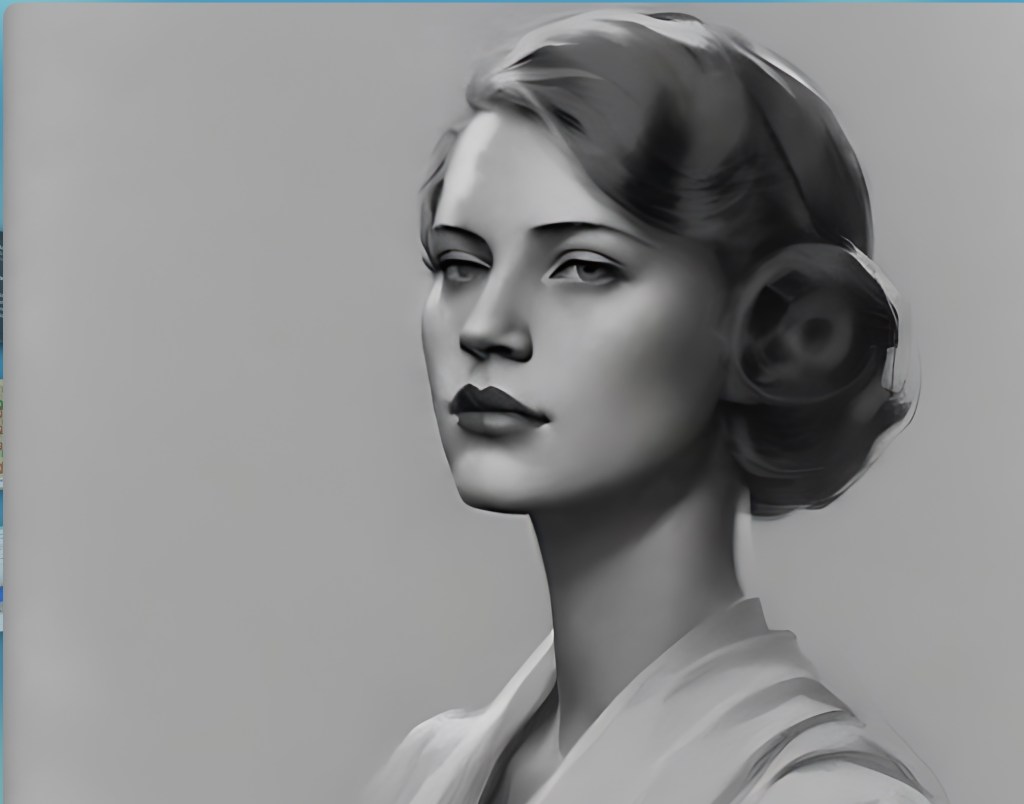


My Dad’s Dad
Frederick Wilhelm Diestler was born on May 6, 1860 in Lansing, Allamakee Countyt, Iowa. The new Republican Party had nominated Abraham Lincoln for the November election in 1860, and he won!
In the months before the election the country was defining issues issues with sharp edges, and the election of Lincoln was felt by some people in the South as the last straw. In Iowa they celebrated!
Frederick’s father, John Frederick, was an immigrant from Prussia. He was born in Gross Fahlenwerder, Soldin county. Over one hundred colonists had moved there from the Pfalz area near France, because of the threat of war, and constant French raids.
The colonists at first wanted to go to the United States, like their Hessian neighbors. But the Emperor had at first refused to let them go, asking them to consider going to some new lands east of Berlin. They spoke German there, and he promised not to draft their sons for war.
John Frederick was born in Gross Fahlenwerder, but as a teenager, he was one of the first that independently decided to move to America.
I’m not certain in what year he first came to the US. I found a record of him coming over when he was in his early twenties, but the oral history was that he was a teenager. I have found several instances where individuals came over to check things out, then went back to escort family and friends to the new world. In 1857 John zfrederick came by ship with a neighbor, Karl Berkeley.
John Frederick came to Iowa via the Great Lakes to Green Bay. From there he followed the portage trail through Wisconsin to the Mississippi River. I believe he stopped briefly to marry a distant cousin, Julia, at his father-in-law’s farm in Lansing , Minn. They stayed there for almost two years, and their first child died there in childbirth.
In a pattern that has repeated several times, after the death, they decide to move back to Wisconsin. This time there went to a sunburn of Milwaukee and lived on a small farm near Pewaukee. Julia was pregnant with Anna, and after the birth they went back to Langsing, Iowa. It’s possible that Julia’s father had helped, or knew, that a farm was for sale nearby, or perhaps they rented.
John Frederick had remember the area and decided to go to the neighboring farm, and Frederick William was born there as the oldest son.
Frederick William had 14 siblings,
1859- Anna, Pewaukee, Wis Julia, 23
1860- Frederick, Lansing, Iowa- Gottlieb’s farm Julia- 24
1861- William, Iowa, later Ackley, Iowa
1862- John, Iowa City, Iowa Julia- 25
1864- Herman, Dover, Iowa- hospital birth? Julia- 27
1867- Lydia, Lansing, Iowa – Gottlieb’s farm Julia- 30
1868- Sarah, Village Creek, Iowa- near Lansing Julia- 31
1869- Lewis, Lansing, Iowa – Gottlieb’s farm Julia- 32
1872- Francisca, Lansing, Iowa – Gottlieb’s farm Julia- 35
1873- Aaron, Quincy, Iowa Julia- 36
1875- Ida, Dover, Iowa- hospital birth
1877- Emma, Quincy, Iowa, Julia- 40
1879- Rosa, Dover, Iowa- Quincy Julia- 42
1882- Cora, Quincy, Iowa- Julia- 45
It seems possible that Lansing was the place to go for births until 1873, when John Frederick purchased the Quincy Township farm. It was very isolated, no commercial buildings. The nearest hospital was in Dover, so perhaps that’s why several children had Dover listed as place of birth.
It looks like Anna and William had left the Quincy farm by the 1880 census. The unresolved mystery is where was Frederick William during the 1870 census. He was only ten years old, but he not listed in the family.
Perhaps this is part of the family lore… that Frederick William was often called “Wild Bill”. He was John Fredericks oldest son, but it appears that he and several of his brothers were not expected to take over the family farm when John Frederick lost his leg. Herman was given the responsibility, but even he gave up pretty quickly. John Frederick sold the farm in the Quincy Township, and brought a small house in the city of Nora Springs, Iowa.
As far as I can tell, Frederick William moved around Iowa, perhaps learning the trade of making rope for the farmers. Most farms had a patch of hemp growing, to use in the seasonal rope making.
Frederick did not get married early, he was 34 when he married Amelia Mary Louise Markmann Korth, on March 14, 1894. The oral story was that Amelia was a mail order bride, arranged through a German language newspaper. The surprise was that when Amelia arrived she was already pregnant with William Diestler, born September 21, 1893, in Fingal, ND.
The records show that she arrived in 1891, when she was 15 years old, she married Frederick William in 1894, when she was 18. Apparently she had been in the country for three years. Perhaps there was a previous mail order situation that didn’t work out, but she was already pregnant when Frederick decided it was time to get married.
His father, John Frederick was miles away in Iowa. His uncles and aunt were in Wisconsin, even further away. For some reason Frederick decided to raise horses in the plains near Fingal, ND, a town founded in 1891, by some Canadians, The nearest city was Fargo, ND and that was pretty small at the time. He purchased a ranch in 1893.
In 1876 the population of Fargo was only 600. By 1893 it had grown to nearly 8,000 people, then disaster struck on June 7, 1893. A fire swept through 33 blocks of the city, destroying nearly 300 buildings. The city responded by rebuilding within a year, and by 1894 most of the buildings were brand new, still standing today.
Frederick William was still living in Fingal, ND. From 1893-1912, he raised horses and slowly gained a measure of wealth. In 1912 he built an 18 room ranch house that was the largest in the local area. Then the winter of 1920 hit.
Frederick William had 160 acres about 2 miles east of Fingal. The blizzard killed over 200,000 head of cattle in ND. It wiped out 90% of the horses on the ranch. Only Ben and a couple of his sisters could help Frederick William. They had a half dozen horses left, which they quickly sold.
They have to sell the ranch at a great loss. The ranch house was moved by the new owner a few miles away. There was nothing left of the ranch.
The family spent the rest of the winter/spring in a stone silo that a neighbor rented to them. They picked the grains of wheat from the cracks in the walls, and parched them on the stove to make a decaf coffee. It was hard times. Most of the girls found jobs cleaning, washing clothes, doing house chores. The boys did the best they could but there was no steady work.
The economic pressure took a toll on the relation between Frederick and Amelia and they divorced in 1926. At the time Fargo was known as the divorce capital of the Midwest.
Amelia moved to the town of Fargo, and the older children found relationships and some work. For the next twenty years Amelia relied on support from the children in some fashion.
Frederick William was traveling throughout the Midwest with his rope making business. Frederick died in 1926, pretty much a broken man.
It was said that he mistrusted banks, but he didn’t put his money in his mattress. Since he traveled a lot, he sewed his money in the seams of his clothes.
He also was very talented with a pocket knife. He would often whittle a chain out of a two by four, complete with a box at the end that contained a small ball. He would do this often in one day.
‘Wild Bill” had many disappointments, and his life was hard. His true wealth was in the amount of his children.