I’ve never really stopped to consider who the first author was. I suppose I always knew it was knowable—I just didn’t know it.Hmm. Knowable. That implies some things are unknowable. And that seems true enough. But now I’m wondering: what even is a fact? And are facts just stabilized opinions? Can a world run on opinion?
Worthy questions—but let me step back. Back to knowing and not knowing. Everything that can be known splits into two camps: the knowing of a thing, and the not knowing of it. Which camp we fall into depends entirely on the subject. Take, for instance, Christopher Columbus. Who knows he discovered America in 1492? Some people don’t. Some once knew and forgot. Some heard it but never registered it. Some never heard it at all.
And some know because they read it—in textbooks, biographies, or archives. They trust the source. We call those sources primary when they’re close to the original. I trust my sources. I fall into the camp that knows Columbus landed in the Americas on October 12, 1492. I believe that because experts who studied his original logbooks say so. Except—uh oh—those logbooks were given to Spanish royalty in 1493, and they’ve never been seen since.
But before they vanished, a copy was made—called the Barcelona Copy. Columbus carried that copy on future voyages, and it stayed with him until his death in 1506. It passed to his son Fernando, who used it to write a biography in 1538. In 1530, Bartolomé de las Casas used it to compose the Diario. That’s the earliest surviving text that describes the discovery. Uh oh again—the Barcelona Copy hasn’t been seen since 1584. Which means: all modern experts reference Las Casas’ Diario.
And all history teachers reference other teachers, who reference teachers, who reference that one source. This, apparently, is how we know things. Except… Columbus didn’t really discover America. The Vikings beat him by centuries. They landed in Nova Scotia. There’s literature and archaeological evidence for that. Some even suggest the Phoenicians—swept off course while rounding Africa—may have reached Central America, bringing pyramids and myth. That’s not confirmed, but it’s a theory.
So what do we know? Knowing is tenuous. And at any given time, the number of people who truly know something may be much smaller than we assume.
—
Today, I revisited a site I admire: The Electronic Text Corpus of Sumerian Literature. It contains primary source translations from Sumer, often considered the first known civilization—because they left writing behind. I’ve studied cuneiform. I can recognize the letter shapes. But when those signs become words, I’m lost. I rely on scholars who can read it. And the good news? Multiple translations say basically the same thing. I trust their expertise. I accept their conclusions as… fact.
One of my most popular blog posts is a collection of Sumerian Proverbs. It draws readers every year. Today, I was browsing new translations when one line arrested me: “My king, something has been created that no one has created before.” That line stopped me. It was composed from 37 tablets found in Ur, written by a woman named Enheduanna, around 2350–2270 BC.
She was the daughter of Sargon of Akkad (2340–2284 BC)—not the one mentioned in Isaiah 20:1 (that’s Sargon II, 722–705 BC), but likely the original Šarru-kin, meaning “true king” or “king established.” Probably a title more than a name. Sargon married Taslultum and had five children: Manishtusu, Rimush, Enheduanna, Ibarum (Shu-Enlil), and Abaish-Takal.Each was given power. They stayed in power across generations. Rimush took the throne after Sargon and ruled for 9 years. Then Manishtusu, for 15. His son Naram-Sin ruled for 56 years. Enheduanna served them all—her father, her brothers, and her nephew. She was appointed High Priestess of Inanna and Nanna, exiled for a time, but reinstated.
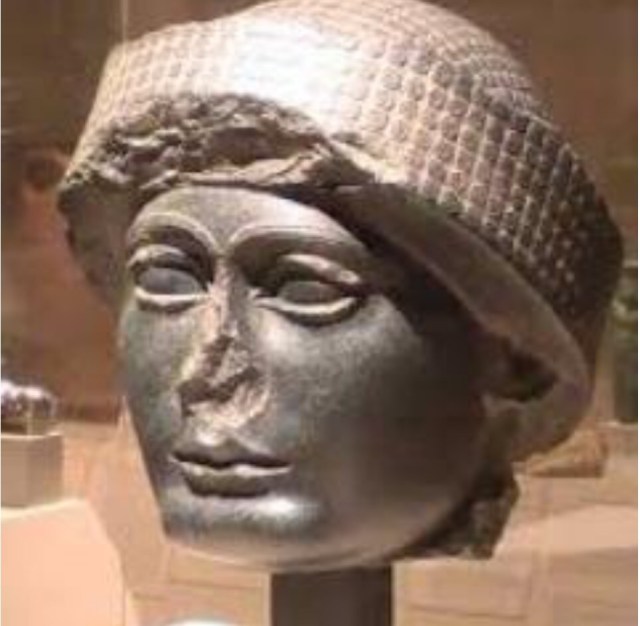
She’s credited with standardizing temple hymns across the empire—a practical and theological unification. That book of hymns, the Sumerian Temple Hymns, may be what she meant when she wrote: “I have created something that no one has created before.” That line—written on tablets, duplicated across temples, preserved in translation—makes her the first known author in human history. And she didn’t just write for the job. She wrote for the heart.
Her other work, The Exaltation of Inanna, is a personal devotion—a song of awe and divine power. These are its first lines:
Lady of all the divine powers, resplendent light, righteous woman clothed in radiance, beloved of An and Uraš! Mistress of heaven, with the great diadem, who loves the good headdress befitting the office of en priestess, who has seized all seven of its divine powers! My lady, you are the guardian of the great divine powers!…
Today, I know a new thing. And it’s old. And it matters.

My intrepation


 A Work Progressing
The First Author
I’ve never really stopped to consider who the first author was. I suppose I always knew it was knowable—I just didn’t know it.Hmm. Knowable. That implies some things are unknowable. And that seems true enough. But now I’m wondering: what even is a fact? And are facts just stabilized opinions? Can a world run on opinion?
Worthy questions—but let me step back. Back to knowing and not knowing. Everything that can be known splits into two camps: the knowing of a thing, and the not knowing of it. Which camp we fall into depends entirely on the subject. Take, for instance, Christopher Columbus. Who knows he discovered America in 1492? Some people don’t. Some once knew and forgot. Some heard it but never registered it. Some never heard it at all.
And some know because they read it—in textbooks, biographies, or archives. They trust the source. We call those sources primary when they’re close to the original. I trust my sources. I fall into the camp that knows Columbus landed in the Americas on October 12, 1492. I believe that because experts who studied his original logbooks say so. Except—uh oh—those logbooks were given to Spanish royalty in 1493, and they’ve never been seen since.
But before they vanished, a copy was made—called the Barcelona Copy. Columbus carried that copy on future voyages, and it stayed with him until his death in 1506. It passed to his son Fernando, who used it to write a biography in 1538. In 1530, Bartolomé de las Casas used it to compose the Diario. That’s the earliest surviving text that describes the discovery. Uh oh again—the Barcelona Copy hasn’t been seen since 1584. Which means: all modern experts reference Las Casas’ Diario.
And all history teachers reference other teachers, who reference teachers, who reference that one source. This, apparently, is how we know things. Except… Columbus didn’t really discover America. The Vikings beat him by centuries. They landed in Nova Scotia. There’s literature and archaeological evidence for that. Some even suggest the Phoenicians—swept off course while rounding Africa—may have reached Central America, bringing pyramids and myth. That’s not confirmed, but it’s a theory.
So what do we know? Knowing is tenuous. And at any given time, the number of people who truly know something may be much smaller than we assume.
—
Today, I revisited a site I admire: The Electronic Text Corpus of Sumerian Literature. It contains primary source translations from Sumer, often considered the first known civilization—because they left writing behind. I’ve studied cuneiform. I can recognize the letter shapes. But when those signs become words, I’m lost. I rely on scholars who can read it. And the good news? Multiple translations say basically the same thing. I trust their expertise. I accept their conclusions as… fact.
One of my most popular blog posts is a collection of Sumerian Proverbs. It draws readers every year. Today, I was browsing new translations when one line arrested me: “My king, something has been created that no one has created before.” That line stopped me. It was composed from 37 tablets found in Ur, written by a woman named Enheduanna, around 2350–2270 BC.
She was the daughter of Sargon of Akkad (2340–2284 BC)—not the one mentioned in Isaiah 20:1 (that’s Sargon II, 722–705 BC), but likely the original Šarru-kin, meaning “true king” or “king established.” Probably a title more than a name. Sargon married Taslultum and had five children: Manishtusu, Rimush, Enheduanna, Ibarum (Shu-Enlil), and Abaish-Takal.Each was given power. They stayed in power across generations. Rimush took the throne after Sargon and ruled for 9 years. Then Manishtusu, for 15. His son Naram-Sin ruled for 56 years. Enheduanna served them all—her father, her brothers, and her nephew. She was appointed High Priestess of Inanna and Nanna, exiled for a time, but reinstated.
She’s credited with standardizing temple hymns across the empire—a practical and theological unification. That book of hymns, the Sumerian Temple Hymns, may be what she meant when she wrote: “I have created something that no one has created before.” That line—written on tablets, duplicated across temples, preserved in translation—makes her the first known author in human history. And she didn’t just write for the job. She wrote for the heart.
Her other work, The Exaltation of Inanna, is a personal devotion—a song of awe and divine power. These are its first lines:
Lady of all the divine powers, resplendent light, righteous woman clothed in radiance, beloved of An and Uraš! Mistress of heaven, with the great diadem, who loves the good headdress befitting the office of en priestess, who has seized all seven of its divine powers! My lady, you are the guardian of the great divine powers!…
Today, I know a new thing. And it’s old. And it matters.
My intrepation
Share this: